Lithuania's Residential Real Estate Market Analysis 2025
The Lithuanian housing market sustains strong momentum, as insufficient supply, growing population, and improved affordability, driven by more favorable credit conditions and rising wages, accelerate sales price growth in all major cities across the country.
This extended overview from Global Property Guide covers key aspects of the Lithuanian housing market and takes a closer look at its most recent developments and long-term trends.
Table of Contents
- Housing Market Snapshot
- Historic Perspective
- Demand Highlights
- Supply Highlights
- Rental Market
- Mortgage Market
- Socio-Economic Context
Housing Market Snapshot
Lithuania's housing market maintained strong momentum in 2025, with price growth accelerating on the back of renewed demand, supported by more favorable borrowing conditions and demographic expansion amid subdued supply of new housing. In August 2025, the Ober-Haus Lithuanian Apartment Price Index (OHBI) for the five largest cities rose by 8.23% year-on-year, marking the eighth consecutive month of acceleration. In real terms, prices increased by 4.07%.
All major cities recorded annual growth: Vilnius (+7.4%), Kaunas (+10.5%), Klaipėda (+8.2%), Šiauliai (+8.4%), and Panevėžys (+9.6%). Vilnius continued to lead in absolute price levels, averaging EUR 2,813 (USD 3,272) per sqm, followed by Kaunas (EUR 1,977/USD 2,299), Klaipėda (EUR 1,842/USD 2,142), Šiauliai (EUR 1,234/USD 1,435), and Panevėžys (EUR 1,216/USD 1,414).
Lithuania's house price annual change:
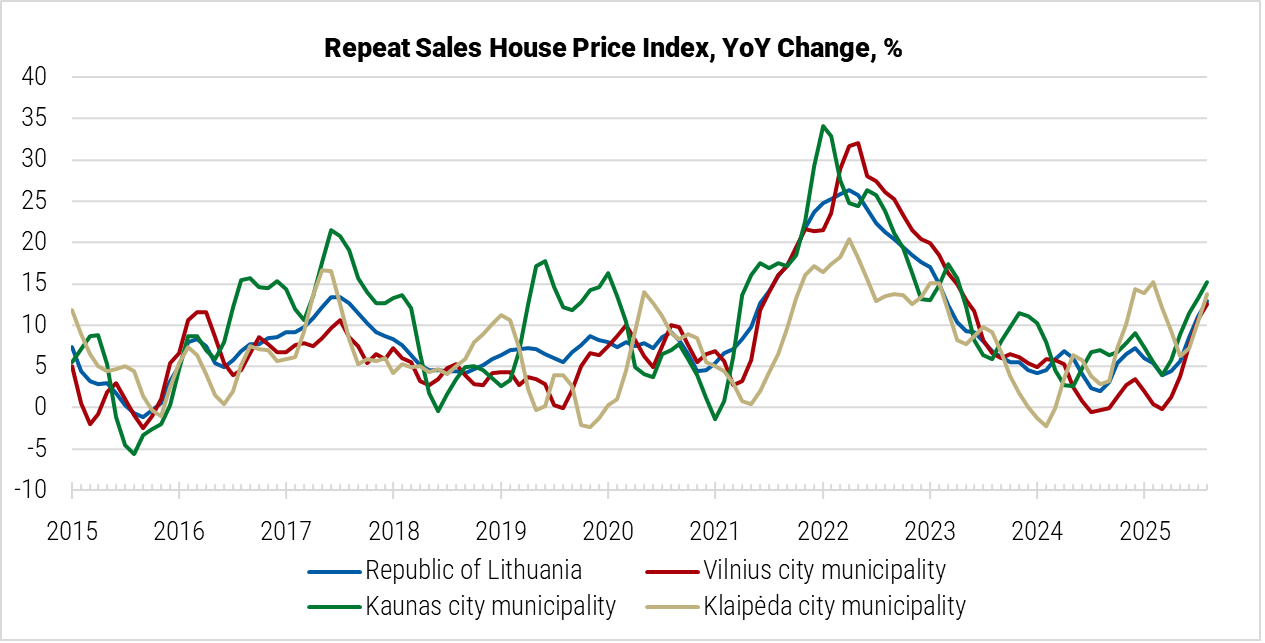
The secondary market echoed this upward trend. The Bank of Lithuania's (LB) Repeat Sales House Price Index (LB RSHPI), which tracks dwellings sold at least twice, reported a nationwide increase of 12.93% year-on-year in August 2025. The sharpest growth was observed in Kaunas city municipality (+15.14%), followed by Klaipėda (+13.77%) and Vilnius (+12.53%).
Data Source: LB.
In the primary market, the Inreal Group analysis shows that Vilnius remained the most expensive city overall, while Klaipėda recorded the highest price within the luxury segment, with units reaching EUR 7,917 (USD 9,208) following a 16.5% year-on-year increase. This reflects both the premium attached to the city's coastal location and the constrained supply of new high-end developments. Kaunas, meanwhile, posted the strongest overall growth, with mid-range apartments rising 20.2% and townhouses increasing 17.1%.
Average primary residential sales price per square meter in the main cities:
| Vilnius Aug 2025 | YoY, % | Kaunas Aug 2025 | YoY, % | Klaipėda Aug 2025 | YoY, % | |
| Affordable | EUR 3,114 (USD 3,622) |
10.86% | EUR 2,148 (USD 2,498) |
1.80% | EUR 1,986 (USD 2,310) |
3.38% |
| Mid-range | EUR 4,161 (USD 4,840) |
0.87% | EUR 3,606 (USD 4,194) |
20.20% | EUR 2,765 (USD 3,216) |
4.58% |
| High-end | EUR 7,522 (USD 8,749) |
10.07% | EUR 4,023 (USD 4,679) |
1.57% | EUR 7,917 (USD 9,208) |
16.49% |
| Loft | EUR 3,341 (USD 3,886) |
22.61% | EUR 2,098 (USD 2,440) |
-8.62% | - | - |
| Townhouse | EUR 2,265 (USD 2,634) |
-1.48% | EUR 2,037 (USD 2,369) |
17.14% | EUR 1,822 (USD 2,119) |
-1.19% |
| Note: Exchange rate as of August 2025, EUR 1 = USD 1.1631. | ||||||
| Data Source: Inreal Group. | ||||||
Looking ahead, market experts anticipate continued price growth. As analysts from the real estate services company Ober-Haus note: "Favorable borrowing conditions and rising wages are strengthening the purchasing power of households. Meanwhile, the declining supply of new housing indicates a shortage is forming. Greater affordability allows buyers to compete more aggressively for available homes, often at higher prices. In light of these dynamics, we expect housing price growth in Lithuania to persist in the near term."
Historic Perspective:
A Journey From Overheating to Resilience
During the mid-2000s, Lithuania's housing market underwent a rapid expansion. Credit growth, rising household incomes, and strong investor demand fueled a sharp increase in nominal prices and a surge in construction activity. Between the early 2000s and 2007, house prices more than tripled, while credit to the private sector expanded at an exceptional pace. These dynamics created a classic overheating episode that left the market highly exposed to the global financial downturn.
When the global financial crisis struck in 2008, a swift correction followed. Housing prices fell sharply, many new construction projects were postponed or canceled, and the combination of economic contraction and tighter lending standards suppressed demand for several years. The subsequent recovery in transactions and prices was gradual and uneven across the country: Vilnius and other major regional centers rebounded earlier and more robustly than smaller towns.
From around mid-2013, the market entered a phase of sustained recovery, supported by stronger macroeconomic fundamentals, rising wages, EU-funded investment, and renewed household borrowing. The national house price index recorded consistent growth throughout the late 2010s, with the strongest performance concentrated in the capital and university cities, where demand outpaced supply and rental markets tightened. Lithuania's historically high home-ownership rate, relative to many EU peers, also shaped demand patterns, with owner-occupiers continuing to dominate over investors.
The COVID-19 period brought renewed acceleration in housing prices across much of the country. Low mortgage rates, shifting household preferences, and limited new completions in several segments supported rapid nominal growth. Rising construction costs and persistent supply constraints further amplified price pressures, particularly for apartments and family homes in the most desirable municipalities.
From 2022 through 2024, the macroeconomic environment shifted significantly. Surging inflation prompted rapid interest rate hikes across Europe, driving up mortgage rates in Lithuania and dampening housing demand. Price growth slowed in nominal terms and turned slightly negative in real terms during late 2022 and the second half of 2023. By late 2024, however, transactional activity began to recover, and price growth showed signs of renewed momentum.
20-year annual house price change (based on year-end OHBI in the five largest cities):
| Year | Nominal house prices (%) | Inflation-adjusted house prices (%) | Year | Nominal house prices (%) | Inflation-adjusted house prices (%) | |
| 2005 | 60.76% | 56.15% | 2015 | 2.29% | 2.38% | |
| 2006 | 16.45% | 11.43% | 2016 | 5.50% | 3.72% | |
| 2007 | 32.75% | 22.75% | 2017 | 3.57% | -0.33% | |
| 2008 | -15.23% | -21.85% | 2018 | 3.94% | 2.01% | |
| 2009 | -26.84% | -27.77% | 2019 | 7.18% | 4.34% | |
| 2010 | -2.98% | -6.55% | 2020 | 4.06% | 3.81% | |
| 2011 | -0.64% | -3.91% | 2021 | 22.39% | 10.70% | |
| 2012 | -1.65% | -4.36% | 2022 | 19.10% | -2.17% | |
| 2013 | 1.12% | 0.76% | 2023 | 1.72% | 0.51% | |
| 2014 | 3.34% | 3.61% | 2024 | 3.07% | 0.97% | |
| Data Source: Ober Haus. | ||||||
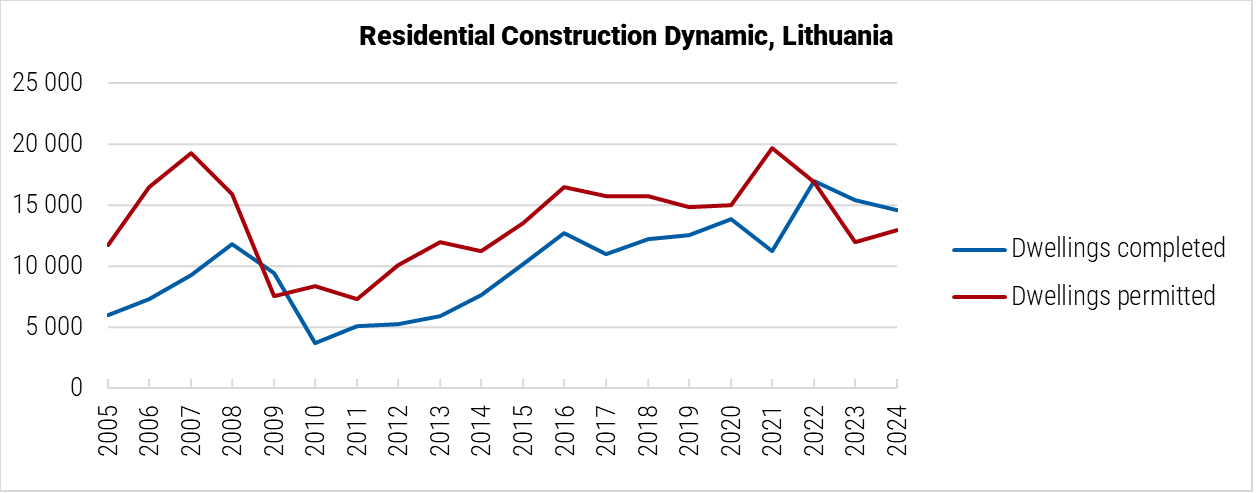
20-year construction activity dynamic (permitted and completed housing units):
Data Source: VDA.
Demand Highlights:
Robust Home Sales Driven by Easing Borrowing Terms and Population Growth
After rebounding at the end of 2024, Lithuania's residential property market continued to build momentum in 2025, supported by a stronger economy and more accessible home financing.
According to the State Enterprise Center of Registers, a total of 32,617 homes, including both apartments and single-family houses, were sold nationwide between January and August 2025, representing a robust 25.8% year-on-year increase in transaction volumes. Apartments continued to dominate, accounting for 74% of all sales. In this segment, 24,262 units were purchased, reflecting 27.9% growth compared with the same period last year. Single-family houses made up the remaining 26%, with 8,355 transactions recorded, up 20.1% year-on-year.
"The easing of borrowing requirements, improved consumer sentiment, and the outlook for continued price growth are key factors stimulating housing market activity," noted experts from Ober-Haus.
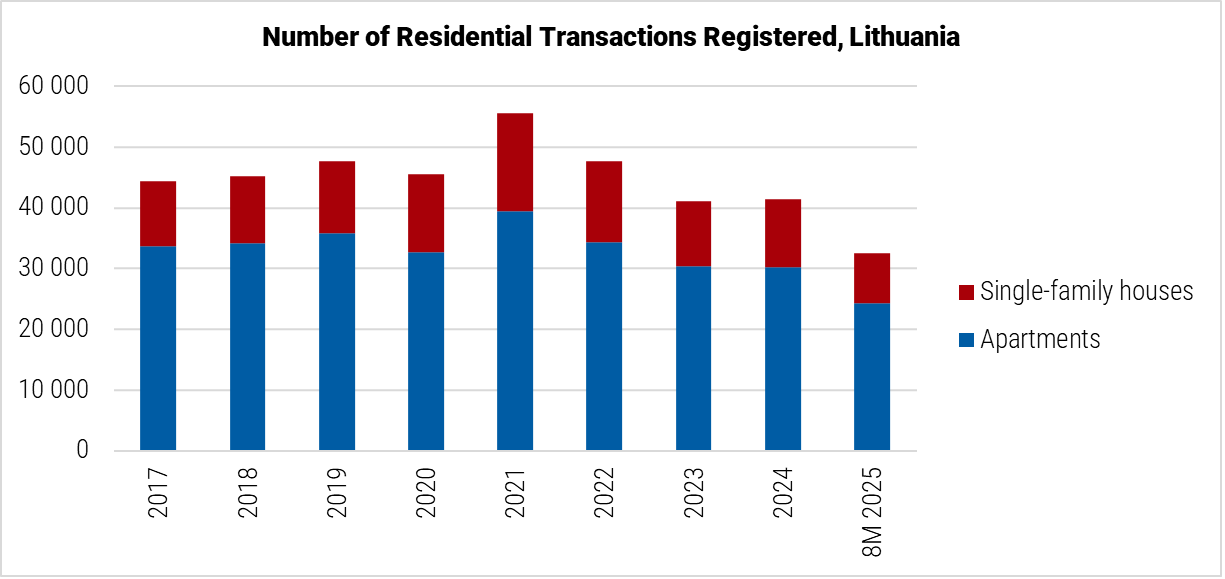
Data Source: State Enterprise Center of Registers.
Regional dynamics reveal that Lithuania's five largest cities generated 65% of apartment sales. The capital, Vilnius, led the market both in scale and growth, with 8,608 apartments sold between January and August 2025, demonstrating a 37.8% year-on-year increase.
Commenting on these results, Paulius Rudzkis, data analyst at the Center of Registers, emphasized stability in the market: "Market growth is quite steady, without major fluctuations. The overall result of this year has been about a fifth higher than last year for several months now. However, this difference is largely due to the low comparative base, as the beginning of last year was rather modest. It is likely that this year's results may not fall behind even the record-breaking year of 2021."
Looking ahead, several factors could provide additional impetus, including the decrease in interest rates and population growth, as highlighted in the H1 2025 market report from Inreal Group. "Housing demand could experience a temporary additional boost from the combination of two factors. Allowing withdrawals from the second-pillar pension system would free up funds for down payments, while expected amendments to responsible lending regulations, reducing the minimum down payment requirement, would enable first-time buyers to purchase homes more quickly. Other buyers would be encouraged to carry out investment transactions before the down payment requirements are tightened," added Tomas Sovijus Kvainickas, Head of Investment and Analysis at Inreal Group.
Number of apartments sold, 5 largest cities:
| City | Number of Apartments Sold, Jan - Aug 2025 |
YoY, % |
| Vilnius | 8,608 | 37.84% |
| Kaunas | 3,303 | 18.01% |
| Klaipėda | 2,077 | 22.46% |
| Šiauliai | 985 | 29.95% |
| Panevėžys | 705 | 20.93% |
| Data Source: State Enterprise Centre of Registers. | ||
Supply Highlights:
Limited Completions Keep Upward Pressure on Prices
Despite a recovery in demand, housing supply in Lithuania remains constrained. According to the State Data Agency (VDA), nationwide new dwelling completions reached 6,061, representing a 24.45% year-on-year drop. Developers continue to cite bureaucratic hurdles, unfavorable legislation, and inconsistent implementation of new procedures as the main barriers to timely project delivery.
Industry participants emphasize that restricted supply is a key factor behind price increases. "The market is trying to catch up with higher demand, but because of complex and lengthy processes, along with projects suspended in recent years, this has not been possible. Unless supply expands significantly, prices will continue to rise," commented Rita Demskytė, Sales Manager at KAITA Group, one of Lithuania's largest developers. She added that greater diversity of housing options and a stronger supply are essential to ensure long-term stability.
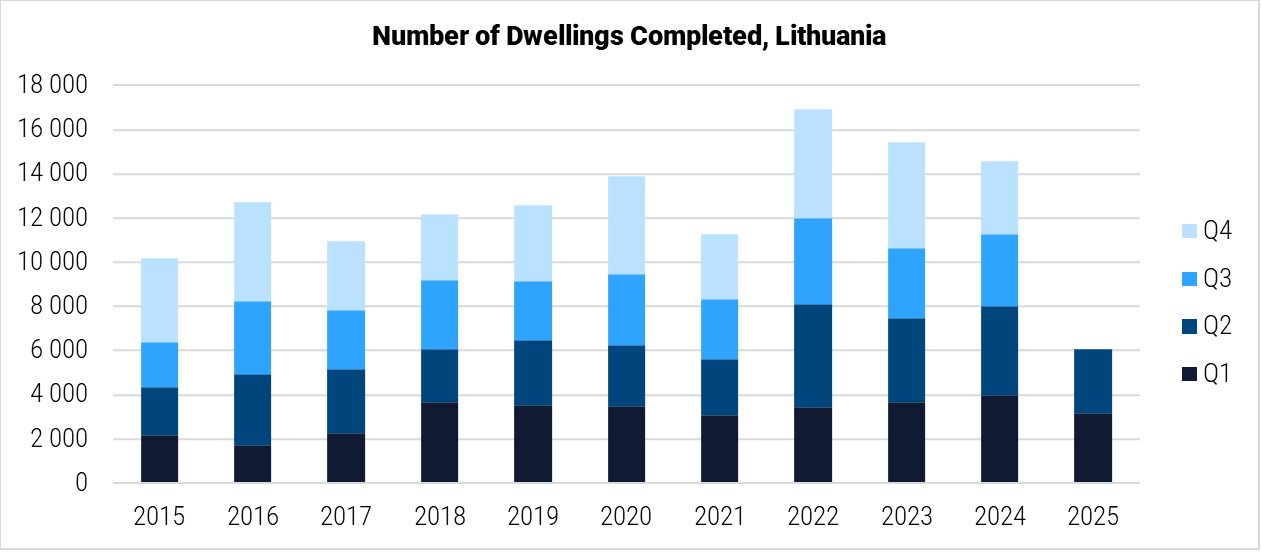
Data Source: VDA.
Forward-looking indicators, however, suggest a somewhat more favorable outlook. Housing starts in H1 2025 totaled 7,442 units, representing a strong 30.24% year-on-year increase. At the same time, the number of building permits issued declined by 4.04% to 5,916 dwellings, highlighting lingering inconsistencies in project pipelines.
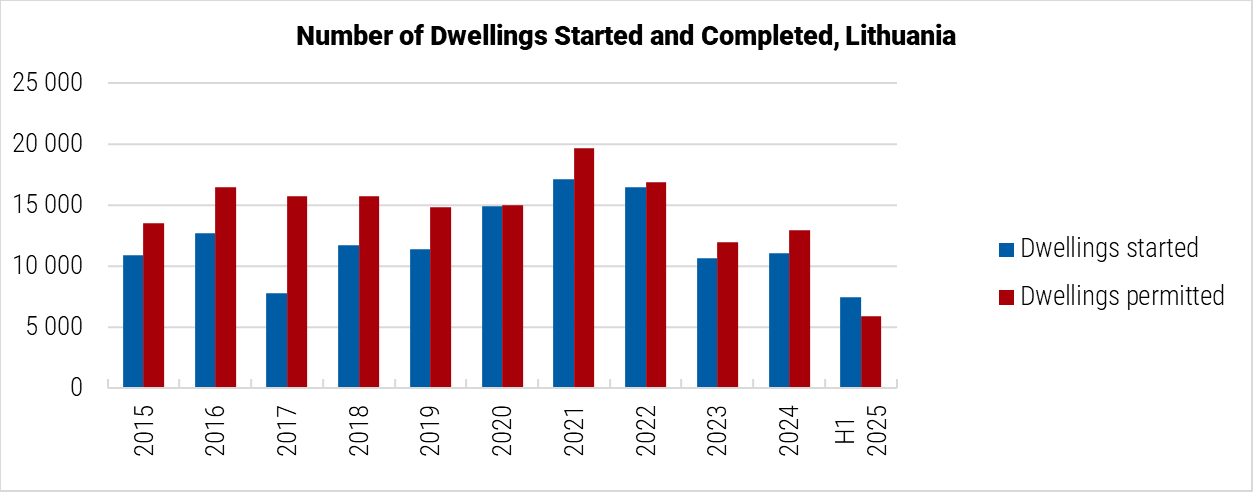
Data Source: VDA.
Developers' sentiment has nonetheless turned markedly positive. "As shown by a survey of the country's major real estate developers, the market is gaining momentum and, most likely, will continue to strengthen this year. After a more moderate period, the real estate sector is regaining confidence thanks to rising sales and greater activity," said Mindaugas Statulevičius, President of the Lithuanian Real Estate Development Association (LNTPA).
Expectations for residential construction in 2025 are notably stronger than a year earlier. The LNTPA's Real Estate Expectations Index, which measures developer outlook on a scale from 0 to 100, indicates that the residential unit development rate rose from 62 in 2024 to 84 in 2025, while the rate for total residential area increased from 57 to 84. These results point to expectations of both higher housing volumes and larger floor space, signaling a more active and expansive residential market through the remainder of the year.
Rental Market:
Moderate Growth in Rents, Yields Slightly Down
Compared to many of its European neighbors, Lithuania's rental market is limited, with just 12.6% of households being paying tenants and only 2.9% of those paying market rents, according to the latest figures from Eurostat. Rental demand from employees of international companies, government employees, students, and foreigners is primarily concentrated in the country's two largest cities -Vilnius and Kaunas.
Lithuania's rent price index:
Against this background, rental inflation for existing contracts has been trending close to the overall price growth in the country in the last few years. In August 2025, the VDA reporting showed a 4.0% annual increase in the actual rentals for the housing component of the consumer price index (CPI), while the inflation for the all-item CPI during the same period reached 5.0%, both indicators down substantially from double-digit levels previously observed in 2022-2023.
"Rising expectations of purchasing a home among households put downward pressure on rental prices, as they rose more slowly than sales prices from autumn 2024 onwards," the Bank of Lithuania noted in the 2025 Financial Stability Overview. "Overall, the growth of both housing sales and rental prices has stabilized and is moderate."
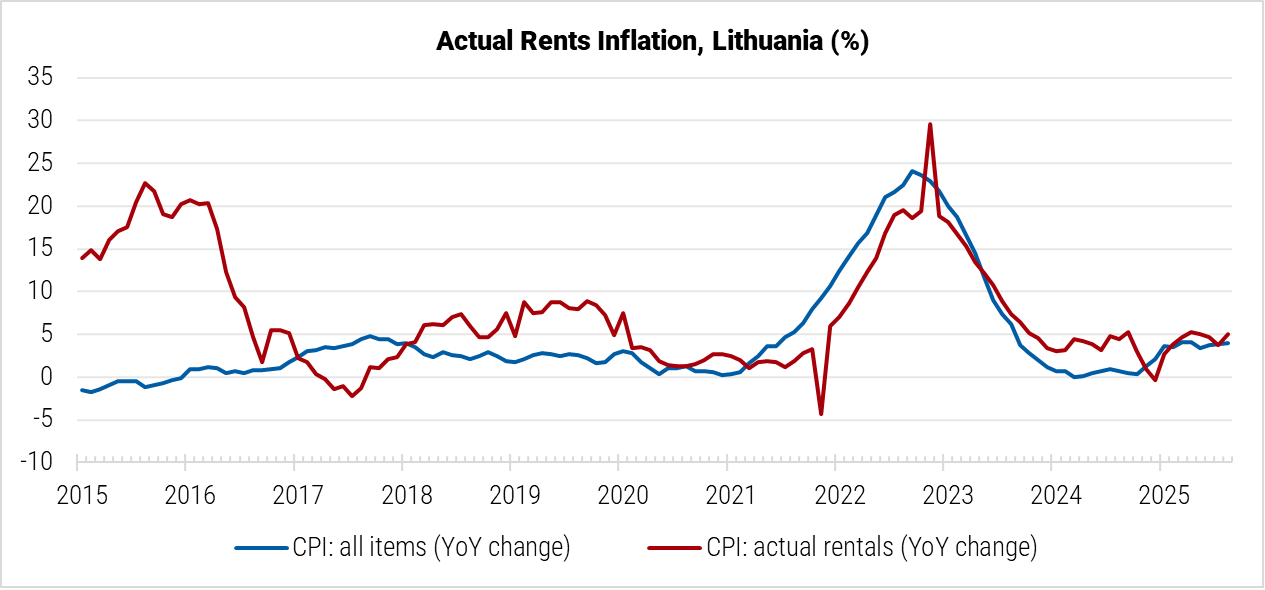
Data Source: VDA.
For newly listed apartments, asking rents vary dynamically between Lithuania's cities. According to data from the real estate advertisement portal Aruodas, as cited by Ober-Haus, in Q2 2025, the average price of apartments offered for rent in Vilnius stood at 14.8 EUR/sqm (2% year-on-year), while more affordable markets of Kaunas and Klaipėda demonstrated more pronounced increases, with the average listed rents reaching 12.1 EUR/sqm (13% year-on-year) and 11.0 EUR/sqm (5% year-on-year), respectively.
In nominal terms, more recent figures from Ober-Haus also show a diverse landscape, with apartment rents varying notably not only between the capital and regional cities, but between more prestigious central districts and other areas within each submarket. For example, in August 2025, rents for 2-room units in city centers ranged from EUR 580-1,200 (USD 675-1,396) in Vilnius to EUR 420-750 (USD 489-872) in Kaunas and EUR 340-550 (USD 395-640) in Panevėžys. In less popular city areas rents for the same category of apartments ranged from EUR 430-720 (USD 500-837) in Vilnius to EUR 370-600 (USD 430-698) in Kaunas and EUR 290-420 (USD 337-489) in Panevėžys.
Apartment rents in key submarkets:
| 2-room unit, EUR Aug 2025 |
2-room unit, USD Aug 2025 |
|||
| From | To | From | To | |
| Vilnius | ||||
| Center | EUR 580 | EUR 1,200 | USD 675 | USD 1,396 |
| Prestigious districts | EUR 490 | EUR 900 | USD 570 | USD 1,047 |
| Other areas | EUR 430 | EUR 720 | USD 500 | USD 837 |
| Kaunas | ||||
| Center | EUR 420 | EUR 750 | USD 489 | USD 872 |
| Other areas | EUR 370 | EUR 600 | USD 430 | USD 698 |
| Klaipėda | ||||
| Center | EUR 420 | EUR 740 | USD 489 | USD 861 |
| Other areas | EUR 370 | EUR 600 | USD 430 | USD 698 |
| Šiauliai | ||||
| Center | EUR 350 | EUR 550 | USD 407 | USD 640 |
| Other areas | EUR 300 | EUR 430 | USD 349 | USD 500 |
| Panevėžys | ||||
| Center | EUR 340 | EUR 550 | USD 395 | USD 640 |
| Other areas | EUR 290 | EUR 420 | USD 337 | USD 489 |
| Note: Exchange rate as of August 2025, EUR 1 = USD 1.1631. | ||||
| Data Source: Ober-Haus. | ||||
In the environment of home sales prices outpacing rent increases, the research conducted by Global Property Guide in May 2025 found gross rental yields for residential units in the country at the average level of 6.29%, slightly down from 6.46% previously reported in April 2024, and 6.71% in July 2023. Among the monitored submarkets, the highest potential performance was registered in Šiauliai (8.22%), while the indicator for Vilnius stood below the country average (4.93%).
Mortgage Market:
Falling Interest Rates Stimulate Record-High Lending Activity
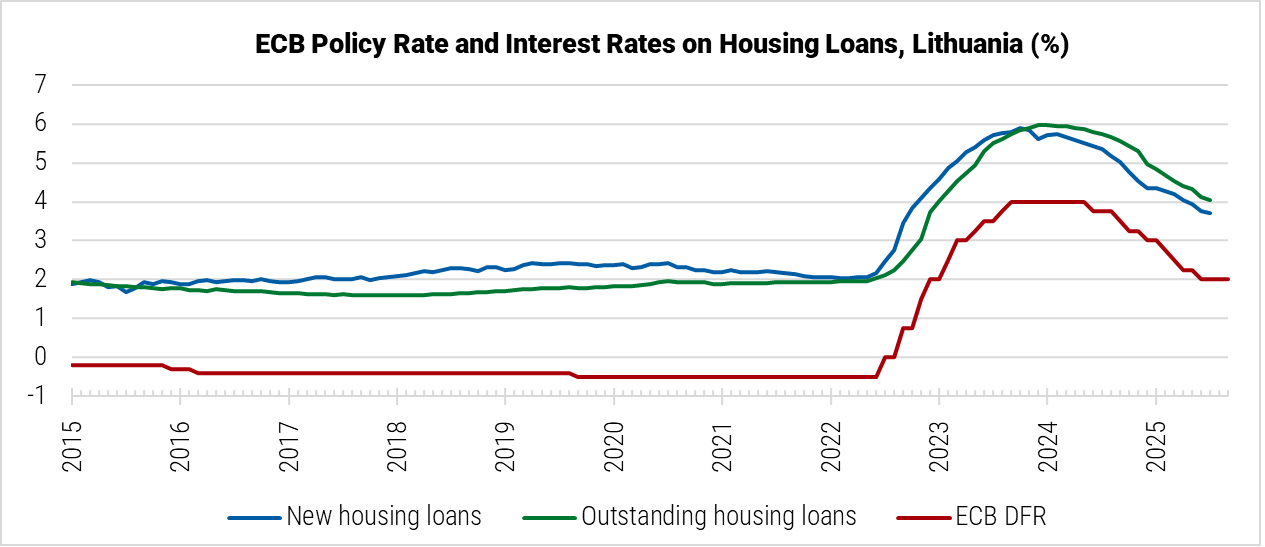
After climbing down from peak levels throughout 2024 and early 2025, interest rates on housing loans in Lithuania may now be approaching a stabilization phase, as the European Central Bank (ECB) is believed to be nearing the end of its monetary policy easing cycle.
Lithuania's mortgage loan interest rates:
After the most recent cut to its benchmark rates in June 2025 (which brought the deposit facility rate to 2.00%, the main refinancing operations rate to 2.15%, and the marginal lending facility rate to 2.40%), the ECB has maintained its stance in the last three months, making no further moves at the September meeting of the Governing Council. The June cut being the eighth since the easing cycle began a year earlier, monetary policy observers now generally agree that the ECB is nearing the end of its rate-cutting cycle, expecting the rates to be cut just one or two more times by the end of the year, with the deposit rate reaching 1.5%.
Data Source: ECB.
Closely following the policy rate's trajectory, the average interest rates to households for house purchase in Lithuania have fallen to levels previously observed three years ago, in the fall of 2022.
In July 2025, the interest rate on new loans reached 3.70%, down from 4.35% in January and 5.36% a year prior in July 2024. For outstanding housing loans, the indicator was reported at 4.03%, down from 4.83% at the beginning of the year and 5.74% during the same period in 2024. The same dynamic was observed for loans with different initial rate fixation periods and maturity periods.
Average interest rates on loans to households for house purchase:
| Jul 2025 | YoY | Jul 2024 | YoY | Jul 2023 | |
| New housing loans | 3.70% | ↓ | 5.36% | ↓ | 5.70% |
| - Floating rate and IRF up to 1 year | 3.66% | ↓ | 5.31% | ↓ | 5.69% |
| - IRF of over 1 and up to 5 years | 6.65% | ↓ | 7.99% | ↑ | 5.93% |
| - IRF of over 5 and up to 10 years | 6.42% | ↓ | 7.89% | ↑ | 6.35% |
| - IRF of over 10 years | 3.56% | ↓ | 6.35% | ↑ | 6.27% |
| Outstanding housing loans | 4.03% | ↓ | 5.74% | ↑ | 5.51% |
| - Original maturity up to 1 year | 5.33% | ↓ | 5.87% | ↑ | 5.69% |
| - Original maturity over 1 and up to 5 years | 6.76% | ↓ | 6.78% | ↑ | 6.52% |
| - Original maturity of over 5 years | 4.03% | ↓ | 5.73% | ↑ | 5.51% |
| Data Source: ECB. | |||||
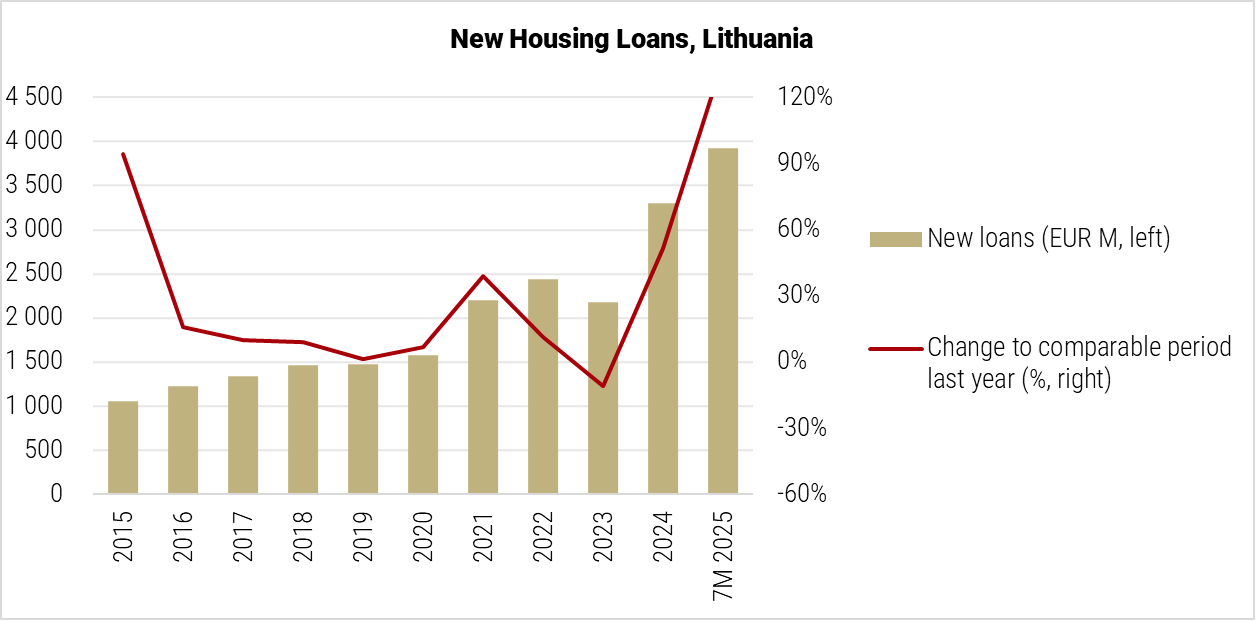
The continued decline in interest rates has encouraged homebuyers to return to the loan market, stimulating a strong rebound in lending activity with record-high volumes of new mortgages recorded. According to the ECB data, the total value of new loans to households for house purchase produced in Lithuania between January and July 2025 (including pure new loans and renegotiations) reached EUR 3.9 billion (USD 4.6 billion), which was an extraordinary 137.2% above the comparable period in 2024 and already exceeded the full-year level of 2024 by 19.0%.
"Along with rising real incomes and a more favorable situation on the housing market, lending standards eased and demand for loans to households increased," the Bank of Lithuania summarized in the 2025 Financial Stability Review. "Lower margins on new housing loans <…> encouraged residents to negotiate more favorable terms for their existing loans. With the entry into force of changes to simplified housing loan refinancing in early 2025, the number of housing loans refinanced increased sevenfold in March compared to January, and renegotiation flows reached a record high <…>"
While renegotiated loans made up over half of all new credit and demonstrated an especially strong growth, pure new loans performed exceptionally well, too. The total value of loans produced in this category in the first seven months of 2025 increased by 62.9% year-on-year and amounted to EUR 1.9 billion (USD 2.2 billion).
Data Source: ECB.
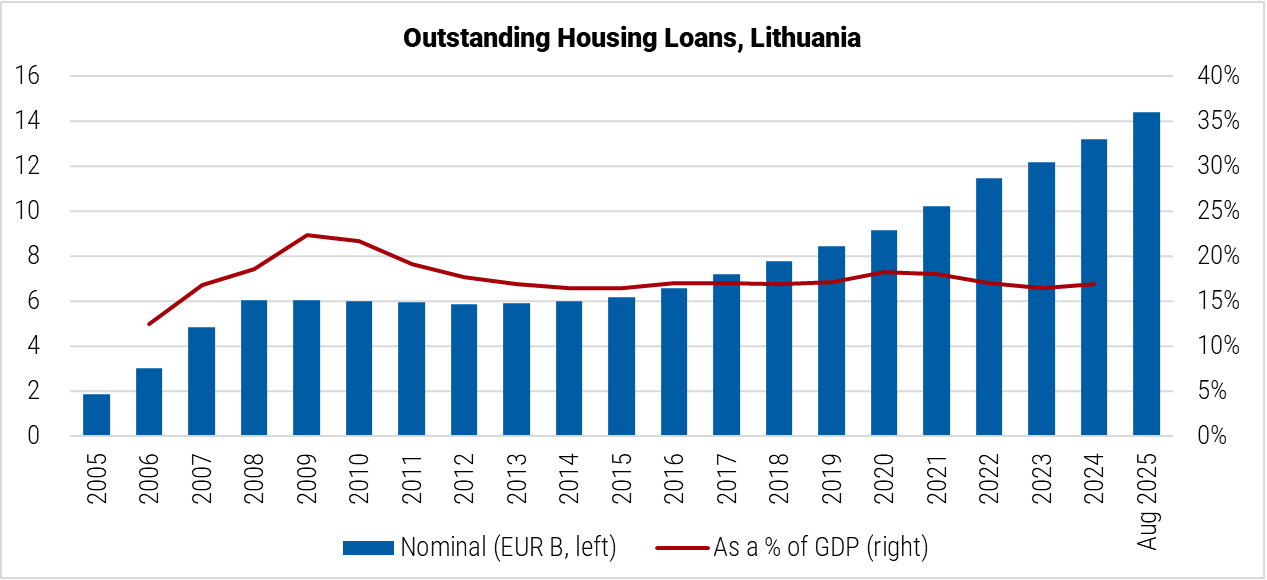
With loan production soaring, the overall size of the mortgage market in Lithuania continues to grow rapidly, its annual expansion rate over the last decade averaging 8.2%. As of August 2025, the total value of outstanding housing loans for house purchase maintained by the country's banking sector stood at EUR 14.4 billion (USD 16.8 billion), demonstrating a 9.0% increase since the end of last year. In parallel, the relative size of the housing loan market, measured by the credit stock to GDP ratio, dropped from a 22.4% peak in 2009 and has been relatively stable at about 16-18% since, most recently estimated at 16.9% of GDP at current prices in 2024.
According to the latest figures from Eurostat, the share of homeowners with an outstanding mortgage or housing loan among Lithuanian households increased substantially over the last two decades, from 3.6% in 2005 to 8.1% in 2015 and 16.8% in 2024.
Data Source: ECB.
Socio-Economic Context:
Economy Resilient, Set to Continue Growing Despite Limiting Factors
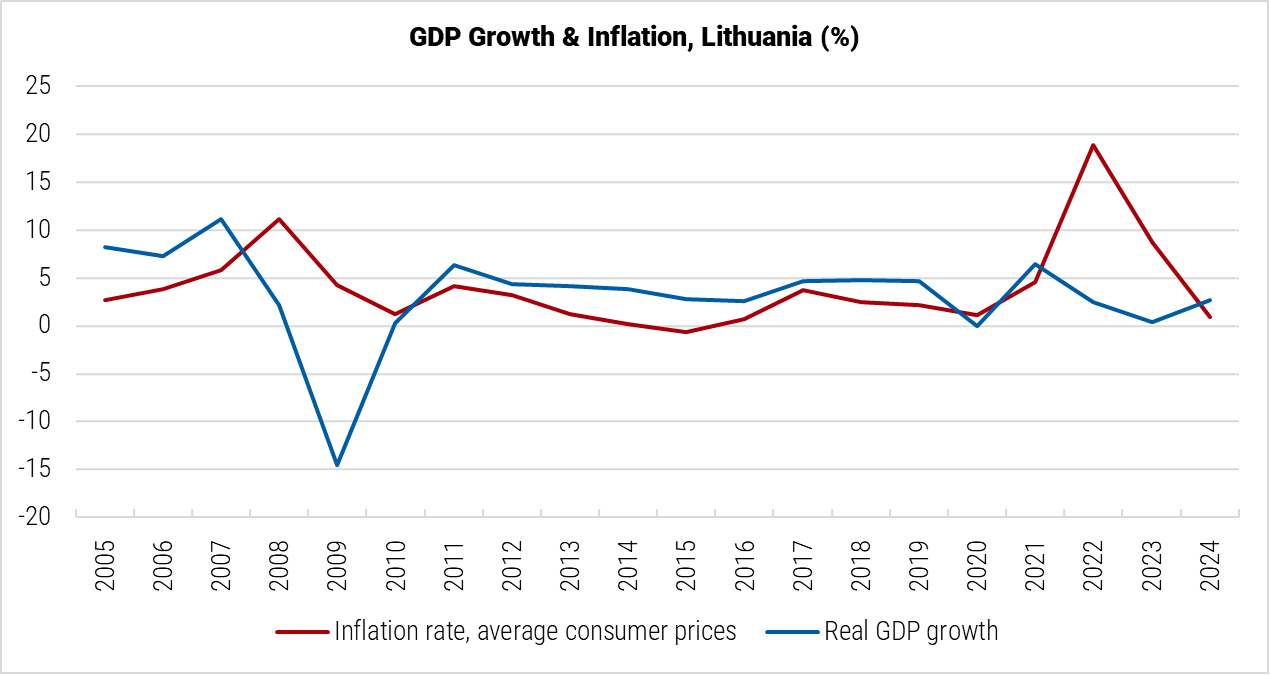
Lithuania's economy has proven resilient to multiple shocks in recent years and grew strongly in 2024. Real GDP growth accelerated from 0.4% in 2023 to 2.7% in 2024, with private consumption supported by real income gains offsetting the impact of weaker investment and net exports. The economy is expected to continue growing over the forecast horizon, supported by robust private consumption and a modest recovery in investment and exports. The European Commission projects growth to accelerate to 2.8% in 2025 and 3.1% in 2026.
However, new challenges are emerging for the economy, while long-standing issues still require attention. The 2025 Article IV staff report from the International Monetary Fund (IMF) notes that Lithuania has achieved rapid income convergence towards high-income EU members over the past decades, but the transition is incomplete. The country's per capita income remains 15% below the euro area average, productivity growth remains weak, and income inequality is high, with persistent old age poverty. Defense spending in Lithuania is high (and set to rise further amid persistent security concerns in the region), adding to other existing long-term spending pressures.
After dropping sharply from the annual level of 18.9% in 2022 to 8.7% in 2023 and just 0.9% in 2024, consumer price index (CPI) inflation in the country re-accelerated in recent months, most recently reported by the VDA at 5.0% in August 2025. The European Commission analysis ties this uptick to a jump in energy and food prices in the early months of the year, increased excise duties on petrol, alcohol, and cigarettes, and continued services inflation. The indicator is projected to increase to the annual level of 2.6% in 2025 before easing to 1.2% in 2026, as oil prices counteract increasing gas and electricity prices and services price inflation slows gradually.
Data Source: IMF.
Lithuania's labor market tightened as migration flows (particularly from Ukraine and Belarus), which supported strong employment growth in 2022-2023, eased. As migration began normalizing in 2024, labor supply eased while economic activity accelerated, narrowing the output gap and leading to labor shortages in some sectors. In 2025, the unemployment rate has picked up somewhat, most recently reported by the VDA at 6.6% in August 2025, but is projected to decrease at an annual level from 7.1% in 2024 to 6.8% in 2025 and 6.6% in 2026.
Wage growth in the country remained above 10% in 2024, boosted by increased public wages, but markedly eased in early 2025. "The persistence of labor and skills mismatches is expected to support continued wage growth at around 7.5% in 2025 and gradually decelerate close to 7% in 2026," explained the European Commission analysis. "A slower pace is expected compared to previous years, given lower inflation rates and recently high wage gains."
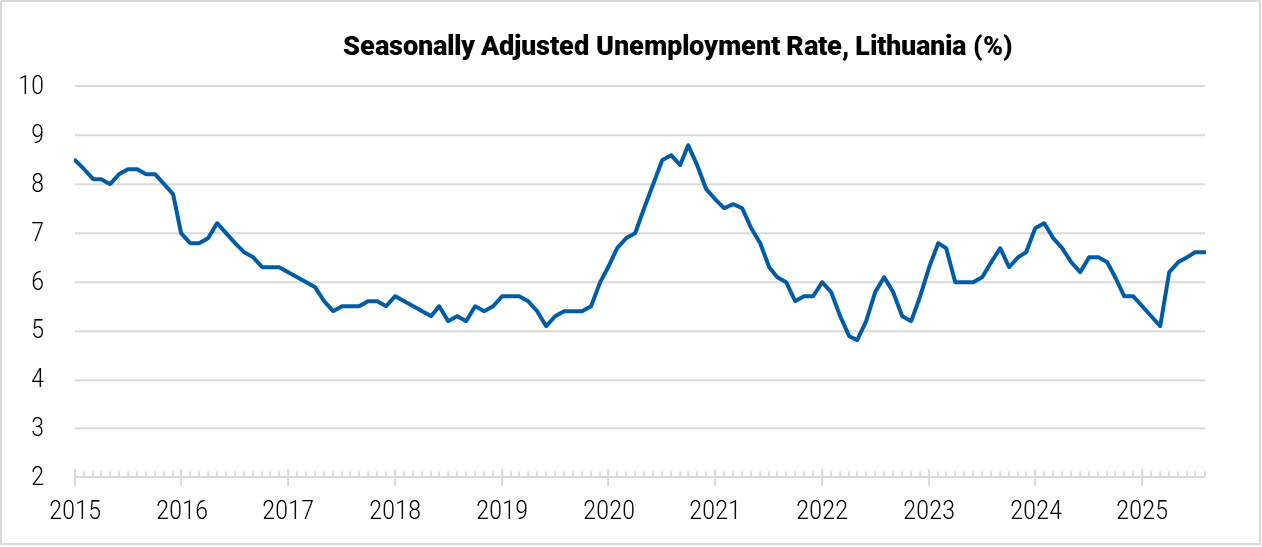
Data Source: VDA.
Overall, despite the resilience demonstrated in recent years, Lithuania's economy remains vulnerable to high uncertainty surrounding trade policies and external shocks, such as potential escalation of geopolitical tensions through its borders with the Russian enclave of Kaliningrad and Belarus. A severe downturn in its main trade partners could also negatively affect its external performance and domestic activity.
In May 2025, Fitch Ratings affirmed the country's 'A' standing with a stable outlook, noting its credible policy framework anchored by EU membership, moderate government debt, a record of fiscal prudence, and governance level above the median of 'A' category peers, which are balanced against the economy's small size and openness.
In this environment, the new coalition government that came into office in Lithuania at the end of 2024 has been focusing its efforts on a socially fair tax system and long-term fiscal sustainability, supporting economic growth, and strengthening security. The country's Parliament recently approved a tax policy package and sweeping changes to the privately administered second-pillar pension system.
Sources:
- State Data Agency of Lithuania (VDA)
- Construction Related Statistics: https://osp.stat.gov.lt/
- Price Indices, Changes and Prices: https://osp.stat.gov.lt/
- Employment and Unemployment: https://osp.stat.gov.lt/
- Bank of Lithuania (LB)
- The Bank of Lithuania's Repeat Sales House Price Index (RSHPI): https://www.lb.lt/
- Financial Stability Review 2025: https://www.lb.lt/
- State Enterprise Center of Registers
- End of Summer in the Real Estate Transaction Market is Upbeat (LT): https://www.registrucentras.lt/
- International Monetary Fund (IMF)
- Country Overview: Republic of Lithuania: https://www.imf.org/
- 2025 Article IV Staff Report: https://www.imf.org/
- Republic of Lithuania: Selected Issues: https://www.imf.org/
- European Commission
- Economic Forecast for Lithuania: https://economy-finance.ec.europa.eu/
- Distribution of Population by Tenure Status, Type of Household, and Income Group: https://ec.europa.eu/
- Ober-Haus
- Ober-Haus Lithuanian Apartment Price Index (OHBI), August 2025 (LT): https://www.ober-haus.lt/
- Real Estate Prices in Lithuania, August 2025 (LT): https://www.ober-haus.lt/
- Residential Real Estate Market Commentary Lithuania, Q2 2025 (LT): https://www.ober-haus.lt/
- Lithuania/Vilnius Real Estate Market Report 2025: https://www.ober-haus.lt/
- Inreal Group
- New Housing Market: Balanced and Active, August 2025 (LT): https://www.inreal.lt/
- Lithuanian Economic and Real Estate Market Report 2025 H1: https://www.inreal.lt/
- Fitch Ratings
- Fitch Affirms Lithuania at 'A'; Outlook Stable: https://www.fitchratings.com/
- Morningstar
- Will the ECB Cut Interest Rates Again in 2025? https://global.morningstar.com/
- Lithuanian Real Estate Development Association (LNTPA)
- Expectations of Major Lithuanian Real Estate Developers Are Optimistic (LT): https://lntpa.lt/
- Lithuanian Real Estate Developers Expectation Index 2025 (LT): https://lntpa.lt/
- Reuters
- Lithuania's New Government Takes Office Amid Controversy Over Antisemitism: https://www.reuters.com/
- Lithuanian National Radio and Television (LRT)
- Lithuanian MPs Approve Pension Reform Allowing Opt-Outs and Withdrawals From Private Funds: https://www.lrt.lt/
- 15min
- Experts: Housing Affordability is at its Highest, but Won't Last Long (LT): https://www.15min.lt/