Prolonged house price boom
Strong house price growth took place in Belgium in 2006, although, it was lower than in 2005.
The average selling price of detached houses rose from €131,336 in 2005 to €148,723 in 2006, a 13% increase, significantly lower than 2005’s 30% price rise. Average apartment prices rose 11% from €140,877 in 2005 to €156,341 in 2006, slightly lower than 2005’s 12% price rise.
From 1993 to 2006, the average price of Belgian houses grew by 165% in nominal terms, while apartment prices grew by 129%. Belgium has experienced 20 years of robust price rises, due to changes in economic fundamentals, such as population growth, credit expansion, and economic growth, as well as the long period of low interest rates.
Low mortgage rates
The strong growth of Belgian house prices has partly been caused by low interest rates. The key lending rate of the European System of Central Banks (ESCB) declined from 5.75 in early-2001 to 1% in July 2003. Although this rate has risen several times to 2.75% in April 2007, it is still conducive to borrowing.
The interest rate for new variable rate mortgages was at 4.7% in Mar 2007; while the rate for 10 year fixed rate mortgages fixed was 4.4%.
Increased competition among banks to attract customers has resulted in an increase in the volume of mortgage loans. Outstanding mortgage value for home purchases increased from below 4 billion euros in 1996 to 12.5 billion euros in 2006. Mortgage applications for home purchases likewise increased to 102,600 in 2006 from just 64,400 in 1996.
Supply-side factors have also played an important role. Home builders and other market experts have argued that the shortages of new residential land, compounded by rising costs, have been prime causes of the fall in housing starts, especially in Flanders.
The land shortage has encouraged homeowners to buy in the second-hand market, or to improve existing homes.
High-income Brussels rental market
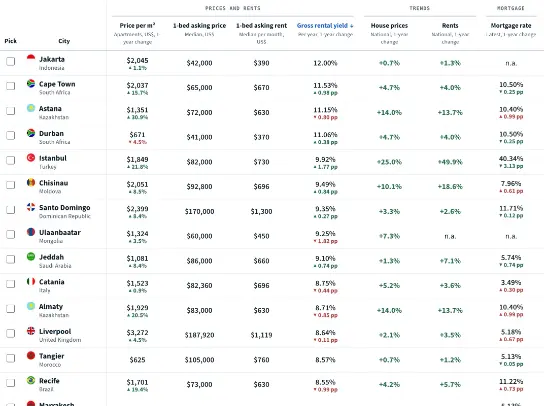
The majority of English speakers settle in the southern and eastern parts of Brussels, near international schools and companies. Rental yields within this area range from 6% to 11%, with smaller units earning the highest returns.
Property in suburbs to the north and west of the city is cheaper, but not popular among English-speaking foreigners. Rental yields are around 6% to 8%.
Rental apartments in central Brussels can cost around €1,800 to €2,500 per sq. m., depending on the size of the property. Apartments in the suburbs offer a cheaper alternative, with typical prices being €1,650 to €1,900 per sq. m. Detached houses in the suburbs costs around €1,500 to €2,100 per sq. m.
The rental market is significant, at about 30% of the housing stock (23% in the private sector, 7% in social housing); but this is falling, and is down from 38% in 1980 and 33% in 1990. However, in Brussels, 60% of households are renters. A significant high-income rental sector is found in the Brussels region.