Qatar’s Residential Property Market Analysis 2025
Qatar's residential property sector is showing renewed momentum, with house prices returning to growth in Q1 2026 after a fragile late-2024 period, while transaction volumes have surged on the back of falling interest rates and continued foreign ownership reforms.
This extended overview from Global Property Guide provides a comprehensive review of Qatar's housing market, highlighting its key characteristics while offering deeper insight into recent developments, underlying market dynamics, and longer-term structural trends.
Table of Contents
- Housing Market Snapshot
- Historic Perspective
- Demand Highlights
- Supply Highlights
- Rental Market
- Mortgage Market
- Socio-Economic Context
Housing Market Snapshot
In March 2026, Qatar's Real Estate Price Index rose by 8.0% year-on-year (3.7% inflation-adjusted), with the index reading at 234.31 points in March, up from 221.02 in December, according to figures published by the Qatar Central Bank (QCB). This is a marked turnaround from the late-2024 weakness, when prices had been falling on a 12-month basis, and reflects what brokerages describe as a market entering a more mature, stable phase after the post-World Cup correction.
Qatar's house price annual change:
The ValuStrat Price Index (VPI) for Qatar's residential sector, an independent benchmark using Q1 2021 as its base of 100 points, rose 1.6% year-on-year in Q1 2026, holding stable on a quarterly basis at 98 points. According to the ValuStrat Q1 2026 report, apartment capital values averaged QAR 10,475 per square metre, unchanged both quarterly and annually. By location:
- The Pearl: QAR 10,615 per square metre, broadly stable year-on-year.
- Lusail: QAR 10,330 per square metre, up 1.5% year-on-year, the only major freehold zone to record annual growth.
- West Bay Lagoon: QAR 9,550 per square metre.
Villa values showed stronger momentum, increasing 1.9% annually to an average of QAR 5,690 per square metre while remaining broadly stable quarter-on-quarter.
"Qatar's real estate market remained broadly stable in Q1 2025, supported by steady residential capital values, a rebound in mortgage lending, and continued leasing across commercial segments," noted Anum Hassan, Head of Research at ValuStrat Qatar. ValuStrat's February 2026 update described the broader market as "entering a structurally more mature phase," supported by residency reform and tighter alignment between supply and absorbable demand.
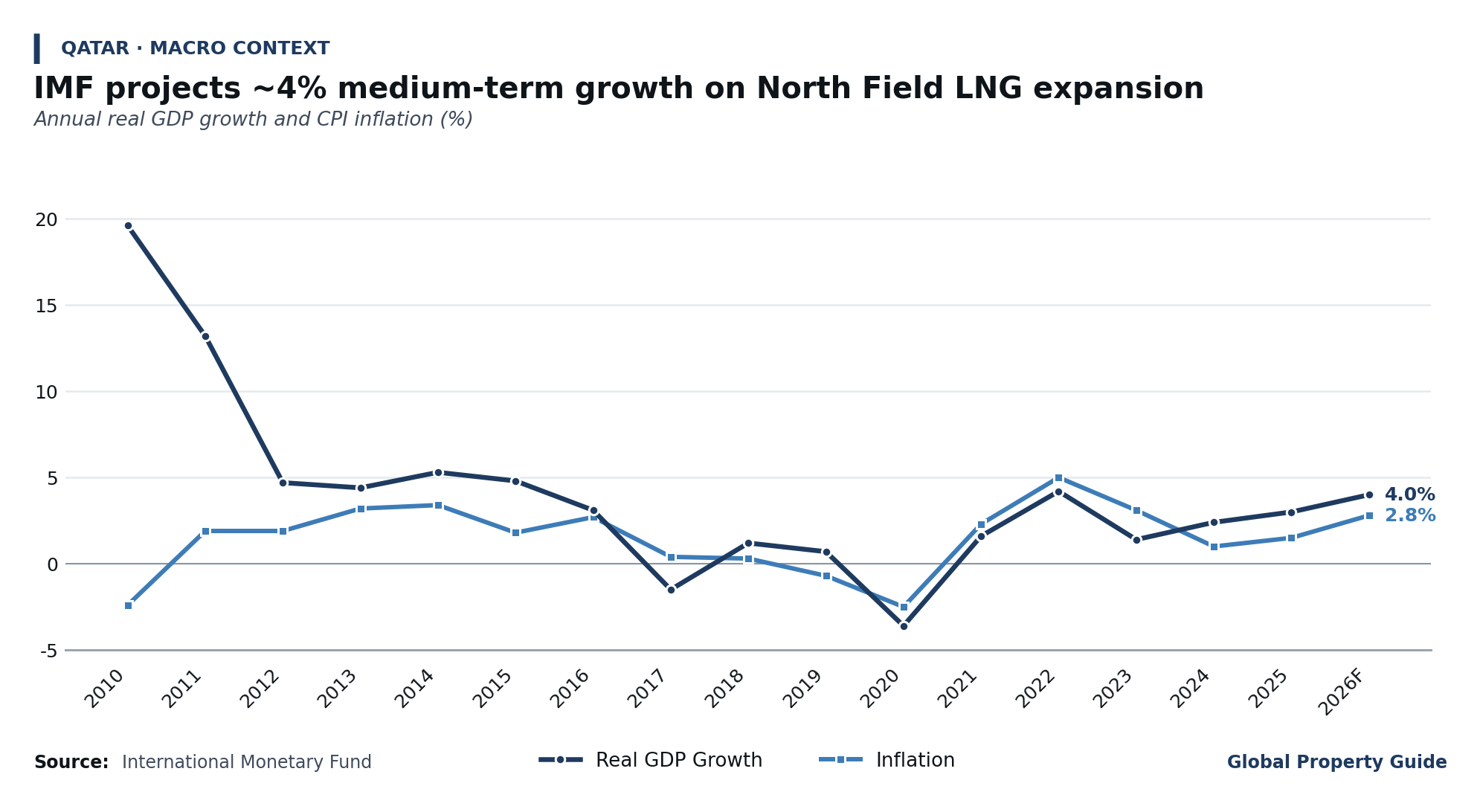
The recovery is being driven by a combination of monetary easing, foreign ownership reforms, and a steady macroeconomic backdrop. The QCB delivered three consecutive 25-basis-point rate cuts between September and December 2025, tracking the US Federal Reserve under Qatar's long-standing currency peg, and has held rates steady through Q1 and Q2 2026. The IMF's February 2026 Article IV mission noted that economic growth had recovered to 2.4% in 2024 and strengthened to around 3% through the third quarter of 2025, with medium-term growth expected to average around 4% on the back of the North Field LNG expansion.
Historic Perspective
From World Cup boom to gradual recovery
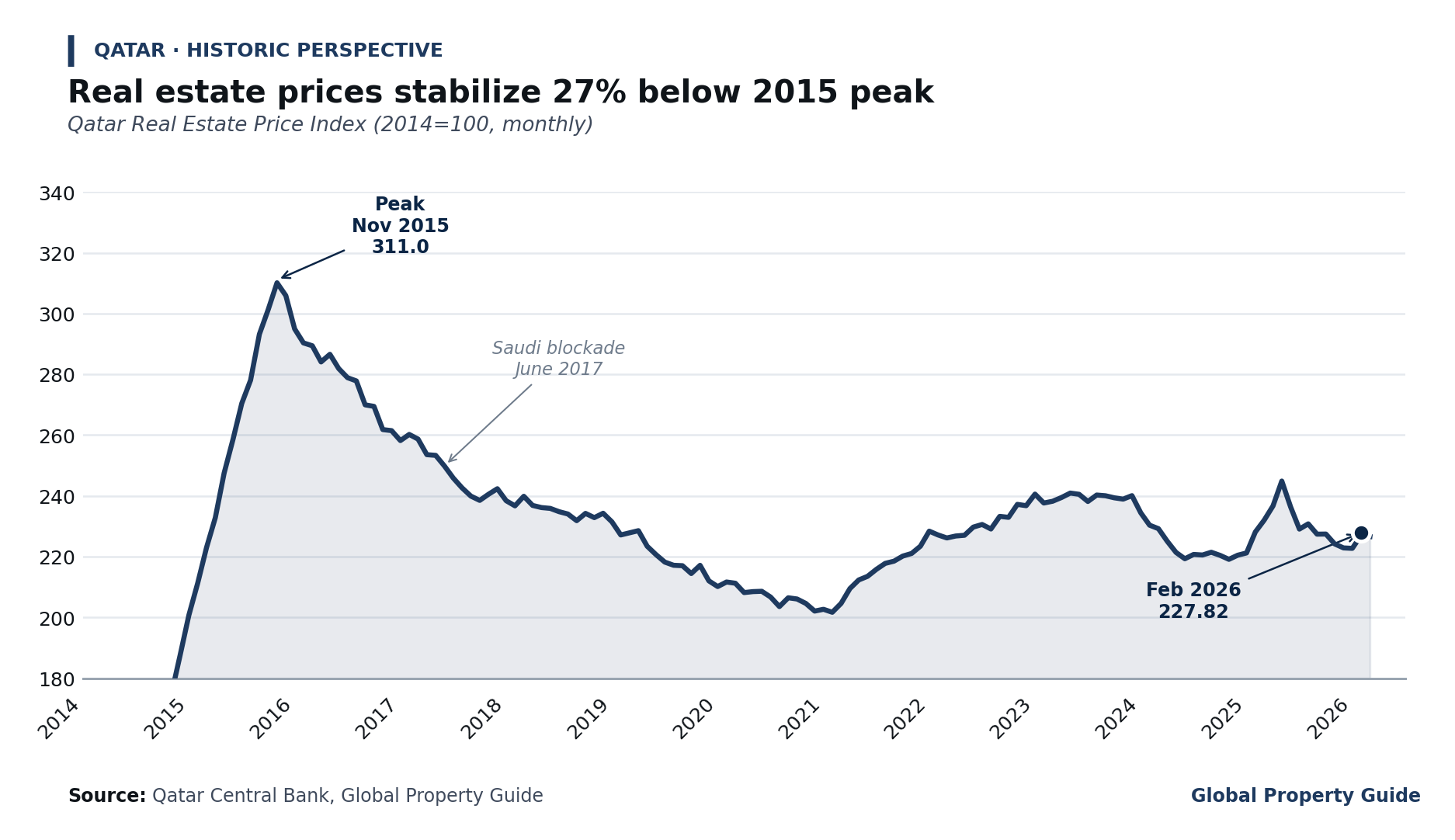
In preparation for the 2022 FIFA World Cup, Qatari real estate boomed for three years from 2012 to 2015, fuelled by rapid population growth and a construction boom. According to the QCB Real Estate Price Index, prices surged 20.74% in 2013, jumped 34.67% in 2014, and rose another 14.39% in 2015.
The market then entered a prolonged correction. From 2016 to 2020, real estate prices fell cumulatively by nearly 26%, hit first by Saudi Arabia's economic blockade beginning in June 2017 and then compounded by the Covid-19 pandemic. The Saudis ended the blockade in January 2021, and the Qatari government had earlier loosened its foreign property ownership rules in October 2020, both of which set the stage for recovery.
From 2021 to 2023, the price index rose 8.3% cumulatively, although it still declining 5.5% in real terms because of exceptionally high regional inflation. The market weakened again in 2024, with prices falling 2.39% (2.62% inflation-adjusted), before returning to growth from the second half of 2025 onwards.
Demand Highlights
Transaction volumes surge 28.5% in Q1 2026
Qatar's residential demand metrics turned sharply higher in Q1 2026. Total real estate sales transactions reached QAR 9.2 billion (US$2.53 billion) in the first quarter, up 28.5% from QAR 7.2 billion a year earlier, according to data from the Ministry of Justice's Real Estate Registration Department. This was the strongest quarterly result since the immediate post-World Cup period and reflected what analysts describe as sustained investor confidence as macroeconomic conditions stabilised.
In March 2026 alone, total property transaction value reached QAR 768.2 million across 226 registered deals, even with the month including the Eid holidays. The breakdown by municipality:
- Doha led on value at QAR 270.6 million, with average prices ranging from QAR 697 to QAR 861 per square foot.
- Al Rayyan followed at QAR 146.7 million, with average prices of QAR 329 to QAR 451 per square foot.
- Al Dhaayen came in third at QAR 116.1 million.
- Al Wakrah matched Doha's volume share at 25% of all units sold, although at much lower average prices of QAR 248 to QAR 492 per square foot.
In the residential segment alone, 52 units were sold in March 2026 for a combined value of QAR 100.2 million. Earlier ValuStrat data showed Q1 2025 residential sales volume rising 13.2% quarter-on-quarter and 67.1% year-on-year, a base on which Q1 2026 has continued to build.
Owner-occupiers drive sales as residency benefits attract buyers
The sales market has been driven largely by owner-occupiers rather than investors. Many apartment buyers are residents seeking to obtain residency permits and reduce their rental expenses, a dynamic supported by Lusail's residential districts, where developers continue to offer flexible structured payment plans for off-plan properties.
"While the sales market has seen significant growth, the majority of purchasers are owner occupiers, many of whom seek the benefits of residency within Qatar that is granted to real estate owners," noted an earlier Cushman & Wakefield report.
This pattern aligns with the foreign property ownership framework that has been progressively liberalised since 2018. Law No. 16 of 2018 expanded freehold zones from 3 to 10. Then, in October 2020, the government introduced a two-tier residency programme tied to property investment:
- Foreign investors purchasing property valued above US$1 million qualify for permanent residency, with access to government healthcare and education benefits previously limited to citizens and long-time permanent residents.
- Buyers of property worth at least US$200,000 qualify for renewable residency permits, extending to family members without the need for employer sponsorship.
Permanent residents are treated similarly to Qatari nationals in many respects, including access to healthcare and education, priority (after citizens) for civilian public-sector jobs, and the ability to operate commercial activities without a local partner. Citizenship remains off-limits to foreigners.
Freehold zones expanded to 10 areas
Foreigners can now obtain freehold ownership in:
- The Pearl-Qatar
- West Bay Lagoon
- Al Khor (Barwa development)
- Rawdat Al Jahaniyah
- Al Qassar (Area #60)
- Al Dafna (Area #61)
- Onaiza (Area #63)
- Al Wasail, Al Khraij, and Jabal Theyleeb (all Area #69, including Lusail)
Most of Lusail City is designated for freehold ownership, though certain parcels remain available only on a 99-year leasehold (usufruct) basis. An additional 16 areas, including Musheireb, Al Sadd, Fereej Bin Mahmoud, and Najma, are available to foreigners on the same 99-year renewable leasehold structure.
"The recent reform to change freehold ownership law will contribute to a positive transformation of the real estate sector, which will now embrace its cultural diversity through new initiatives designed to encourage investments and positively change business perspectives to ultimately result in overall economic growth," said Pawel Banach of ValuStrat.
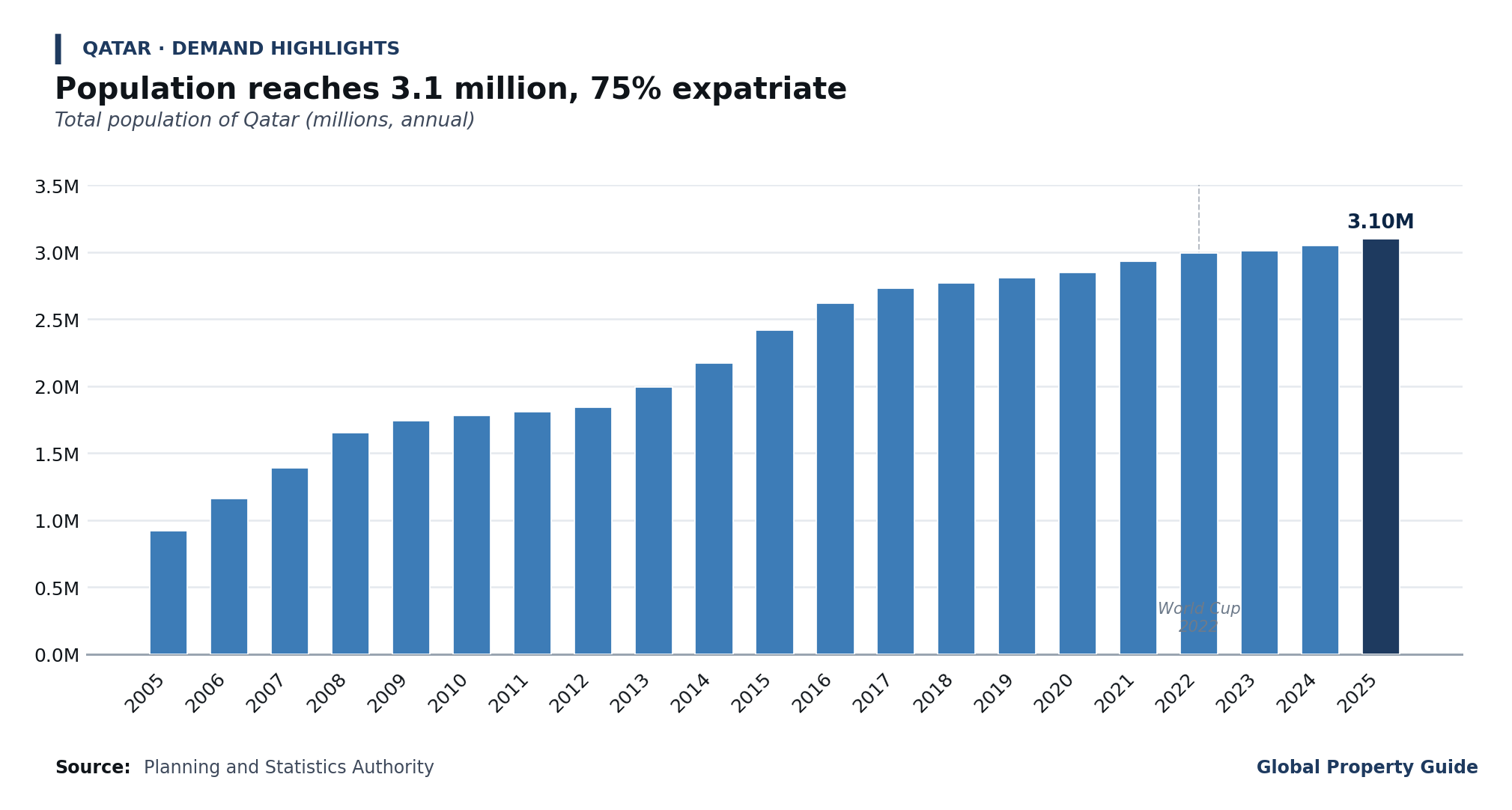
About three-quarters of Qatar's population of approximately 3.1 million are foreigners, according to the Qatar Statistics Authority. About 82% of the population lives in Doha and Al Rayyan, making these two municipalities the natural focal points for residential demand.
Supply Highlights
Supply growth slows as market reaches maturity
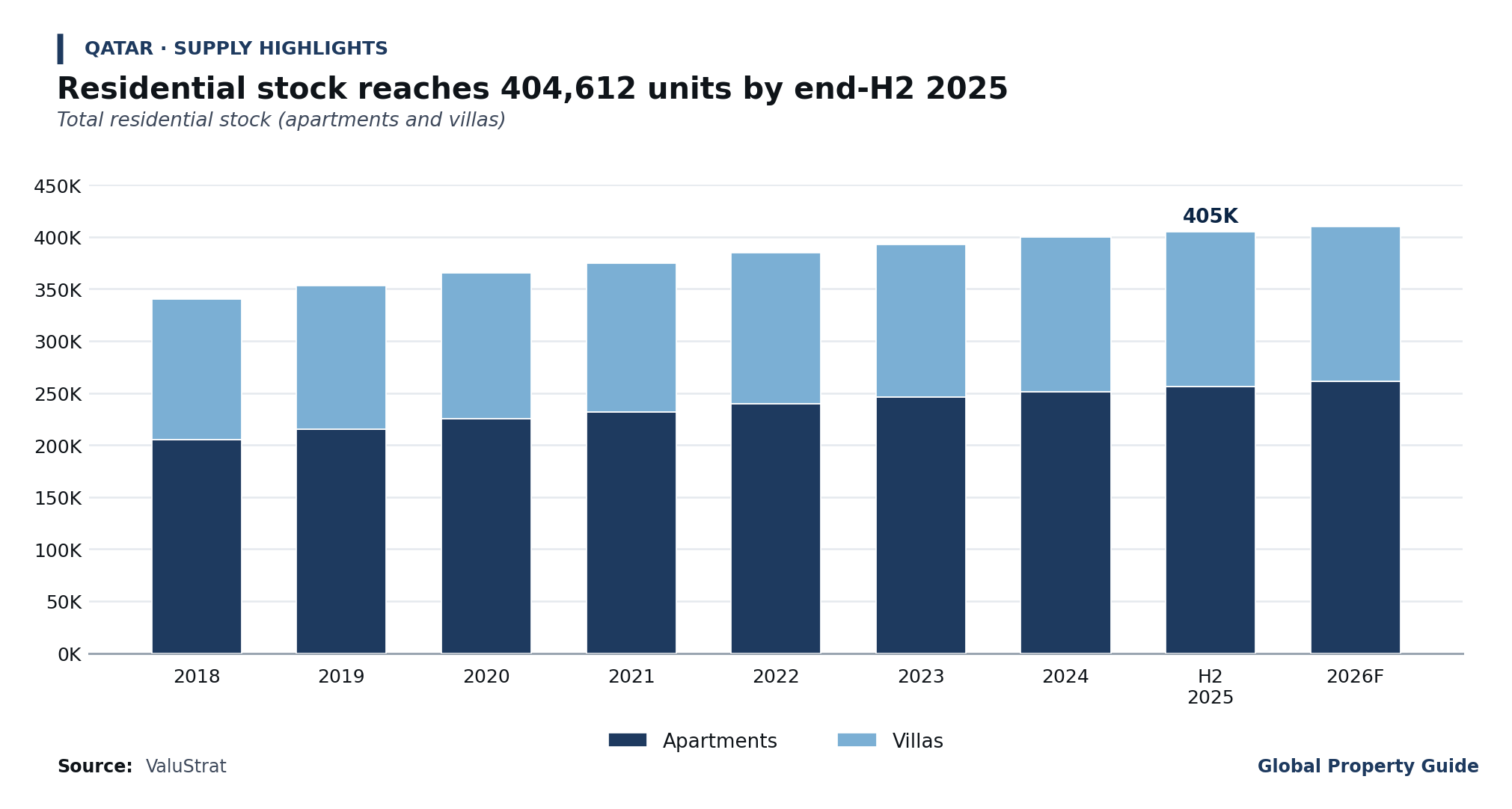
Qatar's residential supply has continued to grow, though at a slower pace as the market absorbs the post-World Cup construction boom. Total residential stock reached 404,612 units by the end of H2 2025, comprising 255,959 apartments and 148,653 villas, according to ValuStrat. This was up from approximately 399,542 units at the end of 2024, representing growth of roughly 1.3%, broadly in line with the prior year's pace.
The country continues to carry an estimated excess supply of around 80,000 units following the 2022 World Cup construction surge, although this overhang is gradually being absorbed as population growth and reform-driven foreign demand pick up.
"While the pace of construction has slowed over the past two years, there is still a significant pipeline of new residential apartment supply in areas such as Lusail, Legtaifiya, Al Waab, and Mesaimeer," said Cushman & Wakefield in its market commentary. "The availability of apartments throughout Doha, combined with the upcoming supply, means it is unlikely that there will be any significant rental growth in the short term, outside of a small number of premium developments."
In the final quarter of 2024, approximately 3,000 apartments and 100 villas were completed, with key additions including 930 units across Giardino, Floresta, and La Plage South in The Pearl, and 742 units in Lusail Marina. Qatari Diar launched premium waterfront townhouses at The Seef, while Barwa Real Estate Group introduced the first phase of its Barwa Hills development in Lusail, featuring 57 one-bedroom units across a 2,649 square metre land area.
ValuStrat projects approximately 6,000 additional units entering the market in 2025, with further completions expected through 2026 to remain at similar levels as developers calibrate launches to absorbable demand.
Rental Market
Rents stabilising after multi-year correction
Qatar's rental market has begun to stabilise after a prolonged correction. According to ValuStrat, residential rents posted modest declines through 2025, but the pace of softening has been narrowing, with apartment median asking rents holding steady on a quarter-on-quarter basis through late 2025.
Qatar's rent price index:
Cushman & Wakefield noted that residential rents have remained relatively stable in recent months, with a typical summer slowdown followed by a spike in activity in late August and September, coinciding with the beginning of the school year. By property type:
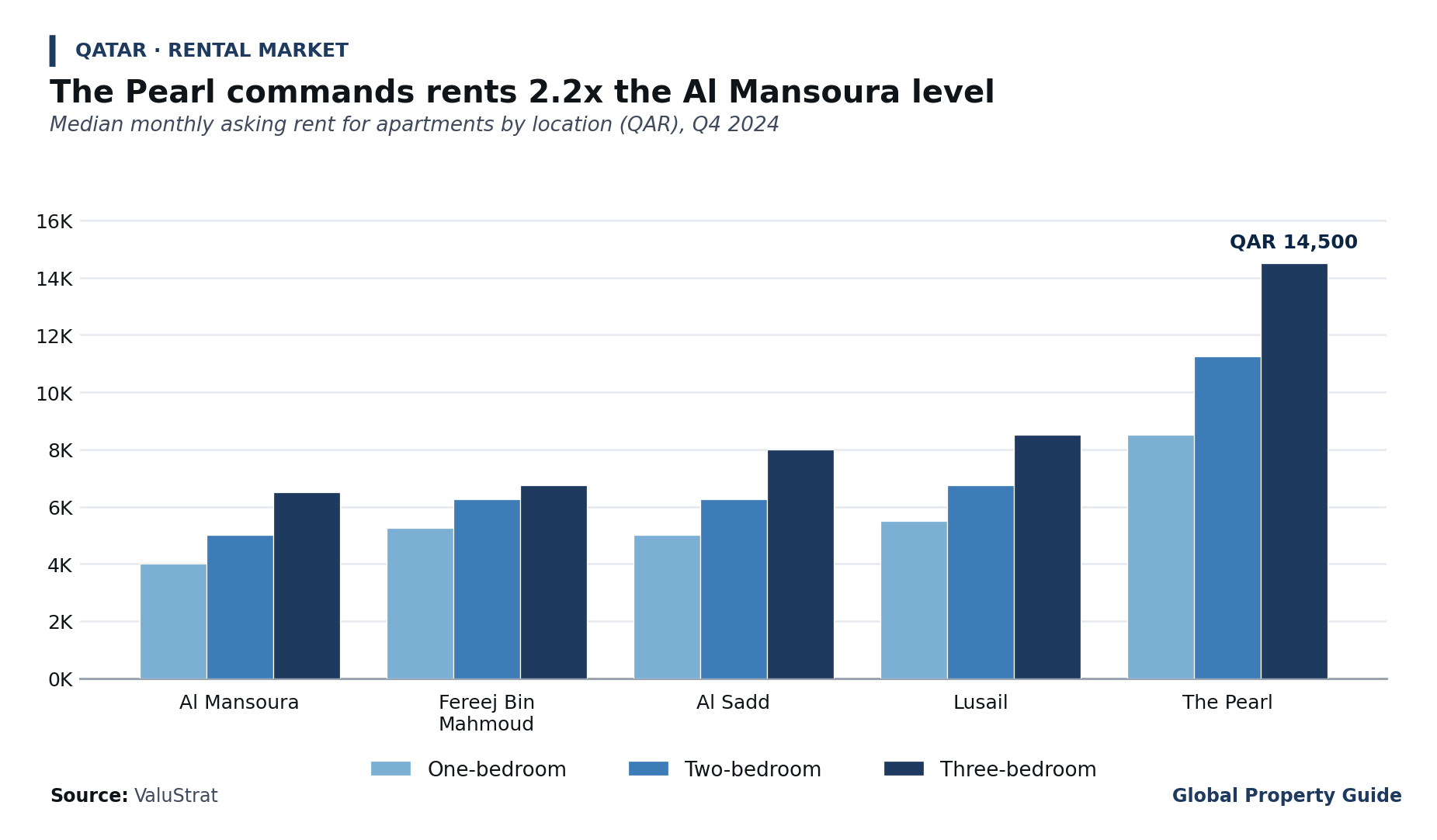
- Apartments: Median asking rent of QAR 6,000 (US$1,648) per month. Median one-bedroom apartments rent for QAR 5,250 (US$1,442), two-bedrooms for QAR 6,250 (US$1,717), and three-bedrooms for QAR 8,000 (US$2,197).
- Villas: Median asking rents remained steady both quarterly and annually. Three-bedroom villas rent for a median of QAR 11,500 (US$3,159) per month, four-bedrooms for QAR 12,250 (US$3,365), and five-bedrooms for QAR 13,750 (US$3,777).
| APARTMENT AVERAGE ASKING RENTS (QAR), Q4 2024 | |||
| Location | One-bedroom | Two-bedroom | Three-bedroom |
| Al Mansoura | 4,000 | 5,000 | 6,500 |
| Lusail | 5,500 | 6,750 | 8,500 |
| Al Sadd | 5,000 | 6,250 | 8,000 |
| Fereej Bin Mahmoud | 5,250 | 6,250 | 6,750 |
| The Pearl | 8,500 | 11,250 | 14,500 |
| Data Source: ValuStrat | |||
| VILLA AVERAGE ASKING RENTS (QAR), Q4 2024 | |||
| Location | Three-bedroom | Four-bedroom | Five-bedroom |
| Al Wakrah | 8,000 | 8,500 | 10,500 |
| Al Muraikh | 11,500 | 12,000 | 13,750 |
| Abu Hamour | 10,250 | 12,250 | 12,500 |
| Al Waab | 12,750 | 13,000 | 14,000 |
| West Bay Lagoon | 19,000 | 20,000 | 25,000 |
| Data Source: ValuStrat | |||
About 59% of all occupied housing units in Qatar are rented. The average expatriate household spends more than a third of its annual income on rent, according to Colliers International.
Apartment rental activity stays high
Tenant mobility remains a defining feature of the market. ValuStrat reports that apartment rental contracts in Q4 2024 surpassed 15,000, up 12% from the previous quarter. New agreements accounted for 95% of all contracts, signalling significant churn rather than steady occupancy. Top-rented apartment areas include Al Wukair, Al Mashaf, and Al Thumama, which together saw 4,529 leases in Q4 2024, up 27.5% quarter-on-quarter.
For villas, Q4 2024 saw approximately 5,500 lease contracts signed, marking a 3% quarter-on-quarter increase and 8.5% year-on-year growth, with new tenancies comprising 88% of total agreements. Top-rented villa areas were Soudan, Aziziya, Ghanim, and Murrah, which together saw 639 contracts.
Gross rental yields moderate but stable
Gross rental yields for residential properties in Qatar averaged 5.17% in Q1 2026, according to research conducted by Global Property Guide. By major area:
- In Doha (including The Pearl), the city's average rental yield was 4.68%.
- At Lusail, the city average was 5.65%.
ValuStrat's broader measure, which includes a wider sample, places residential gross yields at 5.90% in Q4 2024, unchanged year-on-year, with apartments at 8.30% and villas at 4.70%.
Mortgage Market
QCB cuts rates 75 bps in late 2025, holds steady through Q1 2026
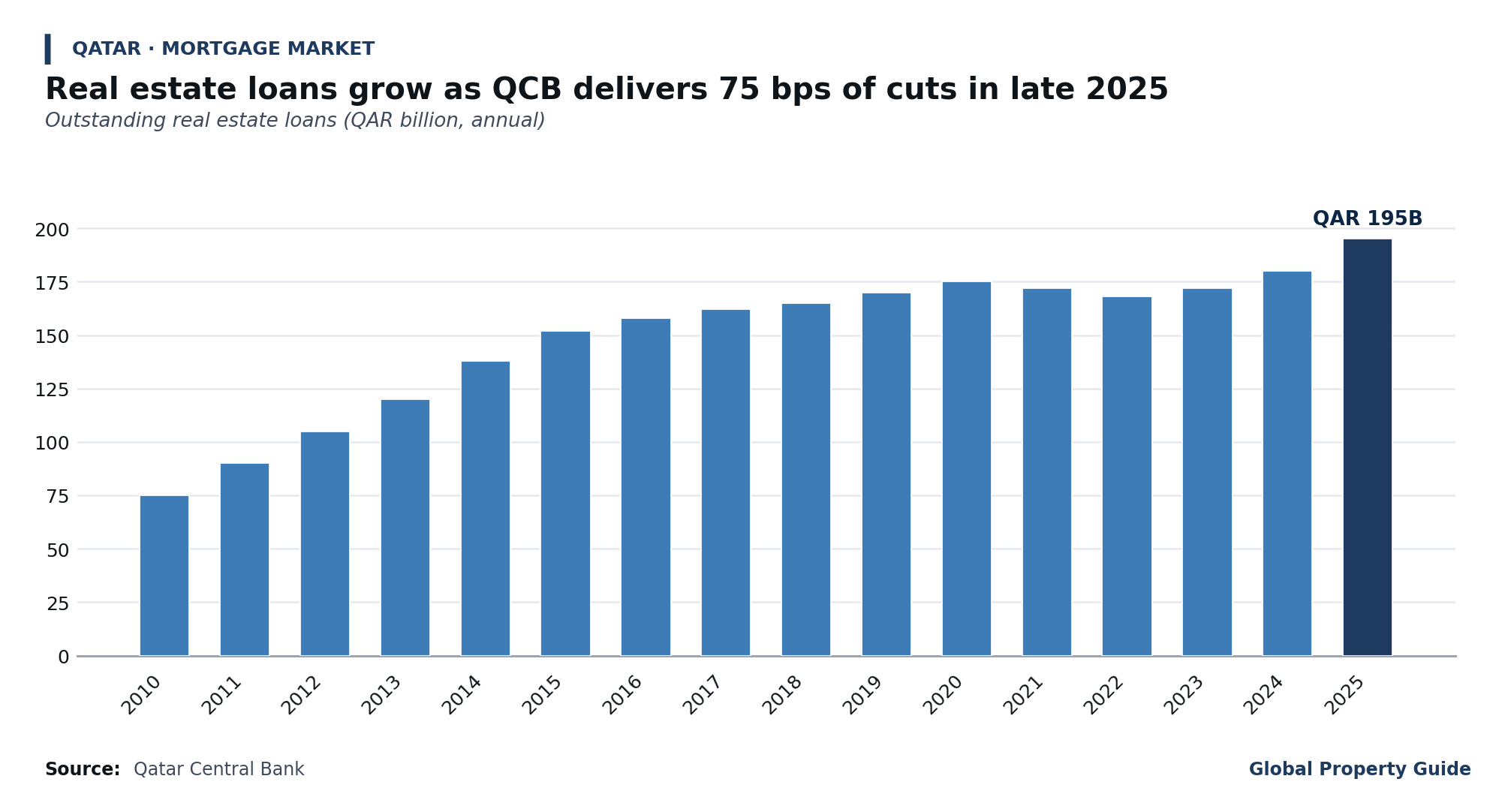
Qatar Central Bank delivered three consecutive 25-basis-point rate cuts between September and December 2025, before holding rates steady at its January and April 2026 meetings. The full timeline:
- September 2025: 25 bp cut, taking the deposit rate to 4.35%, lending rate to 4.85%, and repo rate to 4.60%.
- October 2025: 25 bp cut, taking the deposit rate to 4.10%, lending rate to 4.60%, and repo rate to 4.35%.
- December 2025: 25 bp cut, taking the deposit rate to 3.85%, lending rate to 4.35%, and repo rate to 4.10%.
- Since January 2026: The rates have held.
The QCB moves tracked the US Federal Reserve under Qatar's long-standing currency peg, with the lending rate (QCBLR) serving as the key tool for signalling changes in monetary policy.
Mortgage market expanding on lower rates
The ratio of outstanding real estate loans to GDP rose to approximately 23% in 2024, up from around 22% in 2023, based on Global Property Guide calculations using QCB Financial and Monetary Statistics and IMF nominal GDP data. The ratio remains well below the 29% of GDP peak recorded in 2020.
In Q1 2025, the total amount of real estate loans outstanding, which includes land purchases, property developments, and residential and commercial buildings, rose by 10.7% to approximately QAR 190.23 billion (US$52.25 billion) from a year earlier. By the end of October 2025, commercial bank lending to the real estate sector had grown further to QAR 267.51 billion in the broader QCB classification, with total domestic credit from commercial banks reaching QAR 1.36 trillion.
Expatriate borrowers can access mortgage financing of up to QAR 3 million (US$824,000) with a maximum tenure of 15 years, with loan-to-value ratios typically capped at 70%. Qatar National Bank, the country's leading financial institution, offers home and land financing at rates starting from around 3.5%.
Socio-Economic Context
Growth strengthens through 2025, IMF projects 4% medium-term
Qatar's economy strengthened through 2025 and into 2026, with the IMF's February 2026 Article IV mission confirming that growth recovered to 2.4% in 2024 and strengthened further to around 3% through the third quarter of 2025. Medium-term growth is expected to average around 4%, supported by the significant expansion of LNG production from the North Field and strong non-hydrocarbon growth under the Third National Development Strategy (NDS3).
"Qatar has shown strong resilience amid economic and geopolitical challenges, supported by sound macroeconomic management, the significant expansion of LNG production over the medium term, and strong non-hydrocarbon economic growth amid reform implementation guided by the Third National Development Strategy," noted the IMF in its February 2026 mission statement. The Executive Board formally concluded the 2026 Article IV consultation on 6 May 2026.
Non-hydrocarbon sectors continue to drive diversification. They accounted for approximately 64% of total GDP in 2024, up from 63% in 2023, with non-hydrocarbon growth running at 3.4% in 2024 and projected to exceed 4% through 2025-2026.
Inflation picks up but remains contained
Consumer prices rose modestly through Q1 2026 after a quieter 2025. According to the Planning and Statistics Authority, Qatar's Consumer Price Index rose 2.98% year-on-year in Q1 2026 to 110.65 points, although it edged down 0.50% quarter-on-quarter from Q4 2025. Monthly inflation came in at 2.28% in January 2026 and 2.51% in February 2026, the highest reading since February 2024.
Food prices have been the main upside driver. Food and beverage inflation jumped to 8.7% year-on-year in March 2026, an all-time high in the series, contributing significantly to the broader pickup. The IMF projects medium-term inflation at around 2%, consistent with the currency peg to the US dollar, though near-term readings are expected to remain slightly above 2.5%.
Government finances remain robust
Qatar continues to run twin surpluses on its fiscal and external accounts. The country recorded a current account surplus of 17.4% of GDP in 2024, narrowing from 16.8% in 2023 and 26.8% in 2022. The Q1 2025 current account surplus held strong at 15.6% of GDP, with QCB foreign reserves at approximately US$55 billion (8.1 months of imports) as of August 2025.
On the fiscal side, Qatar posted a budget surplus equivalent to 0.7% of GDP in 2024, narrowing sharply from 5.5% of GDP in 2023. In Q1 2025, the country posted a small budget deficit of QAR 500 million (US$137 million), in contrast with the QAR 2.06 billion surplus recorded in the same period a year earlier. The shortfall reflected a decline in hydrocarbon revenues despite slightly reduced government spending.
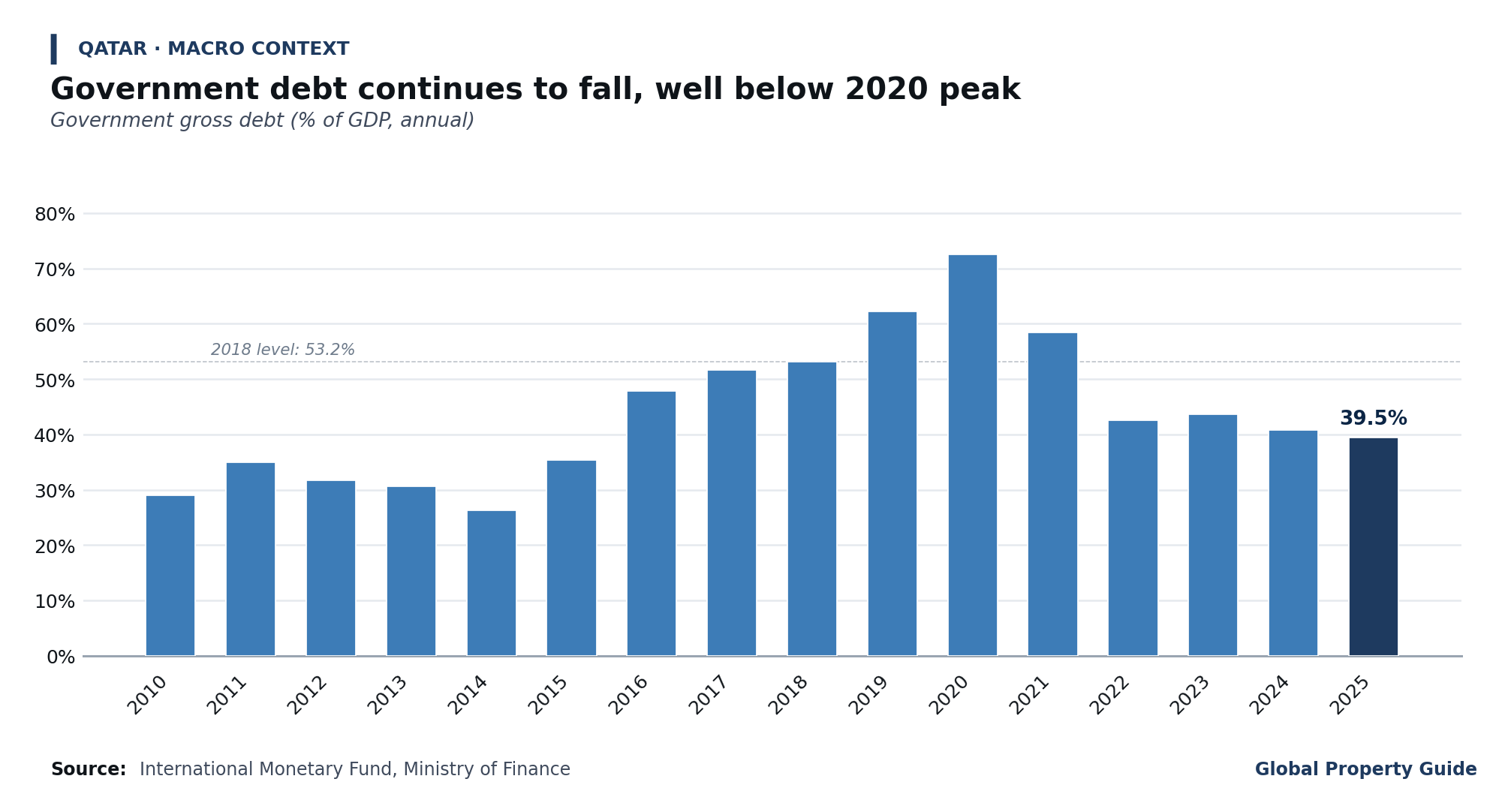
Government gross debt has continued to fall as a share of GDP, narrowing to 40.8% in 2024 from 43.7% in 2023 and 58.4% in 2021.
Sovereign credit ratings remain among the strongest globally
Qatar continues to receive strong sovereign credit ratings from all three major international agencies:
- Fitch Ratings: 'AA' with stable outlook, reaffirmed in March 2025, citing the country's solid fiscal and external positions.
- S&P Global Ratings: 'AA' with stable outlook, maintained in May 2025.
- Moody's: 'Aa2' with stable outlook, upheld as of January 2024.
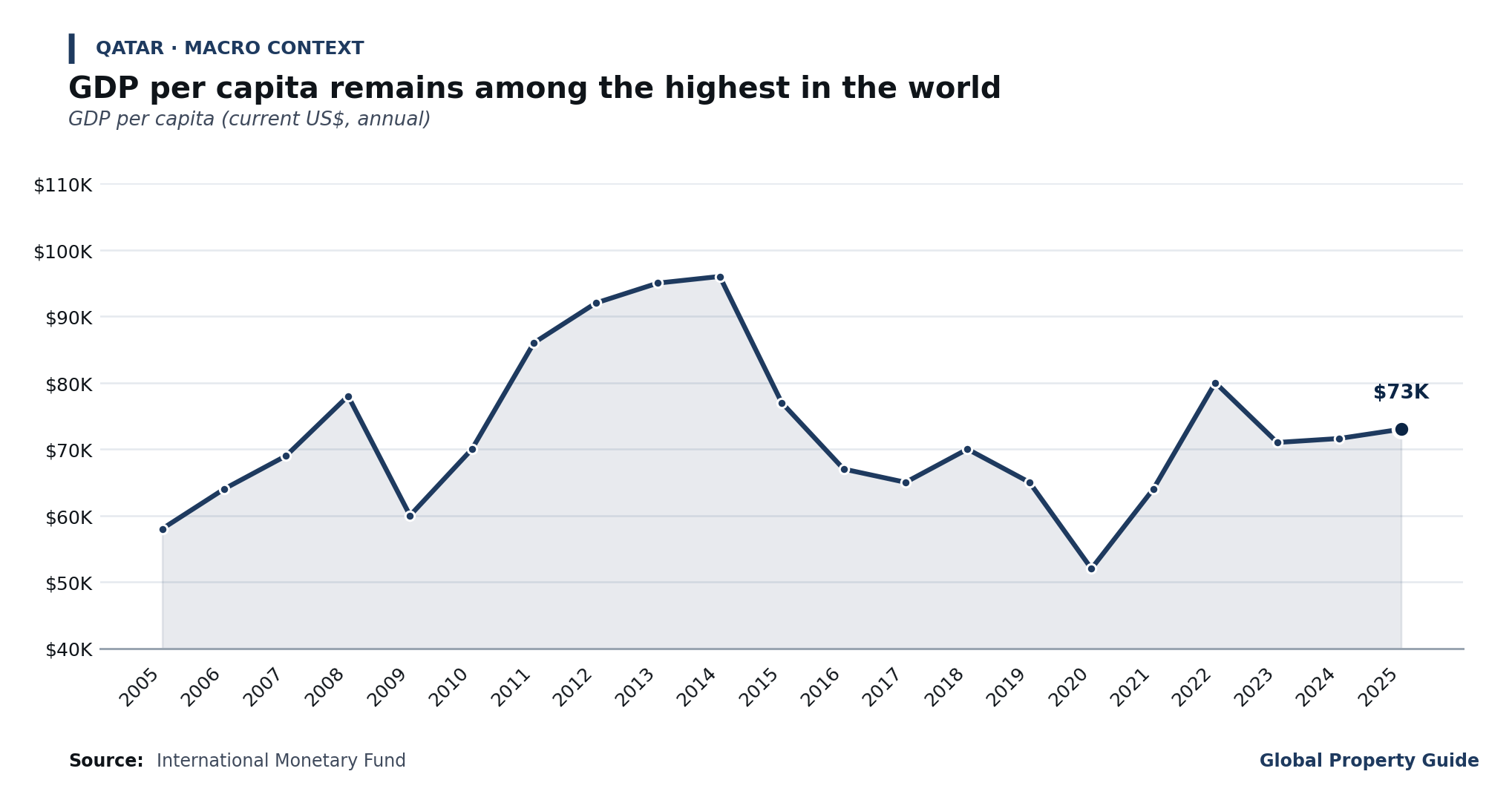
"The 'AA' rating reflects one of the world's highest GDP per capita, our expectation that additional gas production will strengthen public finances and a flexible public finance structure," noted Fitch Ratings.
Geopolitical risks remain elevated
Ongoing tensions between Israel, Iran, and the United States continue to pose risks to Qatar's economy, primarily through regional instability and its impact on energy markets. As a leading exporter of LNG, Qatar may benefit in the short term from elevated energy prices driven by geopolitical uncertainty. However, prolonged conflict could dampen investor confidence, disrupt trade and tourism, and slow progress on key NDS3 reform initiatives.
Sources:
- Qatar Real Estate Price Index (Qatar Central Bank): https://www.qcb.gov.qa/
- Qatar Real Estate 2026: Market Reaches Mature & Stable Phase (ValuStrat): https://valustrat.com/
- Qatar's housing market remains resilient with stable demand (The Peninsula Qatar, May 2026): http://thepeninsulaqatar.com/
- Qatar's real estate market enters 2026 on a stable footing, says ValuStrat (Consultancy-ME): https://www.consultancy-me.com/
- Qatar real estate market records strong activity in March 2026 (The Peninsula Qatar): https://thepeninsulaqatar.com/
- Qatar real estate sales transactions Q1 2026 (Arab News): https://www.arabnews.com/
- Qatar Real Estate: Property market shows stability amid mixed performance (ValuStrat): https://valustrat.com/
- Gross rental yields in Qatar: Doha and Lusail (Global Property Guide): https://www.globalpropertyguide.com/
- QCB reduces interest rates by 0.25% (Gulf Times, December 2025): https://www.gulf-times.com/
- Qatar Central Bank maintains current interest rates (The Peninsula Qatar, January 2026): https://thepeninsulaqatar.com/
- QCB maintains current interest rates (The Peninsula Qatar, April 2026): http://thepeninsulaqatar.com/
- Qatar Interest Rate (Trading Economics): https://tradingeconomics.com/
- Qatar commercial banks' assets jump 6.3% YoY (Gulf Times, December 2025): https://www.gulf-times.com/
- IMF Staff Completes 2026 Article IV Mission to Qatar (IMF): https://www.imf.org/
- Qatar and the IMF (IMF): https://www.imf.org/
- Qatar CPI rises 2.98% year-on-year in Q1 2026 (The Peninsula Qatar): https://thepeninsulaqatar.com/
- Qatar Inflation Rate (NPC): https://www.npc.qa/
- Qatar Housing Index (QCB): https://www.qcb.gov.qa/
- Qatar Banking Sector Loans Expand 6.6% in December (Zawya): https://www.zawya.com/
- Fitch Affirms Qatar at 'AA'; Outlook Stable (Fitch Ratings): https://www.fitchratings.com/
- Qatar records $137m budget deficit in Q1, ending 3-year surplus streak (Arab News): https://www.arabnews.com/