Bulgarian property prices still rising!
Residential property prices in Bulgaria continue to rise, despite forecasts of doom. The average price of dwellings rose 31.55% in the year to Q1 2008 (15.21% in real terms).
Sofia, previously a laggard, is now surging ahead, with a 35.21% residential price increase in 2007.
Bulgaria now has a second wind. Investors have realized that this naturally beautiful country has other attractions than the overcrowded seaside and ski resorts. Power failures, sewage problems, pollution, poor quality building work, noisy building sites, have however spelt trouble for the Black Sea’s seaside resorts.
In the past the Black Sea was the Eastern block’s summer playground. Then it became the third most popular holiday destination after Spain and France for British holidaymakers. Then the Russians came again, and flocked to the beaches. But the water treatment system at Golden Sands can serve 15,000 people, but not the current 40,000. Last year (2007) the beaches became so polluted that, for a time, they had to be closed. The coast will need new sewage systems costing £80 million, but work has still not started.
Nevertheless, Bulgaria was the fourth most popular destination for Britons who were buying overseas property last year, according to the Association of International Property Professionals. 75% of UK mortgage brokers expected to see an increase in the number of UK buyers looking to buy in Bulgaria in the next 3 years, according to a February 2008 survey by the NatWest International Personal Banking League of Buying Abroad. Bulgaria is also the number one destination of choice for Russian buyers - who often buy properties the Brits sell.
Strong economic growth
Bulgaria joined the EU in January 2007. The Bulgarian Lev has long been pegged to the Euro (€1=1.953 Lev), allowing Bulgaria to run low interest rates, one aspect of the property boom, which is domestic as well as foreign-based. Bulgaria’s economy continues to grow strongly, with 6.2% GDP growth in 2007 and in 2006 –and a 6.2% five year annual GDP growth rate 2003-2007. Unemployment fell to 6.8% in Q3 2007. The average monthly salary rose 19.6% on a yearly basis, reaching €217 in Q3 2007.
Sofia is home to the majority of the country's 200,000 millionaires, and they are demanding better quality homes and goods and spending more. The need for larger, more luxurious properties in Sofia, plus in the more exclusive beach and ski locations, is causing an evolution at the top end of the market, with demand from Bulgaria's emerging middle to high classes for properties within commuting distance of the capital. Demand is also increasingly coming from foreigners working for the big multinationals in Sofia.
|
More Global Property Guide pages: |
Sofia is being placed on the international map. It now has a film studio, and is on the rock concert tour route. James Gonzalez, Market Analyst at Obelisk comments: "Luxury properties are still within an affordable range for many overseas buyers, compared with more traditional markets (such as Spain or Portugal). A luxury apartment in Sofia's commuter belt averages around £100,000 - you would be hard pressed to find a good apartment in the Costa del Sol for that price.”
Moderate yields.
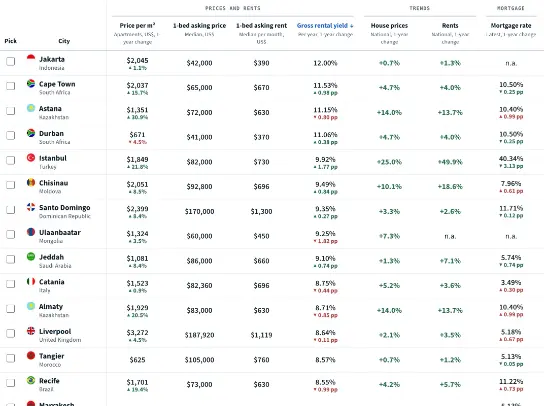
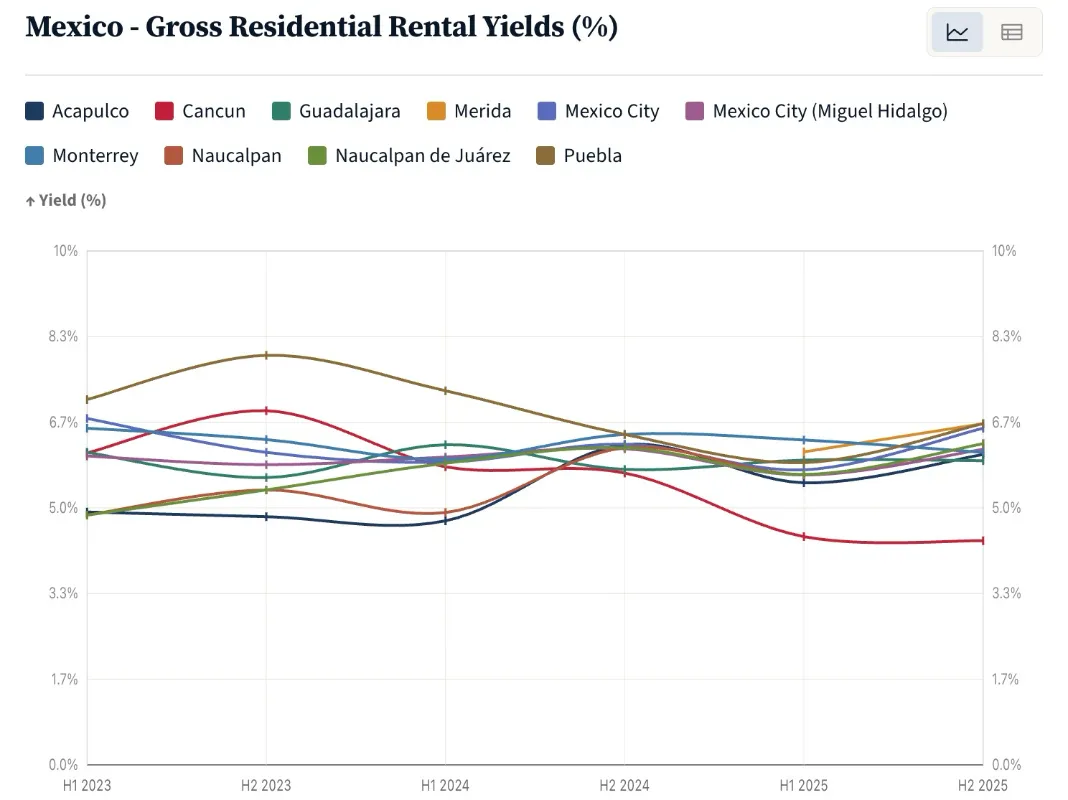
In Sofia, yields are not excellent, but they are quite good, especially given that this is a high-growth economy. Gross yields range from 5.9% to 6.8%, according to Global Property Guide research – i.e., on the higher end of moderate.
In Sofia as elsewhere, the price rises over the past few years have been met by a sharp rise in residential construction. The supply in the rental market has gradually increased, particularly high-end properties in middle-class areas of Sofia. Most of the new supply of high-class apartments in the rental market is located in Doctor’s Garden, Lozenetz, Iztok, Ivan Vazov and Hladilnika. Most supply comprises one and two-bedroom apartments.
Sofia: Ivan Vazov, Lozenets
Sofia’s Ivan Vazov district now leads in property prices, according to imoti.net, outrunning former leaders like Iztok district and the central parts of the capital. Most property offered in Ivan Vazov district is luxurious two and three-bedroom apartments. Proximity to central Sofia and good infrastructure, including medical and education centres, were the factors that produced this development, according to real estate agents.
Lozenets, previously the holder of the title as the district of most expensive property in the capital, now ranks second. Excessive construction in this district has produced various problems for property owners in the neighborhood. Among these are the lack of parking spaces, difficult transportation and proximity of buildings.
Rampant corruption.
There is general consensus that corruption has reached an intolerable crisis point in Bulgaria. Politicians and the mafia appear indistinguishable. Judges are linked to criminal groups. Ordinary Bulgarians are in despair, feeling that there are no clean politicians. Bulgaria’s slow progress in reforming the judiciary and fighting corruption has even caused the European Commission has suspected around €450m (US$655m) in assistance.
This presents an opportunity for Sofia's maverick mayor, Boiko Borisov, whose opposition rightist GERB party could be the winner if elections were held today. However Borisov, a former bodyguard of both ex-king Simeon and late Communist dictator Todor Zhivkov, is also alleged to have links to the underworld (which he denies).
Investors who buy in Sofia and use a reputable agent are unlikely to suffer directly from such corruption. But in the very long-run, high rates of corruption tend to slow economic growth – and in turn this could limit property price rises.