Vietnam’s Residential Property Market Analysis 2025
Vietnam’s housing market remains strong, marked by rising property prices and sustained buyer interest. Backed by robust economic growth and an improving legal framework, the market outlook is positive. Supply is also expected to increase in the coming years, driven by the completion of ongoing projects and new developments.
This extended overview from Global Property Guide covers key aspects of Vietnam's housing market and takes a closer look at its most recent developments and long-term trends.
Table of Contents
- Housing Market Snapshot
- Demand Highlights
- Supply Highlights
- Historic Perspective
- Rental Market
- Mortgage Market
- Socio-Economic Context
Housing Market Snapshot
In Hanoi, the country's capital city, the average price of apartments rose by a spectacular 29.6% to US$2,865 per square meter (sqm) in Q1 2025 as compared to a year earlier, based on figures released by JLL Vietnam.
Quarter-on-quarter, Hanoi apartment prices were more or less steady in Q1 2025.
Demand remains robust in the capital city. For apartments, total sales surged 49% y-o-y to 7,914 units in Q1 2025, according to Savills. Yet, quarter-on-quarter, apartment sales were down by 41%. For villas and townhouses, sales transactions also rose strongly y-o-y to reach 1,629 units in Q1 2025. Though quarterly, sales fell by 49%.
The recent strong growth in Hanoi's housing market can be largely credited to the new housing and land reform laws, which have boosted homebuyer interest in the capital city.
"Notably, this period saw the early implementation of real estate-related laws, including the 2024 Land Law, the 2024 Housing Law, and the Law on Real Estate Business, further reinforcing investor confidence in the real estate sector," said Savills Vietnam.
The outlook for Hanoi's property market remains optimistic, as several high-end projects reach completion.
"Future developments are poised to command premium prices, bolstered by the completion or initiation of diverse amenity developments within or near the projects," said JLL Vietnam. "The market continues to exhibit an upward price trajectory as developers strategically position their offerings as exclusive and superior. Notably, some well-developed townships boast unique amenities that surpass those found in more central locations, further reinforcing their elevated price points."
In addition, the improved legal framework in the country is expected to create a more supportive environment for the housing market.
"Together with three important laws - the Land Law, the Housing Law, and the Real Estate Business Law - taking effect from August, it will create a legal corridor and a favorable premise for the next market period. Therefore, 2025 is considered the first year of a new development cycle," said Kiet Vo of CBRE Vietnam.
Ho Chi Minh City (HCMC), on the other hand, is stabilizing, with its apartment prices increasing slightly by 1.5% in Q1 2025 from a year earlier, to an average of US$3,316 per sqm. This followed a y-o-y increase of 1.4% in Q4 2024 and declines of 2.5% in Q3 and 1.5% in Q2.
Quarterly, apartment prices in HCMC were up by 1.6% in Q1 2025.
Vietnam's house price annual change:
Data Source: Jones Lang LaSalle.
HCMC's relatively soft performance can be attributed to weak demand. Apartment sales fell by 46% q-o-q to just over 1,400 units in Q1 2025, according to Savills. However, performance still improved compared to the same period in the previous two years. Sales of villas and townhouses were low, with just 69 units sold in Q1 2025, nearly unchanged from the previous quarter but down by 5% from a year ago.
The HCMC housing market is projected to improve in the coming months. "HCMC People's Committee is resolutely addressing legal obstacles for key projects. Combined with the completion of large-scale infrastructure works this year, the market is expected to show improvement," said JLL Vietnam.
"Notable upcoming projects driving market demand include the final phase of Eaton Park (Gamuda Land), Global City (Masterise), and Vinhomes Grand Park Opus One (Samty & Vingroup)," added JLL Vietnam.
Overall, residential supply continues to increase in Vietnam. During 2024, nearly 81,000 units were listed for sale in the country, up by more than 40% compared to the prior year. Of which, about 65,300 units were new listings, nearly triple the number from the previous year. Supply is expected to rise further in the coming years, driven by the completion of multiple ongoing projects.
Vietnam opened up to foreigners a decade ago. Foreign residents in Vietnam are now permitted to purchase dwelling houses and can own the house, but not the land on which it is built. Despite this development, many potential foreign homebuyers are still discouraged from investing in Vietnam because of its inconsistent laws and complex regulatory framework, especially for foreigners looking to buy property in the country.
During 2024, Vietnam's service-oriented economy grew robustly by 7.09%, mainly driven by strong exports and foreign investment inflows, according to the figures released by the General Statistics Office (GSO). It was an acceleration from the real GDP growth rate of 5.05% in 2023 and 8.02% in 2022.
Vietnam's strong showing continues this year, with its real GDP growth rate reaching 7.96% in Q2 2025, up from year-on-year expansions of 6.93% in the previous quarter and 7.25% a year ago. In fact, it was the highest level seen in three years. The country's robust growth is supported by trade ties, with the U.S. as its top export market and China as its main import source. Under a new deal, Vietnamese goods face a 20% U.S. tariff, and third-country trans-shipments via Vietnam face 40%. In return, Vietnam can import U.S. products tariff-free.
The government aims to achieve an economic growth of around 8% this year. However, international organizations have issued more cautious forecasts, with the World Bank projecting a 6.8% growth for Vietnam this year and the IMF estimating a more conservative 5.2% expansion.
Demand Highlights:
After strong 2024, property demand shows mixed trends in early-2025
Residential property demand in Vietnam remains strong, amidst declining interest rates, strong foreign investments, and robust overall economic growth.
Accordingly, the market saw more than 47,000 property transactions in 2024, achieving an absorption rate of 72%. Condominiums accounted for about three-fourths of total transactions.
"As the year progressed, the volume of such transfers increased due to improved supply conditions," said Nguyen Van Dinh, Chairman of the Vietnam Association of Realtors, in his article published in the Hanoi Times.
The total number of real estate businesses resuming operations exceeded 3,227 in 2024, a strong growth of 42.2% from the previous year.
Though demand for residential properties showed mixed results in early 2025.
In Hanoi:
- For apartments, total sales surged 49% y-o-y to 7,914 units in Q1 2025, according to Savills. Yet, quarter-on-quarter, apartment sales were down by 41%. Grade B apartments accounted for 99% of sales. New inventory accounted for the majority of sales and reached a market absorption rate of 84%.
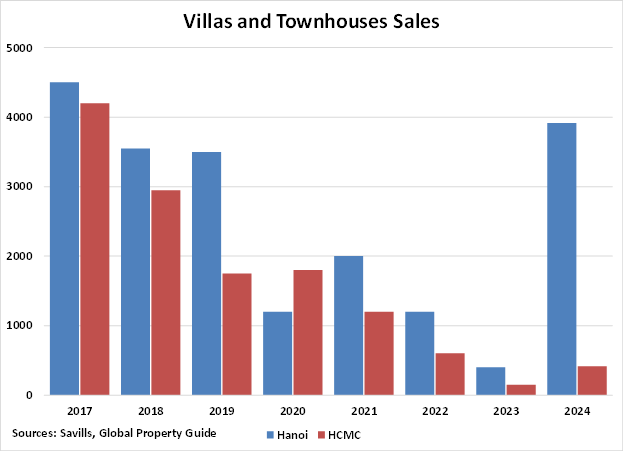
- For villas and townhouses, sales transactions also rose strongly y-o-y to reach 1,629 units in Q1 2025. Though quarterly, sales fell by 49%. The market absorption rate was 41% in Q1 2025, down 26 percentage points from the previous quarter but up 13 percentage points from the prior year.
Dong Anh accounted for the majority of primary transactions, with 848 units, which is equivalent to 52% of the total sales, followed by Dan Phuong with a 43% share. The remaining 5% came from other outlying districts, including Thuong Tin and Ha Dong.
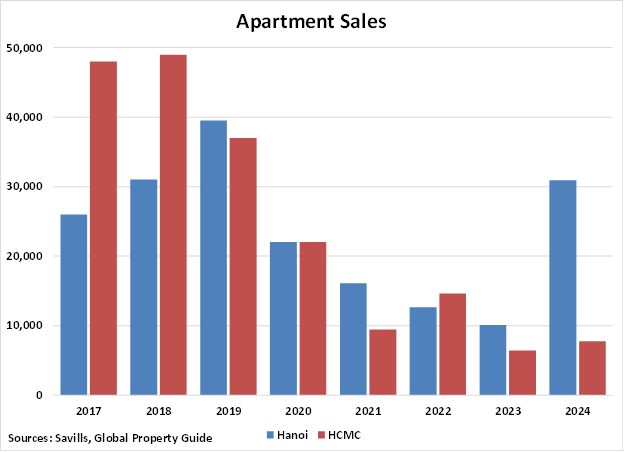
Conversely, property sales performance in Ho Chi Minh City was soft in Q1 2025, due to seasonal factors and shrinking supply of affordable homes.
In HCMC:
- Apartment sales fell by 46% q-o-q to just over 1,400 units in Q1 2025, according to Savills. However, performance still improved compared to the same period in the previous two years, supported by extended payment terms and continued bank financing. Housing demand is largely unmet, resulting in a low overall inventory absorption rate of 23%. In contrast, newly launched units had a higher absorption rate of 61%.
- Sales of villas and townhouses were low, with just 69 units sold in Q1 2025, nearly unchanged from the previous quarter but down by 5% from a year ago. The overall absorption rate was only 10%, with the absorption rate for new supply slightly higher at 28%. Townhouses dominated sales, capturing 59% of total transactions in Q1 2025, while shophouses and villas trailed behind with 29% and 12% shares, respectively.
Supply Highlights:
Apartment supply expected to increase in the years ahead
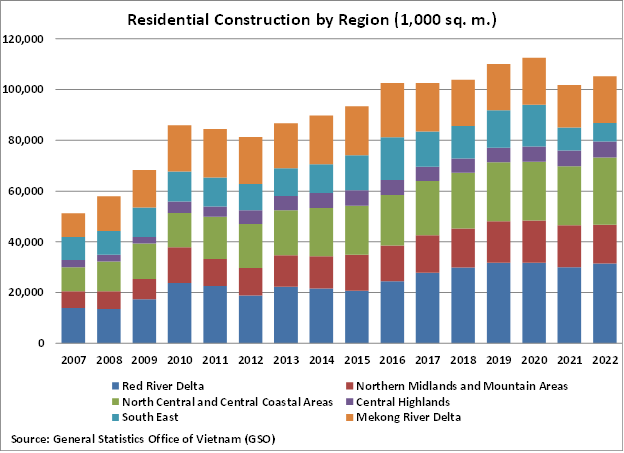
In Hanoi, the new supply of apartments totaled 7,940 units in Q1 2025, down by 39% from the previous quarter but up strongly by 95% as compared to the same period last year, based on figures from Savills. Vinhomes Ocean Park, Smart City, and Global Gate contributed about 89% of the new supply of apartments in the capital city in Q1 2025.
The primary stock of apartments in the capital city stood at 11,168 units in Q1 2025, down by 33% q-o-q and by 14% y-o-y.
An additional 7,400 new apartment units are expected to be completed and become available in 2025.
From 2026 onwards, about 80,900 units from 99 projects will enter the market, with Grade B apartments contributing the largest share of 67% of future supply, according to Savills. Hoai Duc, Dong Anh, and Hoang Mai will account for 52% share of the total anticipated completions.
In HCMC, on the other hand, the new apartment supply stood at approximately 800 units in Q1 2025, a huge decline of 70% from the previous quarter but an increase of 29% from a year ago. According to Savills, more than half of the new supply was from the next phases of large-scale complexes in Thu Duc City and Binh Tan. Accordingly, the 9 Stellars - Alta Heights, in District 9, was the only new project added.
"All new supply was Grade B and C. Affordability continued to worsen, as Grade C new supply of under VND 50 million/m2 NSA made up just 13% of the market, solely from Green Town - Phase 2 in Binh Tan," said Savills.
Due to limited new supply and delayed relaunches of on-hold projects, HCMC had a total primary stock of around 5,000 units in Q1 2025, down by 24% from the previous quarter but up slightly by 2% from a year ago.
Over 7,000 additional units are expected to enter the market by the third quarter of 2025, with approximately 90% coming from the next phases of seven ongoing developments. The remaining 10% will be contributed by four newly launched projects.
Looking ahead to 2027, nearly 40,000 units are projected to be completed. Thu Duc City will account for 55% of this total, while District 7 and Binh Tan will each contribute 9%. In terms of classification, Grade B apartments will comprise 41% of the supply, while Grade C units will make up 45%.
Revised laws, city planning updates, and key infrastructure completions will continue to buoy the market in the coming years.
"The Thu Duc City Plan was approved in January 2025, which is expected to improve apartment supply by 2040. New high-rise transit-oriented developments (TODs), with high floor area ratios are encouraged. New projects are expected to be mainly located in Thu Thiem, Truong Tho, Long Binh, and Long Truong," Savills. "The authorities also resolved legal obstacles for residential projects, resulting in new progress in securing approvals, Sales and Purchase Agreements (SPA), construction permits, and pink book issue."
Supply of villas and townhouses growing but remains scarce
In Hanoi, new launches reached 2,319 dwellings in Q1 2025, down by 20% from the previous quarter, according to Savills. The new supply mainly came from Vingroup's mega-project launch, Vinhomes Wonder City in Dan Phuong, which accounted for about 97% share. The remaining new units came from four existing projects launched in the prior quarter.
The total primary stock of villas and townhouses in the capital city stood at 4,004 units across 17 projects in Q1 2025, down 20% from the previous quarter but actually six times higher as compared to the preceding year.
Townhouses accounted for 64% of the primary supply, followed by shophouses with a 31% share and villas with 5% share.
In 2025, nine projects are anticipated to deliver a total of 2,210 dwellings, led by major developments from Sunshine Group, including the Sunshine Grand Capital in Hoai Duc and Sunshine Royal Capital in Tay Ho. Additional supply will come from ongoing projects such as GIA22 by Kita in Tay Ho and Solasta Mansion in Ha Dong.
From 2026 onward, an estimated 19,812 additional dwellings are expected to enter the market, based on Savills' estimates.
HCMC continues to experience supply constraints as no new projects were launched in Q1 2025. The new supply was limited to 89 units across three existing projects. More than 90% of the new supply came from The Meadow Binh Chanh.
The primary stock of villas and townhouses in HCMC reached 698 dwellings in Q1 2025, up by 14% from the previous quarter. By property type, shophouses accounted for the biggest share at 53%, followed by villas with 26% and townhouses with 21% share.
In Q1 2021, low-rise units priced below VND10 billion (US$382,900) accounted for 60% of the market. By Q1 2025, their share had dropped sharply to just 11%. In contrast, homes priced over VND30 billion (US$1.15 million) now make up more than 70% of the primary supply. As a result, more buyers are turning to nearby provinces where housing is more affordable and the supply is greater.
"The supply within Ho Chi Minh City will remain limited and concentrated in the higher price range. However, this segment is expected to gradually expand outward beyond the city's core," said Savills.
For the remainder of 2025, future supply will be concentrated in Thu Duc City (53% share), followed by Nha Be (25%) and Binh Chanh (22%). Looking ahead to 2027, more than 4,600 dwellings are expected from 28 projects, with Nha Be District accounting for the largest share at 29%, while both Thu Duc City and Cu Chi District are projected to contribute 19% each.
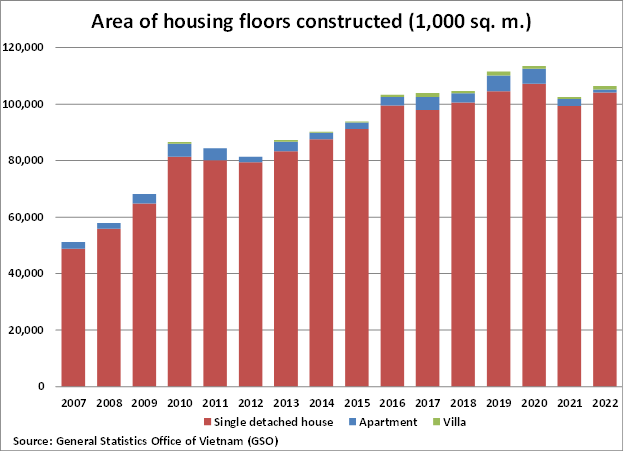
Historic Perspective:
The memory of a housing bust (2009-2013)
Vietnam witnessed a prolonged housing crisis after the 2008-9 global financial crisis. Property prices plunged by double-digit figures. The government was embarrassed, banks went bankrupt, and the economy slowed sharply.
The banking system effectively collapsed. One out of every ten loans in the banking system stopped paying.
To bolster demand, the government provided the real estate market with a US$1.4 billion stimulus package in 2013, subjected developers to stricter financial requirements, and bought US$8 billion of non-performing loans. The central bank slashed the refinance rate and discount rate several times and gave about US$197 million in credit to homebuyers through Vietinbank. These measures were, over time, successful.
Pre-pandemic real estate growth
Following several years of housing decline, the Vietnamese government's efforts helped the real estate market recover - in fact, apartment prices in HCMC surged 75% (63% inflation-adjusted) from 2017 to 2019.
Vietnam has begun to be seen as the next luxury property market hotspot, with a booming economy, coupled with laws that have recently made it easier for foreigners to buy. As a result, wealthy international investors have been drawn to the country.
Vietnam's improving infrastructure is also a plus factor. "Vietnam focuses on investment in infrastructure, including 2,000 km of new highways, subway systems in Hanoi and Ho Chi Minh City, and many airport expansion and construction projects," said JLL.
Aside from increasing foreign interest, the property market was also buoyed by strong demand from wealthy locals. The homeownership rate in Vietnam exceeds 90%, one of the highest rates in the world.
"We have more and more very rich Vietnamese, particularly entrepreneurs looking for places to put their money," said Niel MacGregor of Savills Vietnam.
Post-pandemic housing market recovery
After suffering a huge price decline of 14.3% (-14.5% inflation-adjusted) in 2020, the HCMC housing market bounced back quickly in the following year, as pandemic-related restrictions were gradually lifted. New apartment prices in HCMC were up strongly by 10.4% (8.4% inflation-adjusted) in 2021 and by another 15.1% (10.1% inflation-adjusted) in 2022.
However, HCMC's housing market slowed dramatically in the succeeding two years, amidst declining demand. Apartment prices rose by 2.4% during 2023 but actually declined by 1.2% when adjusted for inflation. This trend continued in 2024, with apartment prices increasing by a meager 1.4% (and falling by 1.5% in real terms).
Rental Market:
Hanoi apartment rents stabilizing; vacancy rates improving
In Hanoi, the average asking rent for Grade A apartments was US$26.9 per sqm per month in Q1 2025, up by a meager 0.5% from the previous quarter but still down by 3.6% as compared to the same period last year, according to CBRE. On the other hand, the monthly rents for Grade B apartments averaged US$17.5 per sqm per month in Q1 2025, down slightly by 0.3% q-o-q and by 0.2% y-o-y.
Overall, the market rent for serviced apartments in the capital city stood at an average of US$24.9 per sqm in Q1 2025.
The average vacancy rate for both grade projects combined was registered at 19.2% in Q1 2025, an improvement from the prior quarter's 20.7%. Over the same period:
- Grade A apartments: vacancy rate of 17.8%, down by 0.9 percentage points from the previous quarter and by a significant 5.8 percentage points from a year earlier.
- Grade B apartments: vacancy rate of 24.5%, down by 4.1 percentage points from the previous quarter and by 1.1 percentage points from the same period in the prior year.
"Vacancy rates showed more substantial improvements across both segments," said the Q1 2025 CBRE report. "This enhanced performance can be attributed to property owners' strategic implementation of rental incentives and promotional packages to attract tenants."
Expats working in industrial parks are a major source of demand for serviced apartments in Hanoi.
The supply of serviced apartments in Hanoi was more or less steady at 5,200 units. Grade A serviced apartments dominated the market, representing about 80% of the total supply.
Hanoi's serviced apartment market is expected to see an additional supply of around 2,300 new high-end units from Grade A projects until the end of 2025.
"From now until the end of 2025, Hanoi's serviced apartment market is set to welcome over 2,300 new high-end units from Grade A projects concentrated in Tay Ho and Ba Dinh districts," said CBRE. "These upcoming developments represent a significant expansion of premium serviced apartment inventory in Hanoi's most sought-after expat and diplomatic areas. Such robust development activity demonstrates the market's continued recovery trajectory."
Gross rental yields continue to fall
The average gross rental yields in Vietnam - the return earned on the purchase price of a rental property, before taxation, vacancy costs, and other costs - stood at 3.16% in Q1 2025, down from 3.83% in Q1 2024 and 4.02% in Q3 2023, according to the Global Property Guide.
Gross rental yields in Hanoi, Ho Chi Minh City, and Da Nang can be low to moderately good, depending on location.
- In Hanoi, gross rental yields range from 1.12% to 4.69%, depending on the district, but still, the overall average for the city is 2.9%.
- In Ho Chi Minh City, yields are slightly higher, at between 1.87% and 5.03%, again depending on the district. The average for the city is 3.52%.
- In Da Nang, the rental yields for apartments are between 2.34% and 3.62% with an average of 3.06%.
Mortgage Market:
Interest rates continue to fall
As of June 2025, the State Bank of Vietnam (SBV), the country's central bank, held its benchmark refinancing rate unchanged at 4.50%. The discount rate was also kept at 3.00%. This move aims to boost lending growth and buoy economic activity.
In early 2024, the central bank asked credit institutions to reduce loan interest rates and supply capital for prioritized sectors, including individual housing demand, social housing, houses for workers, and affordable commercial housing projects.
Then, on November 27, 2024, the SBV released Document No. 9774/NHNN-CSTT, instructing credit institutions and the central bank's municipal and provincial branches to rigorously enforce measures to stabilize deposit interest rates and make greater efforts to lower lending interest rates.
On December 18, 2024, the SBV issued Decision No. 2690/QĐ-NHNN, setting the 2025 interest rate at 4.7% per year for outstanding balances of housing support loans issued under Circulars 11/2013, 32/2014, and 25/2016. These circulars govern Vietnam's subsidized housing loan programs aimed at supporting low-income households, public sector workers, and other eligible groups in accessing affordable housing. The new rate represents a continued effort by the government to ease the financial burden on homebuyers and maintain stable, accessible credit in the housing sector.
These efforts continued into 2025. In February 2025, SBV reiterated its directive for credit institutions to maintain stable deposit interest rates and proactively lower lending rates, in line with the government's target of achieving 8% GDP growth. Still in February, the SBV cut the interest rate on treasury bills by 0.1 percentage point-its first such move this year-signaling a shift toward further monetary easing. Interbank lending rates also declined significantly across various maturities.
By March 2025, the average short-term lending rate for priority sectors stood at about 3.9% per annum, below the central bank's 4% cap, with more than 20 banks reducing deposit rates by 0.1 to 1.0 percentage points. Lending rates continued to decline steadily, falling by an additional 0.8 percentage point in the first half of the year alone, building on a cumulative drop of 1.4 percentage points in 2024.
Many banks in Vietnam have rolled out mortgage packages with interest rates fixed at 5% to 6%, the lowest level recorded in the past decade.
At Shinhan Bank, fixed interest rates for mortgages are currently at 5.5% to 6% annually, nearly half the 9% to 10% rate prevalent in Q2 2023, said Nguyen Thanh Hai, the bank's regional head at its HCMC branch.
At state-owned banks Agribank, Vietcombank, VietinBank, and BIDV, the fixed interest rates on mortgage loans hover around 5% to 7%.
At private lenders such as BVBank, SHB, and ACB, fixed mortgage interest rates range from 5% to 8%.
| FIXED INTEREST RATES FOR MORTGAGES | ||
| Bank | Fixed interest rate | Period |
| Shinhan Bank | 5.5% - 6.0% | 6-36 months |
| Woori Bank | 5.1% - 5.7% | 12-36 months |
| BIDV | 5.0% - 5.5% | 6-12 months |
| Vietcombank | 6.3% - 7.5% | 6-36 months |
| Agribank | 6.5% | 24 months |
| BVBank | 5.0% - 7.5% | 5-12 months |
| ACB | 7.3% - 8.0% | 3-12 months |
| Source: VN Express International | ||
Accordingly, floating mortgage interest rates are also declining by two to three percentage points at some banks. State-owned banks offer 9% to 10% rates while private financial institutions charge rates above 12%.
| FLOATING INTEREST RATES FOR MORTGAGES | |
| Bank | Floating interest rate |
| Shinhan Bank | 8.5% |
| Woori Bank | 8.7% |
| Vietcombank | 9.0% |
| BVBank | 9.5% |
| VIB | 9.0 - 10.0% |
| TPBank | 11.6 - 12.1% |
| HDBank | 12.0 - 12.5% |
| Source: VN Express International | |
Lower interest rates for young homebuyers and social housing developers
Young people aged 35 and below can now get subsidized home loans at a lower interest rate of 5.9% under a government program, according to the SBV. This is 2% lower than the average rates of major state-owned banks - Agribank, BIDV, Vietcombank, and VietinBank - and applies for the first five years of the loan. Starting in 2026, the rate will still be 1% lower than average.
Developers of social and workers' housing and old apartment renovations can also borrow at a reduced rate of 6.4%.
These loans are part of a VND120 trillion (US$4.59 billion) package launched in April 2023 to boost social housing. Since then, interest rates have been cut four times, down from the original 8.2% for buyers and 8.7% for developers.
So far, VND3.4 trillion (US$130 million) has been disbursed-86% of which went to developers of 21 projects, and the rest to homebuyers.
Mortgage market shows steady growth, but still underdeveloped
In Q1 2025, Vietnam's outstanding real estate credit reached about VND3,500 trillion (US$133.87 billion), up by around 11% compared to the end of 2024. This continued growth highlights the steady recovery and sustained demand in both the housing and property development sectors, despite ongoing challenges in the broader economy.
Real estate loans now account for approximately 21.3% of the country's total outstanding credit.
For mortgage and housing project loans, the outstanding credit stood at VND1,490 trillion (US$56.99 billion) in Q1 2025, up by 2% from the previous quarter and by 25% from the same period last year.
Despite this, the mortgage market remains relatively underdeveloped.
Most homebuyers pay cash. Developers are now starting to work with banks to offer mortgages to buyers, but strict loan procedures still hinder the local mortgage market. The loan-to-value (LTV) ratio rarely exceeds 50% of the appraised value of the property. The term period is usually 15 years.
Socio-Economic Context:
Amendments to Housing, Land, and Real Estate Laws
Vietnam opened up to foreigners ten years ago. Through the Housing Law (Law on Housing No. 65/2014/QH13), which became effective on July 1, 2015, foreigners who have been granted a Vietnamese visa, plus foreign investment funds, banks, Vietnamese branches, and representative offices of overseas companies, could now purchase residential property. Foreigners can now own all types of properties, including condominiums and landed property such as villas and townhouses. Properties owned by foreigners can be sub-leased, inherited, and collateralized.
Moreover, overseas Vietnamese who have maintained their Vietnamese citizenship are treated like locals and are permitted to own unlimited property in their own names. It is estimated that about 70% of the 4 million overseas Vietnamese around the world still maintain their original citizenship.
For foreign individuals, the house ownership period is 30 years, but it can be extended. The new law also limits foreigners from owning more than 30% of a single apartment building, or more than 350 houses and apartments in a ward, a subdistrict-level administrative area.
Detailed guidelines on implementing the Housing Law (Decree 99) became effective on December 10, 2015. According to Decree 99, foreigners are allowed to own houses in Vietnam as long as they are able to meet these conditions:
- The foreigner's valid passport should have an entry stamp affixed to it from Vietnam's immigration authority.
- They should not be in the category of people entitled to preferential treatment or diplomatic immunity in accordance with the Ordinance on Preferential Treatment Rights and Immunities Applicable to Representative Diplomatic Offices, Foreign Consulates, and Representative Offices of International Organisations in Vietnam.
On August 15, 2016, the Ministry of Construction Circular 19/2016/TT-BXD (Circular 19) , which contains guidelines on the Law on Housing and on Decree No. 99/2015/ND-CP, became effective. As for individual houses under commercial housing projects (including villas and semi-detached houses), foreigners are allowed to own 10% of the total individual houses of a particular project.
Despite these developments, Vietnam's land, housing, and real estate laws are still publicly perceived as rather complex and confusing because of inconsistencies in some provisions. To address this issue and to encourage foreign investment, the government recently amended its Land Law and the related Housing Law. The amended laws were approved in November 2023 and officially took effect on January 1, 2025.
"According to the Law on Housing 2014 and the Law on Real Estate Business 2014, foreigners are entitled to buy and own houses in Vietnam, including apartments and separate houses associated with land use rights. Meanwhile, according to the Land Law 2013, foreigners are not eligible to own land use rights in Vietnam. Therefore, the proposed amendments in the Revised Law on Housing are considered essential to ensure a consistent and rigid regulatory framework for foreigners looking to buy property in Vietnam," said Dang Phuong Hang of CBRE Vietnam.
There are more than 100,000 foreigners currently living in Vietnam, up from about 83,500 three years ago. Most of the migrants come from China, Korea, Japan, Taiwan, and the United States. They are concentrated in big cities such as Hanoi, HCMC, Da Nang, and Nha Trang.
From 2014, when the housing law came into effect, to 2023, a total of 3,035 foreign individuals have purchased homes in Vietnam, according to figures from the Ministry of Construction. Most of these purchases involve apartments in commercial residential projects. Foreign organizations and individuals have primarily acquired properties in Hanoi (1,765), Ho Chi Minh City (850), Bac Ninh Province in the north (110), Binh Duong Province in the south (210), and Ba Ria-Vung Tau Province (50).
While nationwide figures for the past year have yet to be released, data from 2024 shows that foreigners purchased over 2,800 apartments in Hanoi alone, more than double the total number of foreign purchases in the five-year period from 2018 to 2022, according to the Vietnam Association of Realtors.
"This is a positive sign for the real estate market as it helps sell a large number of unsold high-end and luxury properties," said the association.
New free trade agreements attract more foreign investors
In recent years, Vietnam signed two landmark free trade agreements that are expected to boost foreign investments and accelerate institutional reform.
The EU-Vietnam Free Trade Agreement (EVFTA), which came into force in August 2020, provides opportunities to increase trade and support jobs through the following:
- Eliminating 99% of all tariffs;
- Reducing regulatory barriers and overlapping red tape;
- Ensuring the protection of geographical indications for over 200 products;
- Liberalizing government procurement rules;
- Obligations on antitrust and mergers; and,
- Provisions on sustainable development, particularly on climate, labor, and human rights.
The EVFTA is considered the most comprehensive agreement so far between the EU and any ASEAN country.
The Comprehensive and Progressive Agreement for Trans-Pacific Partnership (CPTPP) also came into force in January 2019 - a free trade agreement between Australia, Brunei Darussalam, Canada, Chile, Japan, Malaysia, Mexico, Peru, New Zealand, Singapore, and Vietnam. The agreement is expected to benefit the real estate market.
- Foreign investors are protected through the Investor-State Dispute Settlement (ISDS) mechanism, which applies to cross-border investments in property development.
- The CPTPP also enlarges the real estate services in which foreign investors can participate, including real estate brokerage services, real estate exchange floors, real estate consulting services, and real estate management services, with respect to both residential and commercial properties.
The positive effects of these new free trade agreements are now being felt after the removal of Covid-related restrictions and as economic activity returns to pre-pandemic levels.
Foreign investments remain robust
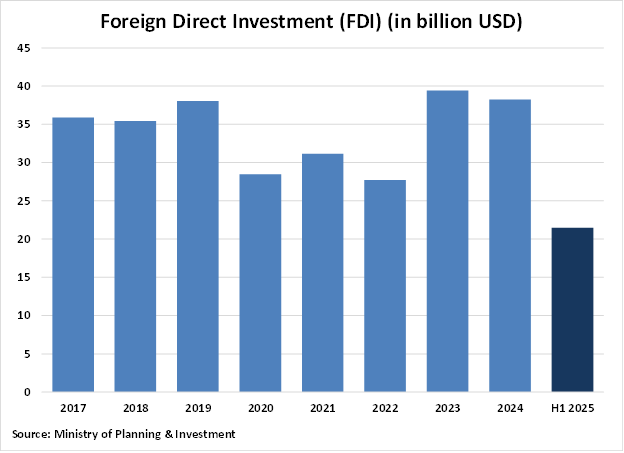
During 2024, the value of disbursed foreign direct investment (FDI) capital in the country reached a record high of US$25.35 billion, up by 9.4% from a year earlier, based on figures from the Ministry of Planning and Investment. In fact, it was the highest disbursement level ever recorded.
However, total FDI fell slightly by 2.9% to US$38.23 billion in 2024 from a record-high US$39.39 billion in the prior year. Singapore accounted for the biggest share, at about 26.7% of the total FDI, followed by South Korea (with 18.5% share), China (12.4%), Hong Kong (11.4%), and Japan (9.2%).
By the end of 2024, Vietnam had 42,002 active foreign investment projects, with a total registered capital of nearly US$502.8 billion. Of this, around US$322.5 billion has been disbursed, representing 64.1% of the total registered investment capital.
Vietnam's ten leading FDI destinations included Bac Ninh, Hai Phong, Ho Chi Minh City (HCMC), Quang Ninh, Hanoi, Binh Duong, Dong Nai, Nghe An, Ba Ria-Vung Tau, and Hung Yen.
During 2024, the real estate sector attracted over US$6.31 billion, accounting for a 16.5% share of the total foreign investments. It experienced a notable growth of 19% compared to the preceding year.
"There are a number of segments that investors pay attention to. For example, the residential real estate segment continues to attract a lot of attention due to urbanization and rising housing demand in large cities. The supply of new projects is recorded at a low level due to legal restrictions, meaning this segment receives a lot of attention from foreign investors," said Nguyen Le Dung, head of the Investment Department of Savills Hanoi.
Despite global economic uncertainties, Vietnam continues to attract robust FDI flows this year. In the first half of 2025, FDI increased by 8.1% y-o-y to US$11.72 billion, the highest realized FDI for a six-month period in the past five years, based on figures from the Ministry of Finance.
Likewise, FDI pledges reached US$21.52 billion in H1 2025, up by a huge 32.6% as compared to a year earlier. The real estate sector attracted a total of US$5.17 billion, which accounted for about 24% of the total FDI pledges. The top five leading sources of FDI in Vietnam are Singapore, South Korea, China, Japan, and Malaysia.
In the period, some 1,988 new projects were licensed, with total registered capital standing at nearly US$9.3 billion. This marks a strong growth of 21.7% from the previous year.
Spectacular economic growth, strong tourism
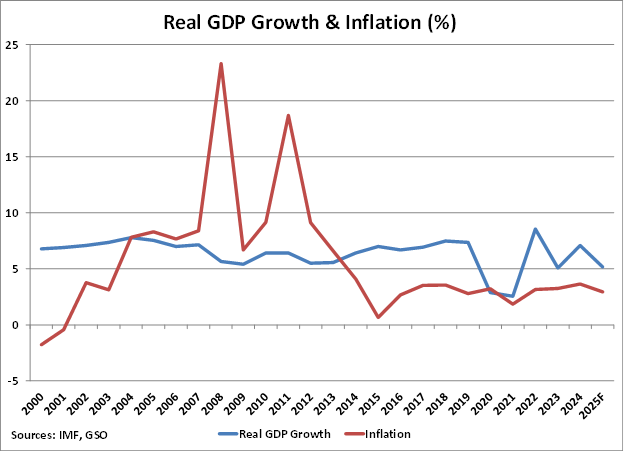
During 2024, Vietnam's economy grew robustly by 7.09%, mainly driven by strong exports and foreign investment inflows, according to the figures released by the General Statistics Office (GSO). It was an acceleration from the real GDP growth rate of 5.05% in 2023 and 8.02% in 2022.
"The Vietnamese economy rebounded strongly in 2024, growing at 7.1 percent backed by robust exports, resilient foreign direct investment (FDI), and supportive policies," said Mr. Paulo Medas of the International Monetary Fund (IMF).
Vietnam is a service-oriented economy, with the services sector accounting for almost half of the country's total GDP.
- The services sector emerged as the primary growth driver during 2024, contributing about 42.36% share, slightly up from the previous year's 42.3% contribution.
- The industrial and construction sector accounted for a 37.64% share of the country's GDP last year, slightly up from 37.58% in 2023.
- The agroforestry-fishery sector had a share of 11.86% last year, nearly unchanged from the prior year.
Vietnam's strong showing continues this year, with its real GDP growth rate reaching 7.96% in Q2 2025, up from year-on-year expansions of 6.93% in the previous quarter and 7.25% a year ago. In fact, it was the highest level seen in three years.
The country's robust growth is supported by trade ties, with the U.S. as its top export market and China as its main import source. Under a new deal, Vietnamese goods face a 20% U.S. tariff, and third-country trans-shipments via Vietnam face 40%. In return, Vietnam can import U.S. products tariff-free.
The government aims to achieve an economic growth of around 8% this year. However, international organizations have issued more cautious forecasts, with the World Bank projecting a 6.8% growth for Vietnam this year and the IMF estimating a more modest 5.2% expansion.
"Viet Nam is projected to maintain robust economic growth over the next two years, but it can use its fiscal space to better prepare for heightened uncertainties", said Mariam J. Sherman of the World Bank. "Growth-enhancing public investment, especially in urban, transport, and energy infrastructure, will be critical, provided the authorities can both scale it up and ensure that spending is efficient."
Despite the adverse impact of the Covid-19 pandemic, the Vietnamese economy managed to post decent growth of 2.87% in 2020 and another 2.56% in 2021, coming after almost four decades of uninterrupted growth:
- 1981-1990 - average real GDP growth of 5.9% per year
- 1991-2000 - average real GDP growth rate of 7.6% annually
- 2001-2010 - average real GDP growth rate of 6.8% annually
- 2011-2020 - average real GDP growth rate of 6.2% annually
"Viet Nam's growth acceleration, one of the longest on record, started in 1991 and was upended only by the COVID-19 recession of 2020. Between 1991 and 2019, Vietnam's real annual GDP growth per capita averaged 5.6 percent, almost twice the rate in non-acceleration years. This sustained period of growth was accompanied by a substantial decline in inflation, low unemployment rates, modest fiscal and current account deficits, and relatively low debt levels," said the World Bank in its Global Economic Prospects published in January 2025.
"Even during the global recession of 2009, the country maintained positive growth, reflecting the strength of its domestic market and the effectiveness of government policies," added the World Bank.
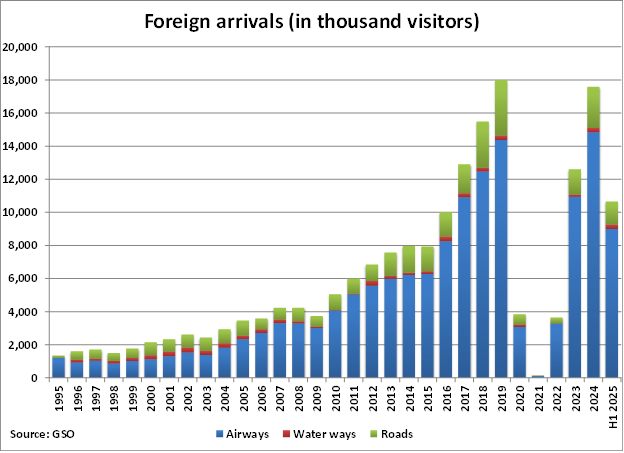
Tourism is steadily recovering and has almost reached pre-pandemic levels. During 2024, there were nearly 17.6 million foreign visitors in Vietnam, up by a spectacular 40% from a year earlier, according to the country's GSO. It is now the second biggest number of arrivals recorded in Vietnam, behind the 18 million visitors welcomed in 2019 prior to the Covid-19 pandemic.
Tourist arrivals grew by an annual average of 23% during 2016-19 before plunging by nearly 90% annually in 2020 and 2021. The sector has been continuously recovering since.
By means of transport:
- By airways: 14.85 million foreign visitors, up by about 36% compared to a year ago
- By sea: 2.49 million foreign visitors, up by 63% from a year earlier
- By land: 248,100 foreign visitors, nearly twice as many as the previous year
South Korea accounted for the biggest share of about 25.6% of total international visitors in Vietnam during 2024, followed by China (21.2% share), Taiwan (7.3%), the United States (4.4%), Japan (4.0%), India (2.8%), Malaysia (2.8%), Australia (2.8%), Cambodia (2.7%), and Thailand (2.4%).
Then in the first half of 2025, total international arrivals soared by 20.7% y-o-y to 10.66 million. Air travel continued to dominate, with over 9 million arrivals by air, accounting for more than 85% of the total and marking a 22.7% y-o-y increase. This was followed by nearly 1.4 million arrivals by land, while the remainder arrived by sea.
"Favorable visa policies, enhanced tourism promotion programs, and prestigious tourism awards presented by international organizations have attracted an increasing number of international visitors to Vietnam," said the GSO.
Vietnam aims to welcome a record high of 23 million international tourists in 2025, a more than 30% jump from last year's arrivals, according to Tran Phong Binh, deputy director at the Vietnam National Authority of Tourism.
Consumer prices remain manageable. In June 2025, annual inflation stood at 3.57%, slightly up from 3.24% in the previous month but still down from 4.34% recorded in the same month last year, according to figures from GSO. It remains within the central bank's inflation target of under 4.5%.
Inflation slowed to an annual average of just 2.9% from 2014 to 2024, from an average of 10.6% from 2004 to 2013.
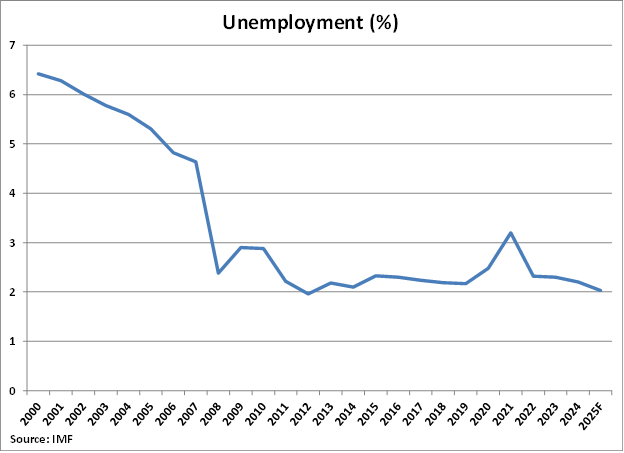
The labor market remains tight. The country's unemployment rate was 2.24% in Q2 2025, hardly changed from 2.2% in the previous quarter and 2.29% a year earlier, according to GSO.
From 6.42% in 2000, Vietnam's unemployment rate has continuously declined to reach 2.17% in 2019, according to the IMF, but increased to 2.48% in 2020 and further to 3.2% in 2021 due to the pandemic. The labor market started to improve again in recent years, with the jobless rate falling to 2.32% in 2022, 2.3% in 2023, and 2.2% in 2024.
Vietnam remains under the U.S. currency manipulator watch list
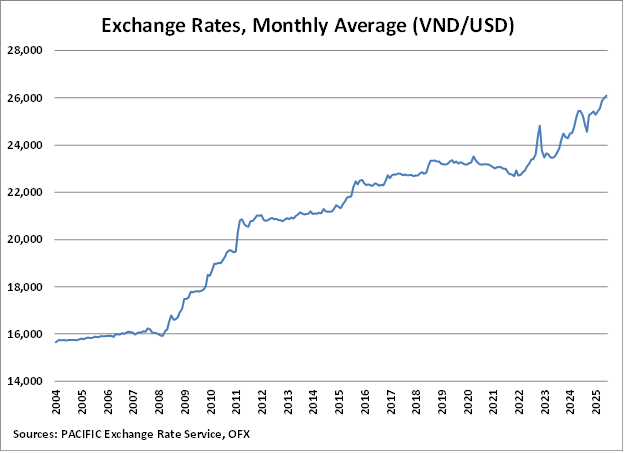
In January 2016, the central bank announced a move to a market-based exchange rate mechanism, setting daily reference exchange rates to discourage hoarding of US dollars. However, the new rate is not really "free". The central bank sets a reference rate daily, and local and foreign banks in Vietnam can trade within a band of plus or minus 3%.
In 2019, the US indicated that Vietnam was under scrutiny for possibly manipulating its currency. Then, in August 2020, the US Treasury confirmed that the dong was undervalued by about 4.7% against the dollar in 2019 due in part to "government action on the exchange rate." In December 2020, the Treasury officially labeled Vietnam a currency manipulator, claiming that it "conducted large-scale and protracted intervention, much more than in previous periods, to prevent appreciation of the dong."
Finally, in July 2021, Vietnam reached an agreement with the U.S., pledging to "to avoid manipulating its exchange rate in order to prevent effective balance of payments adjustment or to gain an unfair competitive advantage and will refrain from any competitive devaluation of the Vietnamese dong."
In its December 2021 and June 2022 semiannual reports, the U.S. Treasury stated that it continues to engage closely with Vietnam to monitor the latter's progress in addressing the U.S. concerns.
Then, in its November 2022 report, the U.S. Treasury finally removed Vietnam from the monitoring list for currency manipulation, after the Southeast Asian country exceeded the threshold for the criterion of surplus of trade in goods and services with the United States.
However, in its June 2024 report, the U.S. Treasury included Vietnam on its watch list again, as the country meets two of the three criteria: a trade surplus with the U.S. of at least US$15 billion, a global account surplus above 3% of GDP and persistent one-way net foreign exchange purchases of at least 2% of GDP over 12 months.
Vietnam remained under scrutiny in the U.S. Treasury's November 2024 and June 2025 currency monitoring list. Other countries included in the latest report were Japan, China, South Korea, Taiwan, Singapore, Germany, Ireland, and Switzerland due to their large trade surpluses with the U.S. and material current account surpluses. Though being on the watch list does not mean Vietnam is being sanctioned. It simply shows that the U.S. is keeping an eye on policies that could affect trade balances.
Sources:
- Hanoi Real Estate Market Q1 2025 (CBRE Vietnam): https://mktgdocs.cbre.com/
- Ho Chi Minh City Real Estate Market Q1 2025 (CBRE Vietnam): https://mktgdocs.cbre.com/
- Vietnam Property Market Brief Q1 2025 (JLL): https://journeys.jll.com/
- Hanoi's condo market sees Q2 surge in high-end supply (Vietnam Plus): https://en.vietnamplus.vn/
- Hanoi's real estate market to pick up steam in Q2/2025 (Hanoi Times): https://hanoitimes.vn/
- Ha Noi Market Brief Q1/2025 (Savills): https://www.savills.com.vn/
- Ho Chi Minh City Market Brief Q1/2025 (Savills): https://www.savills.com.vn/
- Vietnam's property market rebounded in 2024, driven by reforms and transparency (Hanoi Times): https://hanoitimes.vn/
- Vietnam's real estate regains stability in 2024 (Xinhua): https://english.news.cn/
- Fresh hopes for real estate in 2025 (Vietnam Investment Review): https://vir.com.vn/
- Investment and Construction (National Statistics Office): https://www.nso.gov.vn/
- Interest rate developments of credit institutions for customers in March 2025 (Vietnam Bank Association Portal): https://vnba.org.vn/
- Banks slash mortgage rates to decade low (VN Express): https://e.vnexpress.net/
- Vietnam central bank tells lenders to hold deposit rates, lower loan rates (Reuters): https://www.reuters.com/
- Interest rate falls further on subsidized loans for homebuyers under 35 (VN Express): https://e.vnexpress.net/
- Bank loan interest rate for housing support in 2025 in Vietnam is at 4.7% per year (LawNet): https://lawnet.vn/
- Gross rental yields in Vietnam: Hanoi and Ho Chi Minh (Global Property Guide): https://www.globalpropertyguide.com/
- Nỗi lo nợ xấu khi tín dụng bất động sản tăng nhanh (Kinhte & Dothi): https://kinhtedothi.vn/
- Vietnam's property sector attracts $2.39bil. FDI in Q1/2025 (Vietnamnet Global): https://vietnamnet.vn/
- Vietnam Housing Law 2024 (Vietan Law): https://vietanlaw.com/
- Issues linger for foreign homebuyers (VnEconomy): https://vneconomy.vn/
- Foreign buyers not lifesavers for Vietnam's struggling property market: expert (The Investor): https://theinvestor.vn/
- More foreigners buy homes in Hanoi (VN Express): https://e.vnexpress.net/
- FDI disbursement in Vietnam in 2024 hits record high (Vietnam Law Magazine): https://vietnamlawmagazine.vn/
- Vietnam Foreign Direct Investment (Trading Economics): https://tradingeconomics.com/
- Vietnam's FDI disbursement in 2024 reports record high (Xinhua): https://english.news.cn/
- Real estate sector saw FDI increase 60 percent in 2024 (Vietnam Investment Review): https://vir.com.vn/
- Vietnam's Economic Performance in H1 2025: Inflation, Trade, FDI, and Business Trends (Vietnam Briefing): https://www.vietnam-briefing.com/.
- Q2 GDP growth highest in 3 years (VN Express): https://e.vnexpress.net/
- Tariff reprieve leads to positive Q2 for Vietnam (Vietnam Investment Review): https://vir.com.vn/
- Vietnam GDP Annual Growth Rate (Trading Economics): https://tradingeconomics.com/
- IMF Staff Completes 2025 Article IV Mission to Vietnam (International Monetary Fund): https://www.imf.org/.
- Vietnam stands firm on 8% GDP growth goal (VN Express): https://e.vnexpress.net/
- Vietnam's Economy Forecast to Grow 6.8 Percent in 2025: WB (World Bank): https://www.worldbank.org/
- Global Economic Prospects January 2025 (World Bank): https://openknowledge.worldbank.org/
- Trade and Tourism (National Statistics Office): https://www.nso.gov.vn/
- Vietnam Tourist Arrivals (Trading Economics): https://tradingeconomics.com/
- Foreign visitors to Vietnam near 10.7 million in H1, half of full-year target (Vietnam Law Magazine): https://vietnamlawmagazine.vn/
- Vietnam Welcomes Nearly 10.7 Million International Visitors in First Half of 2025 (The Gulf Observer): https://thegulfobserver.com/
- Some 11 million international arrivals to Vietnam in H1/2025 (Hanoi Times): https://hanoitimes.vn/
- Việt Nam stays on US currency watch list (Viet Nam News): https://vietnamnews.vn/
- US Government Officially Labels Vietnam a Currency Manipulator (The Diplomat): https://thediplomat.com/
- Joint Statement from the U.S. Department of the Treasury and the State Bank of Vietnam (U.S. Department of the Treasury): https://home.treasury.gov/
- Vietnam dropped from US currency monitoring list (Vietnamnet Global): https://vietnamnet.vn/
- US says Vietnam not manipulating currency (Hanoi Times): https://hanoitimes.vn/