New Zealand: The RBNZ gets heavy
New Zealand house prices rose by 14.43% y-o-y to April 2007 (in nominal terms). Almost all pundits had expected the rise in house prices to moderate. They did just the opposite – price rises have accelerated, especially since the beginning of this year, 2007.
This acceleration followed 11.86% house price rises in 2006, 13.46% house price rises in 2005, and 13.24% rises in 2004. During the five years to end-2006 house prices in New Zealand have risen 85.39%. The national median house sale price stood at NZ$349,000 this April, 2007, considerably up on the end-2005 median price of NZ$295,000.
We now believe that mortgage rates at 10% will put pressure on the market, and that house price rises will decelerate, if not fall in some areas. However Wellington and Auckland yields are still healthy. Because yields continue high in some key areas, we believe that Wellington house prices, in particular, will continue strong.
The RBNZ has become very interventionist
The Reserve Bank is particularly concerned by house price inflation. The number of monthly house sales exceeded 10,000 during the month of March 2007, the highest sales volume recorded since April 2004 (though in seasonally-adjusted terms there have been four months of decline).
The Reserve Bank has taken action by increasing base rates to 8% in June 2007, New Zealand’s third base rate rise this year from January’s 7.25% level. Non-tradable inflation remains at 4.1% y-o-y to March 2007, identical to the previous year’s 4.1% level, and a point lower than the 4.2% inflation y-o-y to March 2005. The RBNZ is unhappy with this, as is clear from its ratcheting up base rates from 4.75% in January 2002 to 8% today.
New Zealand has experienced eight years of unbroken economic growth. Recent strong house price growth has been due to the strong labor market and low unemployment, now at its lowest for twelve years. The labour cost index rose 3.8% in annual terms in March 2007.
Real GDP grew by a modest 1.5% in the year to end-2006, but growth appears to have re-accelerated during the first half of 2007, according to the May 2007 Treasury report.
Home affordability has been steadily deteriorating, according to the Massey University/AMP Home Affordability Index. Auckland saw a 10.4% decline in the last 12 months, Wellington an 18.3% decline, and Canterbury a 12% decline.
The NZ$ is appreciating rapidly (despite RBNZ objections), spurred by the Yen ‘carry trade’, by which Japanese investors borrow at low rates and invest for much higher returns in New Zealand, in a rising currency environment. There is no magic way the RBNZ can stop this.
However, eventually, a stronger NZ$ will be counter-inflationary.
Immigrants’ role
In a 5-year perspective immigration has been falling - the number of net migrants in 2006 was 14,609, significantly lower than the 38,200 net migrants in 2002, 34,900 in 2003 and 15,100 in 2004 (though up on last year’s 7,000).
The fall in migrants should reduce demand for housing – but perversely, it also affects housing supply. Housing New Zealand Corporation notes that a skills shortage in the construction sector, in combination with land price increases , is pushing up house construction costs. To address the skills shortage the government implemented immigration reforms in December 2004. This includes:
Increasing the number of points allocated to skilled employment, qualifications and work experience in areas of absolute skill shortage; and
- Recognizing a wider range of qualifications where they meet industry needs.
Rents and yields
Rents have continued to rise more slowly than house prices. While house prices rose by 14.43% in 2007 in the year to date, rents only rose by 5.6% in the year to February 2007, according to the Massey University rents survey. Therefore gross rental yields have continued to fall over the years.
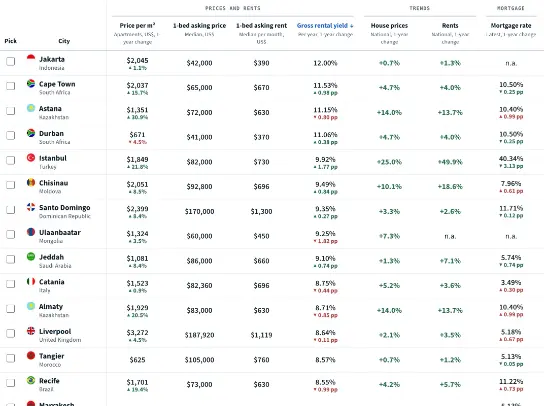
Unfortunately it is over two years since we updated our own rental yields data. Massey University estimates national yields at around 3-4%. When two years ago we looked at yields in key markets, we found that while yields were low nationally, yields were surprisingly high in key cities - apartments in Wellington had yields of 9-10%, and small apartments in Auckland were similar. We would expect yields to have fallen somewhat since two years ago, but not substantially.
Nevertheless the fact that almost all mortgages are at the ‘short’ end of the spectrum means that affordability is strongly affected by changes in the official cash rate (OCR), the Reserve Board of New Zealand’s main tool for adjusting the interest rates.
Therefore we would h ouse price growth to slow this year, due to the higher interest rates. We would hazard a guess that toward the year end or next year, house price might begin to fall in rural areas , while rising at a more moderate pace in Wellington and Auckland.