Overpriced and oversupplied
Prices for ‘Grade A’ apartments continue to rise rapidly in Prague. Prague residential property prices are now high, at €3,000 per sq. m. This is however not reflected in the official statistics, which undoubtedly capture a different market.
Though these statistics show that the average value of multi-dwelling buildings rose by 10.6% in 2005, the average apartment in a multi-dwelling unit is priced at only to €56,000 (CZK1,575,000), while the average family house price rose by 1.1% to only €97,400 (CZK2,743,000). Little can be bought in Prague at these levels.
Despite high prices in central Prague falling rentals, especially at the top end of the market, mean that yields have fallen.
The high rentals of the past few years have been largely driven by expatriate demand. But the senior and middle expatriate managers who flooded into the country a decade ago have now largely been replaced by Czechs, who are much more cost-effective for international companies, their skills honed by 10 years of “market economy” experience plus Westernized training.
Luxury rentals very oversupplied
The result is an oversupply of luxury rentals. Rental prices for luxury flats and villas in Prague have fallen 20-70% since the year 2000, with the top end units getting hit the hardest.
It is important to realize that after the fall of Communism, luxury refurbished housing rented at locally unprecedented prices, with EUR 5-8,000/month not unusual. This created a two-tier market. 90% of Czechs lived in rent-controlled apartments, and their regulated rents were (and are) nominal (often less than EUR 50/month for a 2 bedroom flat regardless of location).
So landlords with half-decent flats were suddenly generating income at 1.5-10 times the national average wage. Older couples commonly moved to the countryside to make way for an expat tenant that would finance their retirement. Tenants of rent-controlled apartments costing CZK 1,000/month [then ~30 USD] would illegally sublet for CZK 10,000 (€355) a month or more (still a common practice).
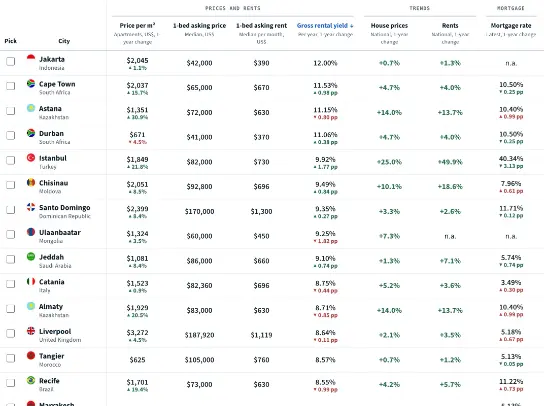
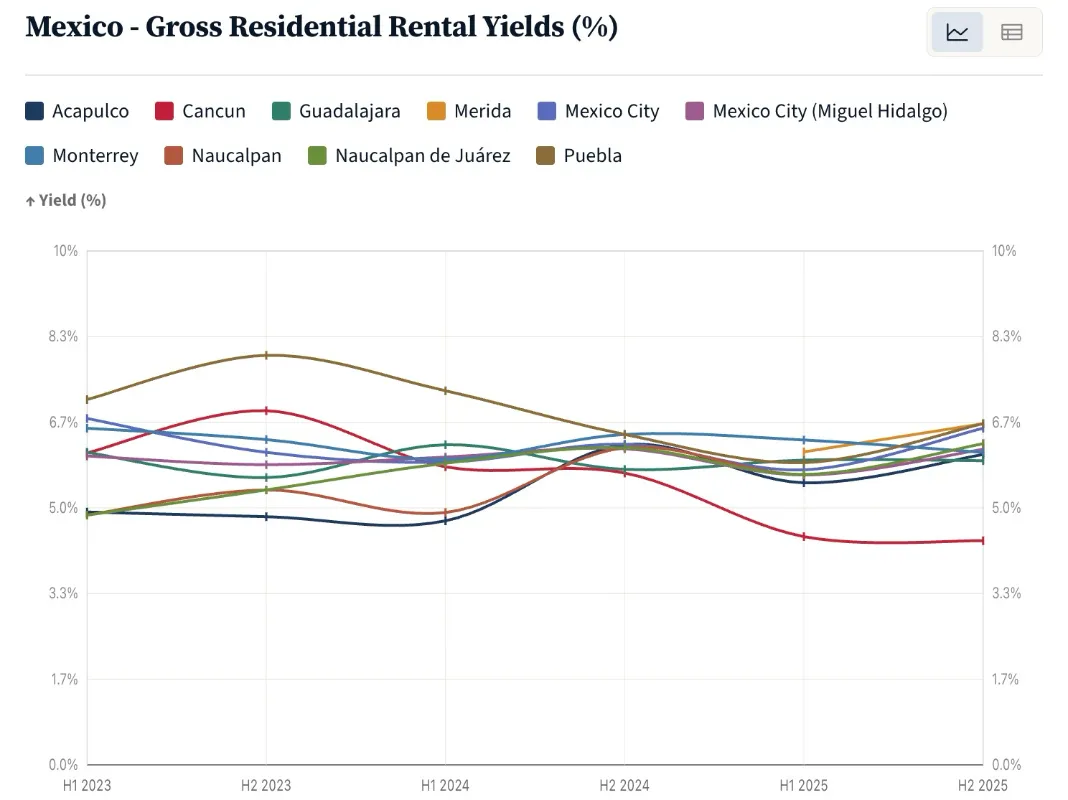
Now that the expatriates have been leaving, the top end of the rental market is collapsing. Yields at the top-end of the market are around 4 to 6% against 6.5% to 7.5% for other properties.
“There is no shortage of real estate agents pushing rents for 80-100 sq. m. (~840-1,050 sq. ft.) 2 bedroom flats close to the centre for EUR 2-4,000/month,” warns Erik Dempsey of Propertyinprague.com. “[But] even if such flats do achieve these high rents, the prospect of growth in the medium term (5-years) is nil with a larger probability of decline.”
“Ordinary” local rental market strong
However, the lower end of the private market is holding up well. In the early years after the fall of Communism, housing demand was unmet. This was partly because even if you could get a mortgage, it didn’t make financial sense to buy, because the monthly payment would be 10-50 times the regulated rental payment for an equivalent property.
On the supply side state subsidies for housing construction were abolished after 1989. By 1993, the number of dwellings built annually had decreased by more than 50%, to a level of 3 dwellings per 1,000 inhabitants (West European countries complete approximately 6-7 dwellings annually per 1,000 inhabitants).
There is a demand for modern, quality, yet affordable housing, as a result of the Czech Republic’s economic success, and the growth of a young middle class moving away from their parents’ rent-controlled flats. It is common to see Czechs spending 50%+ of their net incomes on mortgage payments.
New construction starts strongly up
Smaller, low-cost rental flats (under EUR 500/month) have good prospects for capital growth. In response to this increasing demand, new construction starts have increased dramatically since about 2000. “The number of started dwellings is particularly strong in multi-unit dwellings,” notes Dempsey.
Despite this rapid growth, the Czech statistical office estimates that there is a need to finish approximately 50,000 dwellings annually until 2010 (i.e. to reach a level of approximately 5 dwellings per 1,000 inhabitants).
Other estimates show 20,000 dwellings a year will be removed from the housing market due to age and deteriorated condition.
Permits for construction of only 23,700 apartment units were issued from Jan.-Nov. 2002, up by 6.7% year-on-year. Combined with the weak supply expected over the next 7 years, the strong growth within the Czech middle class, low interest rates and the ever increasing availability of mortgage financing; the facts indicate continuous strong demand pressures overriding supply for the long-term.
Steady price growth forecast
”My own forecast is that we will see steady growth in prices around the 20% per annum range for the next 2-3 years possibly falling to the 10-15% range by about 2008,” says Dempsey.
“Despite the rapid growth in the past, I still believe there is plenty of room for further steady growth well into the future. If we refer back to the discussion on the commercial market, it took about 10 years for the supply to catch up with demand. I would say the residential market is in its comparative 3rd year. Thus we should see about another 7 years before prices take on a correction period,” Dempsey concludes.