Brazil's Residential Property Market Analysis 2026
Brazil’s residential real estate market remains on a growth trajectory, albeit with moderating momentum. House price increases are softening despite strong demand. This trend reflects a broader deceleration in overall economic activity.
This extended overview from the Global Property Guide covers key aspects of the Brazilian housing market and takes a closer look at its most recent developments and long-term trends.
Table of Contents
- Property Prices and Price Index
- Property Demand Trends
- Property Supply Trends
- Rental Market: Rents and Rental Yields
- Mortgage Market and Interest Rates
- Historic Perspective
- Economic and Social Factors
Property Prices and Price Index
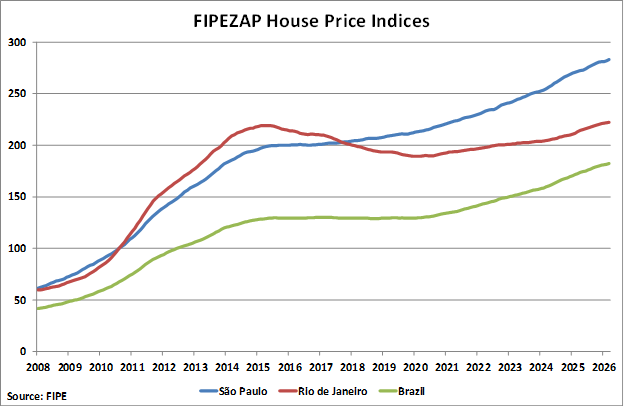
In the first quarter of 2026, Brazil’s FIPEZAP house price index was up by 5.62% from a year earlier, followed by year-on-year growth of 6.52% in Q4 2025, 6.89% in Q3, 7.49% in Q2, and 8.13% in Q1, according to figures released by Fundação Instituto de Pesquisas Econômicas (FIPE). This underscores a prolonged uptrend, marking the twenty-ninth consecutive quarter of sustained house price increases.
However, after adjusting for inflation, nationwide house price growth was more subdued, rising by just 1.41% over the same period.
Quarter-on-quarter, house prices increased by 1.01% in Q1 2026 but declined slightly by 0.9% in real terms.
Brazil's house price annual change:
The national figure conceals large variations in local house price movements. In the country’s five most populous cities:
- In São Paulo, house prices rose by 4.36% (0.13% inflation-adjusted) y-o-y in Q1 2026, lower than the prior year’s 6.54% growth. Quarter-on-quarter, nominal house prices in the city were up by 0.83% but declined by 1.1% when adjusted for inflation.
- In Rio de Janeiro, house prices rose by a modest 4.21% y-o-y in Q1 2026 and by just a miniscule 0.1% in real terms. Quarterly, prices increased by just 0.64% during the latest quarter and dropped by 1.25% when adjusted for inflation.
- In Brasilia, house prices rose by 3.19% in Q1 2026 from a year earlier, a slowdown from the previous year’s 5.92% growth. In fact, prices decreased slightly when adjusted for inflation. Quarterly, house prices were up by 2.14% (0.24% inflation-adjusted).
- In Fortaleza, house prices increased strongly by 13.46% y-o-y in Q1 2026, marking one of its best showings in the past decade. In real terms, house prices were up by 8.94% over the same period. Quarterly, prices rose by 2.87% (0.93% inflation-adjusted).
- Salvador also registered one of the highest year-on-year house price growth among the country’s 16 large towns, at 13.13% (8.6% inflation-adjusted) in Q1 2026. Quarter-on-quarter, house prices were up by 2.69% (0.75% inflation-adjusted).
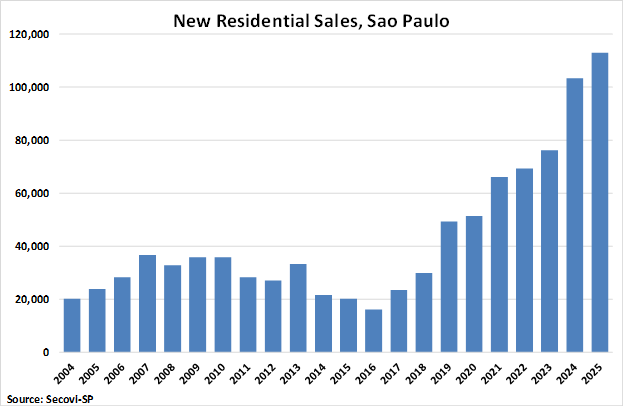
Demand continues to increase strongly. During 2025, the total number of residential sales in São Paulo rose by 9.3% to 113,000 units from a year earlier, according to Secovi-SP. This followed annual growth of 35.7% in 2024, 9.9% in 2023, 4.9% in 2022, 28.5% in 2021, and 4.5% in 2020. It marked its ninth consecutive year of annual growth and the highest number of residential sales ever recorded in the city.
The upward trend continues this year. In the first two months of 2026, there were 18,436 residential sales recorded in the city of São Paulo, up by 7.5% from 17,156 units sold in the same period last year.
There is also a renewed interest by foreign investors in Brazilian real properties recently, which is expected to boost the housing market further in the coming years. Foreign individuals and nonresidents may invest in urban and rural properties in Brazil through direct ownership from abroad, or resident companies or partnerships. To be able to buy a property, a tax registration number from the Cadastro de Pessoa Fisica (CPF) is required.
However, there are restrictions on investments in rural properties. Foreign individuals who intend to migrate to Brazil may acquire rural properties directly from abroad only if they come to live in Brazil within three years from the date of acquisition. In addition, rural properties acquired by foreign companies must be destined for the implementation of agricultural, industrial, or settlement projects, and these activities must be related to the companies’ purposes.
During 2025, the total number of residential launches in São Paulo surged by a huge 33.7% y-o-y to 139,654 units, following a strong growth of 42.6% in 2024, based on figures from Secovi-SP. It is now considered the highest number of residential launches recorded in a year in recent history.
However, supply appears to be slowing in early 2026, despite continued strong demand. In the first two months of 2026, there were 13,190 residential launches, down by 22.1% from 16,940 units in the same period last year. This is in stark contrast to the year-on-year growth of 130.3% in the first two months of 2025.
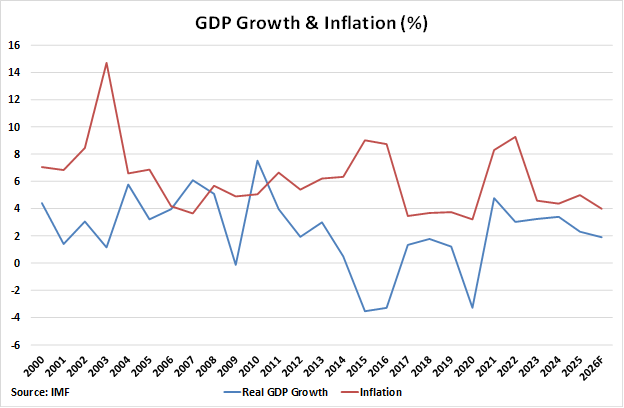
The country’s overall economic growth is moderating. In 2025, Brazil’s economy expanded by 2.3% year-on-year, marking its weakest performance since the COVID-19 downturn in 2020, as elevated interest rates weighed on both consumption and investment, according to the Instituto Brasileiro de Geografia e Estatística (IBGE). The slowdown reflected the impact of a prolonged restrictive monetary policy stance, implemented to guide inflation back toward the central bank’s 3% target. It followed annual real GDP growth rates of 3.4% in 2024, 3.2% in 2023, 3% in 2022, and 4.8% in 2021.
Recently, Brazil’s Finance Ministry revised its 2026 economic growth forecast downward to 2.3%, slightly lower than the previous estimate of 2.4%. International institutions have adopted a more cautious outlook, with the International Monetary Fund (IMF) projecting real GDP growth of 1.9%, while the World Bank forecasts a more conservative 1.6% expansion for the year.
Property Demand Trends
Residential sales in São Paulo continue to increase
Property demand continues to increase strongly. During 2025, the total number of residential sales in São Paulo rose by 9.3% to 113,000 units from a year earlier, according to Secovi-SP. This followed annual growth of 35.7% in 2024, 9.9% in 2023, 4.9% in 2022, 28.5% in 2021, and 4.5% in 2020.
It is now the ninth consecutive year of annual growth and the highest number of residential sales ever recorded in the city.
The upward trend continues this year. In the first two months of 2026, there were 18,436 residential sales recorded in the city of São Paulo, up by 7.5% from 17,156 units sold in the same period last year.
Property Supply Trends
Supply continues to surge
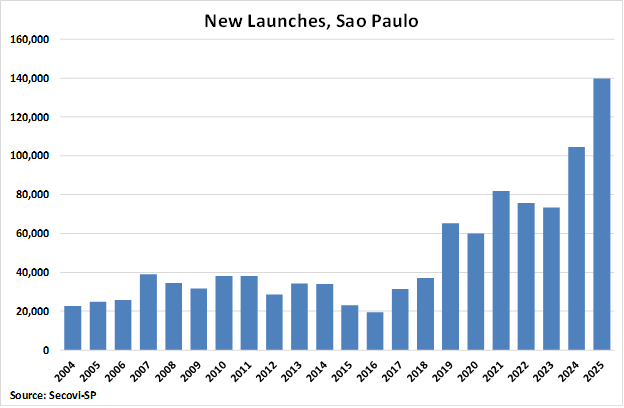
Residential supply is rising strongly. During 2025, the total number of residential launches in São Paulo surged by a huge 33.7% y-o-y to 139,654 units, following a strong growth of 42.6% in 2024 and annual declines of 3.2% in 2023 and 7.5% in 2022, based on figures from Secovi-SP. It is now considered the highest number of residential launches recorded in a year in recent history.
However, supply appears to be slowing in early 2026, despite continued strong demand. In the first two months of 2026, there were 13,190 residential launches, down by 22.1% from 16,940 units in the same period last year. This is in stark contrast to the year-on-year growth of 130.3% in the first two months of 2025.
As of February 2026, there were 80,248 available units of residential properties in the market.
In 2025, Brazil had 79.3 million permanent private housing units, an increase of 18.9% compared to 2016.
Minha Casa Minha Vida relaunched, replacing Case Verde e Amarela housing program
The Minha Casa Minha Vida (MCMV) program, originally launched in March 2009, remains one of Brazil’s most significant federal housing initiatives. Introduced during the administration of former President Luiz Inácio Lula da Silva, the program provided subsidized mortgage financing to low- and middle-income households through the state-owned bank Caixa Econômica Federal (CEF). Over the years, MCMV delivered millions of housing units and became the country’s flagship social housing program.
In late 2020, the federal government replaced MCMV (My Home, My Life housing program) with the Casa Verde e Amarela program (Green and Yellow House program). While it retained the core objective of expanding access to housing finance, Casa Verde e Amarela introduced additional components such as land regularization and home improvement financing. The program also adjusted income brackets and interest rates, aiming to improve affordability and broaden access to housing credit.
From four different categories under the MCMV program, the Casa Verde e Amarela program has only three:
- Range 1.5: families with a monthly income of at most BRL 2,000 (US$402) - subsidy up to BRL 47,500 (US$9,537), interest rate of 4.5%
- Range 2.0: families with a monthly income of up to BRL 4,000 (US$803) - a subsidy of up to BRL 29,000 (US$5,822), interest rate of 4.75%
- Range 3.0: families with a monthly income from BRL 4,000 (US$803) to BRL 7,000 (US$1,405), interest rate of 7.66%
In the first category, families can benefit from reduced interest rates, subsidized housing units, property reform, and land regularization.
However, in 2023, the government reinstated and restructured the Minha Casa Minha Vida program, effectively replacing Casa Verde e Amarela. The revamped MCMV places stronger emphasis on social inclusion, targeting lower-income families and reintroducing direct subsidies for the poorest households. It also prioritizes urban infrastructure, housing quality, and access to basic services.
Under the updated MCMV framework (2023-2026), income brackets were revised and expanded, allowing more families to qualify. Subsidies were increased, particularly for low-income groups, while interest rates remained subsidized through funding mechanisms such as the Fundo de Garantia do Tempo de Serviço (FGTS) and the Social Development Fund (FDS). The program also reintroduced a stronger role for public housing provision, especially for families in vulnerable conditions.
Since its relaunch in 2023, the MCMV program has significantly accelerated housing delivery and financing activity. As of late 2025, the program has contracted around 1.9 to 2.1 million housing units nationwide, benefiting millions of Brazilian families and surpassing its initial targets ahead of schedule.
In terms of actual delivery, thousands of housing units continue to be completed and handed over across multiple states. For instance, in 2025 alone, the government reported multiple rollout phases, including the delivery of 1,876 housing units in a single nationwide turnover event, reflecting the program’s ongoing implementation at scale.
The program also recorded a strong annual performance, with nearly 700,000 housing units financed in 2024, marking the highest level in over a decade.
Overall, the government aims to reach approximately 3 million contracted housing units by 2026, further reinforcing the program’s central role in addressing Brazil’s housing deficit and supporting the construction sector.
Rental Market: Rents and Rental Yields
Moderately good rental yields
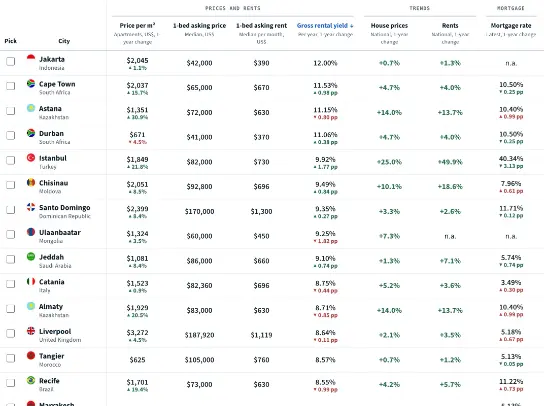
Brazil’s big cities offer moderate to good rental yields, what you can earn from an apartment before tax and other expenses. In the first quarter of 2026, the average gross rental yields on apartments in Brazil stood at 5.71%, unchanged from Q3 2025 but higher than the 5.28% recorded in the same period last year, according to a recent research conducted by the Global Property Guide.
In Brazil’s major cities:
- In São Paulo, apartments offer rental yields ranging from 4.73 to 9.45%, with a city average of 7.69% in Q1 2026.
- In Rio de Janeiro, apartment rental returns are relatively lower, ranging from 2.63% to 8.61%, with a city average of 4.14%.
- In Fortaleza, gross rental yields are very low, ranging from 1.47% to 4.49%, with a city average of 3.31%.
- In Guarapari, apartments offer rental yields ranging from 4.3% to 5.99%, with a city average of 4.97%.
- Recife apartments offer high rental yields of around 8.28% to 10.66%, with a city average of 9.36%.
- In Vitoria, gross rental yields are moderate, ranging from 4.76% to 4.79%, with a city average of 4.77%.
Brazil's rent price index:
Mortgage Market and Interest Rates
Selic rate cut signals cautious shift after extended tightening cycle
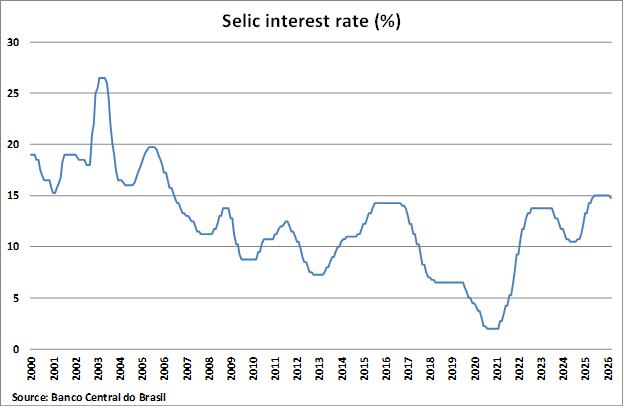
From an annual average of 3.5% in 2017-20, nationwide inflation surged to 8.3% in 2021 and further to 9.3% in 2022, as the reopening of the economy, coupled with global supply issues, a weaker currency, and severe drought, pushed up prices. To rein in inflationary pressures, the central bank hiked the Selic interest rate twelve times from a record-low of 2.0% in February 2021 to 13.75% in August 2022, where it remained unchanged until July 2023.
Brazil's mortgage loan interest rates:
As inflation began to ease, averaging about 4.5% in 2023-2024, the central bank shifted its stance and initiated a monetary easing cycle. The Selic rate was reduced by a cumulative 325 basis points, reaching 10.5% in May 2024.
However, by the end of 2024, there were clear indications that inflationary pressures were resurfacing, supported by resilient domestic demand, currency volatility, and external uncertainties. In response, the Banco Central do Brasil’s Monetary Policy Committee raised the Selic rate by 25 basis points to 10.75% in September 2024.
This marked the beginning of a renewed tightening cycle that extended into 2025. The Monetary Policy Committee (Copom) continued to raise interest rates through successive adjustments, as inflation remained above target and inflation expectations became less anchored. The Selic rate reached 15% in June 2025 and remained at that level until February 2026.
In March 2026, the central bank cut the Selic rate by 25 basis points to 14.75%, signaling the need for a more cautious policy calibration. It noted that the prolonged hold has begun to show clear transmission effects, contributing to a slowdown in economic activity. At the same time, external risks remain elevated, including the ongoing geopolitical tensions in the Middle East and continued global financial market volatility, both of which are weighing on emerging markets. Domestically, economic growth is gradually easing, although the labor market remains relatively strong. Inflation has shown improvement but continues to stay above the central bank’s target range.
“The global environment became more uncertain due to the escalation of geopolitical conflicts in the Middle East, altering global financial conditions. This scenario requires caution from emerging market economies amid heightened volatility of asset and commodities prices,” said the central bank in its Monetary Policy Statement released in March 2026.
“Regarding the domestic scenario, the set of indicators continues to show, as expected, a trajectory of moderation on economic growth, while the labor market still shows signals of resilience. In recent releases, headline inflation and measures of underlying inflation continued to show some improvement but remained above the inflation target,” added the central bank.
Real estate credit slowing again
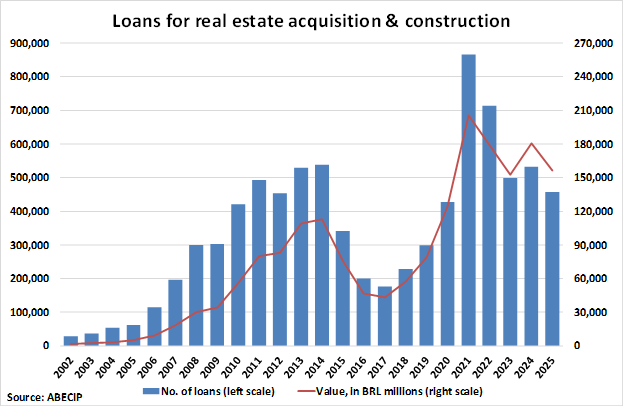
After 2017, the economy came out of the post-2014 economic slump, and loans for real estate acquisition and construction began to rise again. During 2021, real estate loans soared 65.7% y-o-y to reach a record-high of BRL 205.41 billion (US$40.99 billion), following strong growth of 57.5% in 2020, 37.1% in 2019, and 33% in 2018, according to ABECIP.
Likewise, the total number of real estate loans drawn more than doubled to 866,331 in 2021 from a year earlier. It was also the highest ever recorded.
However, real estate credit has slowed in the succeeding years, despite strong property demand. The total value of real estate loans fell by 12.8% y-o-y to BRL 179.16 billion (US$35.75 billion) in 2022 and by another 14.8% y-o-y to BRL 152.68 billion (US$30.47 billion) in 2023. Similarly, the number of loans fell by a huge 30% y-o-y to 499,149 in 2023, following a 17.7% decline in the prior year.
The market showed some signs of recovery in 2024, with the total value of real estate loans increasing by 18.2% y-o-y to BRL 180.41 billion (US$36 billion). Likewise, the number of loans was also up by 6.6% to 532,113 in 2024.
However, the market slowed again last year, with the total value of real estate loans falling by 13.4% y-o-y to BRL 156.3 billion (US$31.19 billion). Similarly, the number of loans declined by 14% y-o-y to 457,656 in 2025.
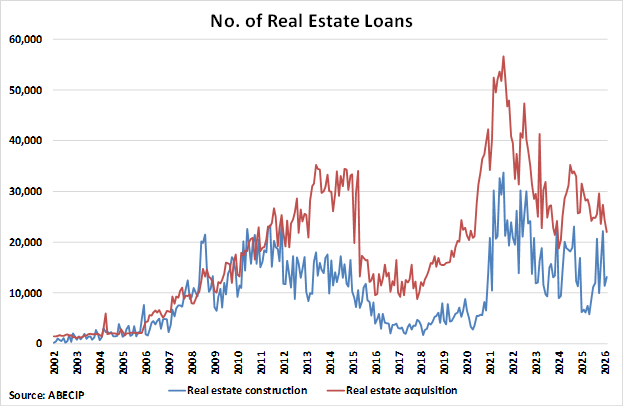
The real estate credit market remained weak this year, despite falling interest rates. In the first two months of 2026, the total amount and number of loans dropped by 7.6% and 4.5% y-o-y, respectively.
- Acquisition: total loan value for the purchase of real estate fell by 14.3% y-o-y to BRL 18.56 billion (US$3.7 billion) in Jan-Feb 2026. Also, the number of loans declined sharply by 24.2% y-o-y to 46,360 over the same period.
- Construction: total amount of loans for the construction of properties, on the other hand, increased by 27.3% y-o-y to BRL 5.34 billion (US$1.07 million) in the first two months of 2026. Likewise, the number of said loans surged by 88.2% to 24,480.
Outstanding home loans represent more than 10% of the country’s gross domestic product.
Historic Perspective:
Looking back: the amazing Lula housing boom
House prices surged in Brazil’s major cities during the period, rising by an impressive 224.74% in São Paulo between January 2008 and December 2015 (106.3% in real terms), and by an even more remarkable 266.1% in Rio de Janeiro (134% inflation-adjusted).
Pro-market reforms under former President Lula da Silva greatly helped boost mortgage lending, which rose by at least 25% per year between 2007 and 2014. Plus, interest rates were progressively cut from 26% to 7.25% between 2003 and 2012. The rapid growth of the middle class was another important factor. All of these elements contributed to the house price boom.
The 2007 discovery of enormous oil fields deep beneath a layer of salt in the Atlantic seabed boosted the energy industry’s demand for residential and office space. Demand continued to surge following the 2009 announcement that Rio de Janeiro would host the 2016 Olympic Games.
The property had by then become increasingly unaffordable due to the surge in house prices, leading many Brazilians to rent rather than own. “In the major cities, young professionals were struggling to afford the kind of prices now being asked for properties in good areas,” according to Colordarcy Investment.
However, in 2014, nominal house price rises slowed dramatically, ending the year with 6.7% growth (0.3% inflation-adjusted). Beginning in 2015, national house prices began to fall in real terms.
| ANNUAL HOUSE PRICE CHANGES (%), SAO PAULO | ||
| Year | Nominal | Inflation-adjusted |
| 2009 | 21.58 | 16.55 |
| 2010 | 23.99 | 17.08 |
| 2011 | 26.96 | 19.21 |
| 2012 | 15.78 | 9.39 |
| 2013 | 13.91 | 7.55 |
| 2014 | 7.33 | 0.87 |
| 2015 | 2.51 | -7.38 |
| 2016 | 0.41 | -5.53 |
| 2017 | 1.40 | -1.50 |
| 2018 | 1.79 | -1.89 |
| 2019 | 2.26 | -1.96 |
| 2020 | 3.79 | -0.70 |
| 2021 | 4.13 | -5.39 |
| 2022 | 5.06 | -0.68 |
| 2023 | 4.69 | 0.07 |
| 2024 | 6.65 | 1.73 |
| 2025 | 4.57 | 0.29 |
| Sources: FIPE, Global Property Guide | ||
The crisis and its aftermath, Bolsonaro came to power
Brazil’s decade-long troubles began with the global recession in 2008. To boost the economy, the Central Bank of Brazil slashed the benchmark Selic rate from 13.75% in December 2008 to 8.75% by July 2009.
Brazil was swamped with consumer credit, and there was a surge in inflation. Even so, economic growth fell to 1.9% in 2012, 3% in 2013, and 0.5% in 2014.
In June 2013, riots exploded, precipitated by a BRL0.20 (USD0.04) rise in public transport fares and complaints about excessive spending on mega-sporting events. Brazil is not a poor country. But tax rates are extremely high, yet many Brazilians spend up to four hours per day in traffic jams, either in their cars or on crowded public transport. The protests were an outburst of popular frustration at corruption - a protest against an intolerable situation.
Alarmed at the inflation, the central bank raised the benchmark interest rate nine times from 7.25% in March 2013 to 14.25% in 2015, the highest level for almost six years.
Mortgage lending slowed sharply, with the total value of loans plunging by 33% in 2015 and by another 38.3% in 2016, according to the Brazilian Association of Real Estate Loans and Savings Companies (ABECIP), amidst the ongoing political turmoil in the country. The decline continued in 2017, with real estate credit falling by 7.4% compared to the prior year.
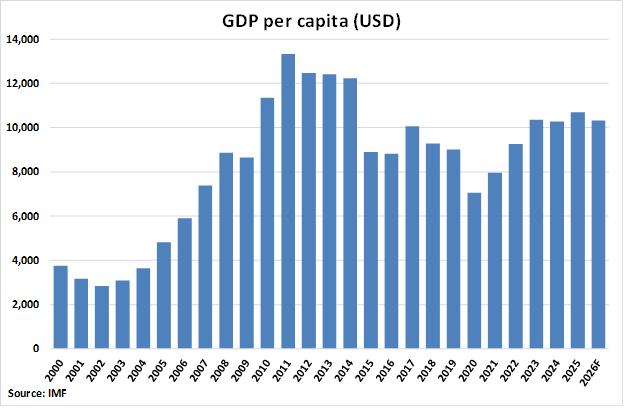
A slump followed, and the currency fell. GDP per capita fell 32.4% between 2011 and 2019, to US$9,010, according to the IMF, though this was largely an artifact of the currency’s decline - in fact, real GDP fell by only 3.5% in 2015 and by 3.3% in 2016. Then came a corruption scandal involving oil giant Petrobras and the country’s largest engineering and construction firms. The investigation has implicated politicians, mostly from President Dilma Rousseff’s Workers’ Party.
Protests in the streets escalated, worsening the country’s already ailing economy. In August 2016, Rousseff was removed from office, and Michel Temer was sworn in as Brazil’s new president.
Although the public did not hit the streets to protest against Temer, his approval ratings remained in single-digit figures. Corruption controversies led him to become even more unpopular, and after his term of office ended, Temer was arrested in March 2019 on corruption and money laundering charges. Worse, the massive bribery scandal involving Brazilian construction giant Odebrecht exploded. Odebrecht was behind the construction of venues for the 2014 World Cup, the 2016 Olympics, the metro systems in Caracas, and other huge infrastructure projects.
The crisis helped right-wing candidate and retired army officer Jair Bolsonaro sweep to victory during the October 2018 presidential election on a populist, anticorruption platform.
Bolsonaro’s defeat and Lula’s return to power
Bolsonaro, a free marketeer, has very worrying anti-environmentalist and anti-human rights views. He has failed to deliver on most of his promises. During the onset of the Covid-19 pandemic, Bolsonaro had been widely criticized for his handling of the health crisis, refusing to support measures to halt the spread of the virus.
The economy contracted by 3.3% during 2020, following annual average growth of 1.4% in 2017-19. It was at par with the decline seen in 2016.
In fact, the country’s GDP per capita plummeted by almost 22% in just a year, falling to US$7,057 in 2020.
Public dissatisfaction intensified in the following years. In July 2021, tens of thousands of people took to the streets to protest amidst the allegations of corruption involving the purchase of vaccines by the government. In October 2021, a Senate investigative committee found that Bolsonaro committed nine crimes related to his administration's handling of the health crisis, amidst delayed vaccines, oxygen shortages, and ineffective treatments.
With the incumbent president’s poor approval ratings leading to the October 2022 general elections, it is not surprising that he lost to his leftist rival, ex-president Lula da Silva, who was inaugurated as president on January 1, 2023.
Since returning to office, Lula has focused on easing cost-of-living pressures, particularly through efforts to stabilize food prices, strengthen public security via police reform and anti-cybercrime initiatives, and accelerate infrastructure development under the Novo PAC program to support long-term growth.
In 2025, the administration faced a more challenging macroeconomic environment marked by tighter financial conditions and slower growth, as monetary policy remained restrictive to contain inflationary pressures. Despite this, employment conditions remained relatively resilient, helping to support household consumption.
By 2026, Brazil began to show early signs of macroeconomic stabilization, with inflation gradually easing and allowing for a cautious shift toward monetary policy easing. However, growth remained moderate, reflecting the lagged effects of earlier rate hikes, while external risks, including geopolitical tensions and global financial volatility, continued to weigh on emerging market sentiment.
Economic and Social Factors
Economic growth slows, Brazilian Real strengthens
In 2025, Brazil’s economy expanded by 2.3% year-on-year, marking its weakest performance since the COVID-19 downturn in 2020, as elevated interest rates weighed on both consumption and investment, according to the Instituto Brasileiro de Geografia e Estatística (IBGE). The slowdown reflected the impact of a prolonged restrictive monetary policy stance, implemented to guide inflation back toward the central bank’s 3% target.
It followed annual real GDP growth rates of 3.4% in 2024, 3.2% in 2023, 3% in 2022, and 4.8% in 2021.
Recently, Brazil’s Finance Ministry revised its 2026 economic growth forecast downward to 2.3%, slightly lower than the previous estimate of 2.4%. International institutions have adopted a more cautious outlook, with the International Monetary Fund (IMF) projecting real GDP growth of 1.9%, while the World Bank forecasts a more conservative 1.6% expansion for the year.
“Growth is expected to moderate to 1.6 percent in 2026, as household consumption slows amid reduced government transfers and softer labor market gains, while normalizing agriculture growth after a bumper year, elevated interest rates and global economic uncertainty weigh on investment and exports,” said the World Bank.
“Macroeconomic risks are tilted to the downside. While resilient activity and additional structural reforms could support stronger growth, insufficient fiscal adjustment could weaken growth prospects, hinder the anchoring of inflation expectations, and heighten debt vulnerabilities. The conflict in the Middle East elevated inflation and exchange rate risks and delayed monetary normalization, which may dampen domestic demand. Rising oil prices can reduce the current account deficit as Brazil is a net oil exporter,” added the World Bank.
Labor market conditions appear to have softened in recent months. In the three months to February 2026, the national unemployment rate rose to 5.8%, up from 5.4% in the previous month and marking its highest level since June 2025, according to data from IBGE. Nevertheless, it remains below the 6.8% recorded in the same period a year earlier, indicating that while momentum is weakening, labor market conditions remain favorable.
From an annual average of 7.7% in 2010-15, the jobless rate rose to 12.6% in 2016-21. Unemployment fell again to 9.3% in 2022, to 8% in 2023, to 6.6% in 2024, and finally to 5.6% in 2025.
There were about 6.24 million unemployed persons in Brazil in February 2026, up from 5.85 million in the previous month but still far lower than the 7.33 million unemployed persons recorded in the same period last year.
Overall inflation stood at 4.14% in March 2026, up from 3.81% in the previous month but still lower than the 5.48% recorded in the prior year, according to IBGE. The reading is still within the central bank’s inflation target range of 3.0%, with a tolerance band of plus or minus 1.50 percentage points, though it is now close to the upper limit of the target corridor.
From an annual average of just 3.5% in 2017-20, inflation surged to 8.3% in 2021 and to 9.3% in 2022. It reached a 19-year peak of 12.13% in April 2022, prompting the central bank to hike its benchmark Selic rate several times to rein in inflationary pressures. Inflation eased to an average of 4.6% in 2023 and to 4.4% in 2024 but increased again to 5% last year.
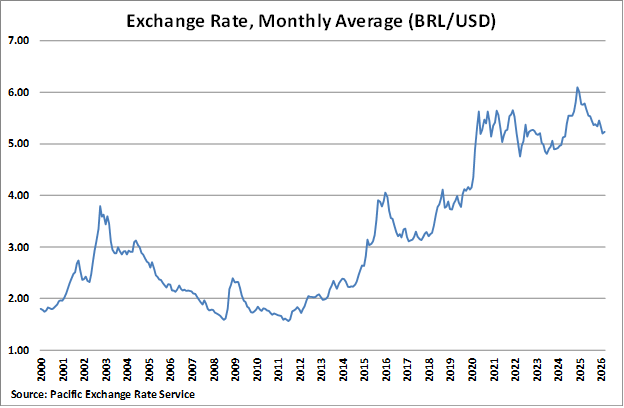
Since the onset of the pandemic, the Brazilian Real (BRL) has weakened sharply. By the end of 2022, the average monthly exchange rate stood at BRL 5.2478 per US dollar, losing nearly 22% of its value against the dollar over the preceding three years.
The domestic currency remained generally weak over the subsequent two years, depreciating by around 15% against the US dollar between January 2023 and December 2024, when it reached an average exchange rate of BRL 6.0975 per US dollar.
However, the Real began to strengthen in early 2025, recovering some of its losses amid improved market sentiment and shifting external conditions. By March 2026, it had appreciated by approximately 16.6% against the dollar, with the average exchange rate reaching BRL 5.2316 per US dollar.
Sources:
- FipeZAP - Índice Fipezap de Preços De Imóveis Anunciados (Fundação Instituto de Pesquisas Econômicas): https://www.cit-homolog.com.br/
- Secovi-SP launches Real Estate Market Yearbook 2025 (Secovi-SP): https://secovi.com.br/
- Pesquisa Secovi-SP do Mercado Imobiliário – Fevereiro 2026 (Secovi-SP): https://secovi.com.br/
- Rented housing units grew more than 50% since 2016 (Instituto Brasileiro de Geografia e Estatística): https://agenciadenoticias.ibge.gov.br/
- “Green and Yellow House” Program: 1.2 million houses delivered (Gov.br): https://www.gov.br/
- Entenda as razões do sucesso do Minha Casa, Minha Vida em 2025 (Gov.br): https://www.gov.br/
- Minha Casa, Minha Vida entrega novas moradias para mais de 7,5 mil brasileiros (Gov.br): https://www.gov.br/
- Minha Casa, Minha Vida bate recorde com 698 mil financiamentos em 2024 (CNN Brasil): https://www.cnnbrasil.com.br/
- Três anos de realizações: Minha Casa, Minha Vida muda vidas de Norte a Sul do Brasil (Gov.br): https://www.gov.br/
- Gross rental yields in Brazil: Sao Paulo and 5 other cities (Global Property Guide): https://www.globalpropertyguide.com/
- Copom reduces the Selic rate to 14.75% p.a. - 277th Meeting - March 2026 (Banco Central do Brasil): https://www.bcb.gov.br/
- Brazil (International Monetary Fund): https://www.imf.org/
- Target for federal funds rate (Selic) (Banco Central do Brasil): https://www.bcb.gov.br/
- The Most Attractive Market for Property Investors (Colordarcy Investment): https://www.colordarcy.com/
- Crédito imobiliário tem virada promissora em dezembro (ABECIP): https://www.abecip.org.br/
- Crédito imobiliário atinge o montante de R$ 3,68 bilhões em dezembro (ABECIP): https://www.abecip.org.br/
- Former Brazil president Michel Temer arrested on corruption charges (The Washington Post): https://www.washingtonpost.com/
- Brazil (International Monetary Fund): https://www.imf.org/
- Brazil (World Bank): https://thedocs.worldbank.org/
- Brazil GDP Annual Growth Rate (Trading Economics): https://tradingeconomics.com/
- Brazil’s economy cooled in 2025 under the weight of high interest rates (Reuters): https://www.reuters.com/
- Brazil Unemployment Rate (Trading Economics): https://tradingeconomics.com/
- Brazil Finance Ministry revises 2026 growth forecast to 2.3% (Investing.com): https://www.investing.com/