When buying property overseas, one of the most overlooked but important costs is the annual property (holding) tax.
While many countries impose recurring charges on property owners, often 0.5%–2% of the property’s value per year, some countries do not levy such a tax at all, or apply only a minimal rate.
This makes these jurisdictions especially attractive to long-term investors, retirees, and second-home buyers, since carrying costs remain low over time.
However, investors should keep in mind that in some of these countries, other fees (such as municipal service charges, tourism levies, or notary/registration costs) may partially substitute for property tax.
Countries With No Annual Property Tax
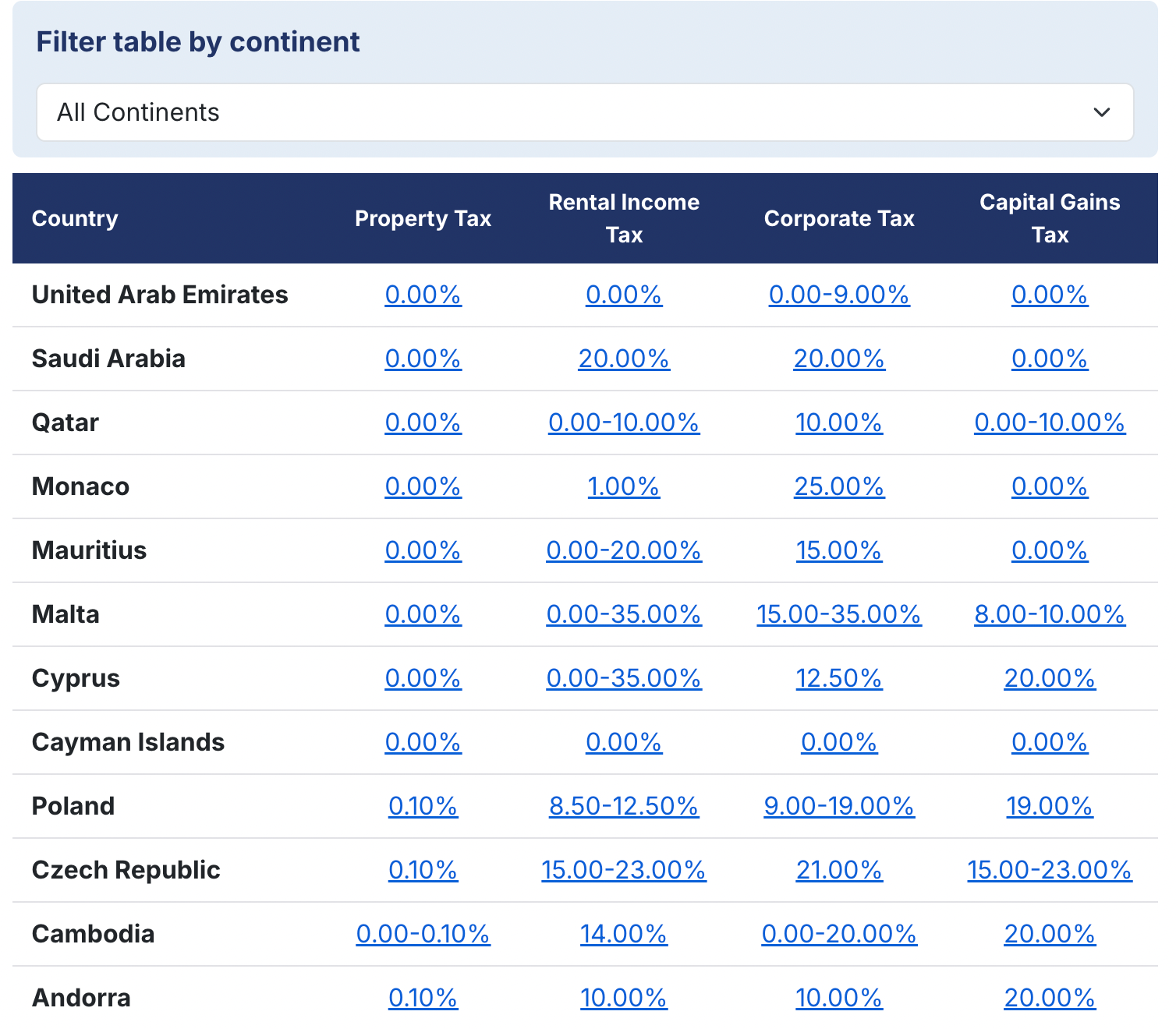
These countries and jurisdictions currently do not impose a direct, nationwide annual property tax on real estate owners:
If you own a property, you will pay 0% tax in:
-
Bahrain
-
Turks and Caicos
Countries With Minimal Annual Property Tax Rates
These countries maintain an annual property tax, but at very low rates compared to global standards (generally under 0.30% of property value):
-
Andorra: 0.10%
-
Costa Rica: 0.25%
-
Croatia: 0.10%–0.20%
-
Czech Republic: 0.10%
-
Hungary: 0%–0.20%
-
Ireland: 0.10%–0.30%
-
North Macedonia: 0.10%–0.20%
-
Mexico: 0.05%–0.30%
-
Poland: 0.10%
-
Slovenia: 0.10%–0.30%
-
Thailand: 0.10%–0.30%
-
Vietnam: 0.03%–0.15%
-
Cambodia: 0%–0.10%
-
Slovakia: 0.25%
-
Ukraine: 0%–0.20%
Conclusion
For global investors, the absence or near-absence of annual property taxes can make a big difference in long-term returns.
A 1% annual tax may sound small, but over 10–20 years it compounds into a major cost, often rivaling rental income. Same applies for luxury real estate.
Countries with no or very low property taxes are therefore especially appealing for:
-
Long-term holders who want to minimize carrying costs.
-
Second-home buyers and retirees seeking predictable expenses.
-
Yield-focused investors looking to preserve more of their rental returns.
Although we update property tax list every year, investors and buyers should remain cautious. Some of these jurisdictions rely on alternative fees or can introduce new taxes during fiscal pressure. It’s always wise to consult a local tax advisor before committing capital.