Montenegro's Residential Property Market Analysis 2026
Montenegro's new-home prices are still climbing at double-digit rates, but almost everything around them has changed. The construction slump described in our previous edition has turned into a permit boom, rent inflation has fallen from above 20% to barely 1%, the European Central Bank is raising rates again, and a new residence law has made property-based residency much harder for non-EU buyers.
This extended overview from Global Property Guide covers key aspects of the Montenegrin housing market and takes a closer look at its most recent developments and long-term trends.
Table of Contents
- Property Prices and Price Index
- Property Demand Trends
- Property Supply Trends
- Rental Market: Rents and Rental Yields
- Mortgage Market and Interest Rates
- Economic and Social Factors
Property Prices and Price Index
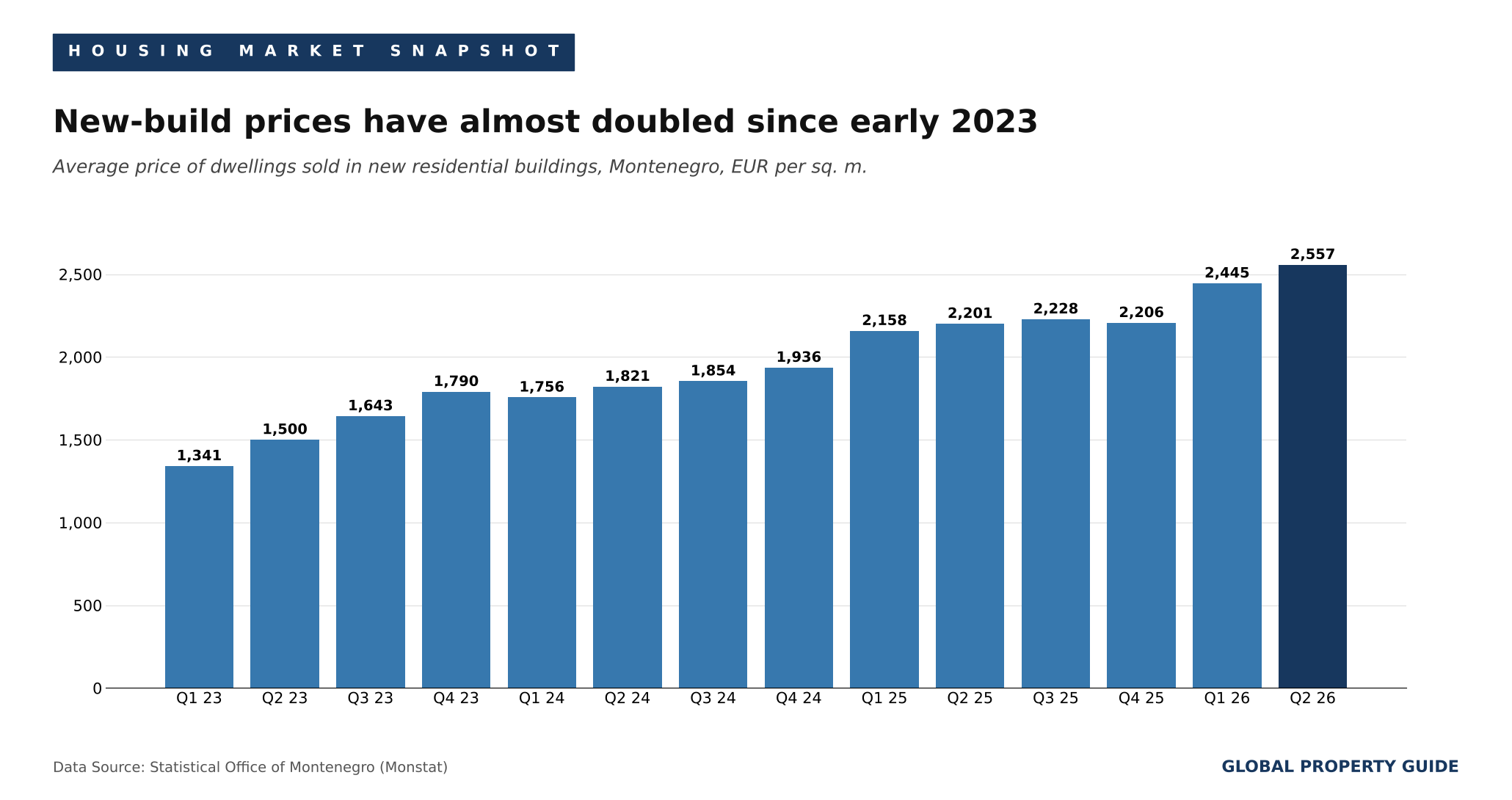
In Q2 2026, the average price of dwellings sold in new residential buildings in Montenegro reached a record EUR 2,557 (USD 2,860) per square meter, according to the Statistical Office of Montenegro (Monstat). That is 16.2% higher than a year earlier and 4.6% higher than in Q1 2026. Adjusted for inflation, prices rose by about 12.1% year-on-year.
Montenegro's house price annual change:
Prices have now almost doubled since early 2023, when the average stood at EUR 1,341 per square meter. In full-year 2025, the average new-build price was EUR 2,200 (USD 2,461) per square meter, up 19.3% from 2024.
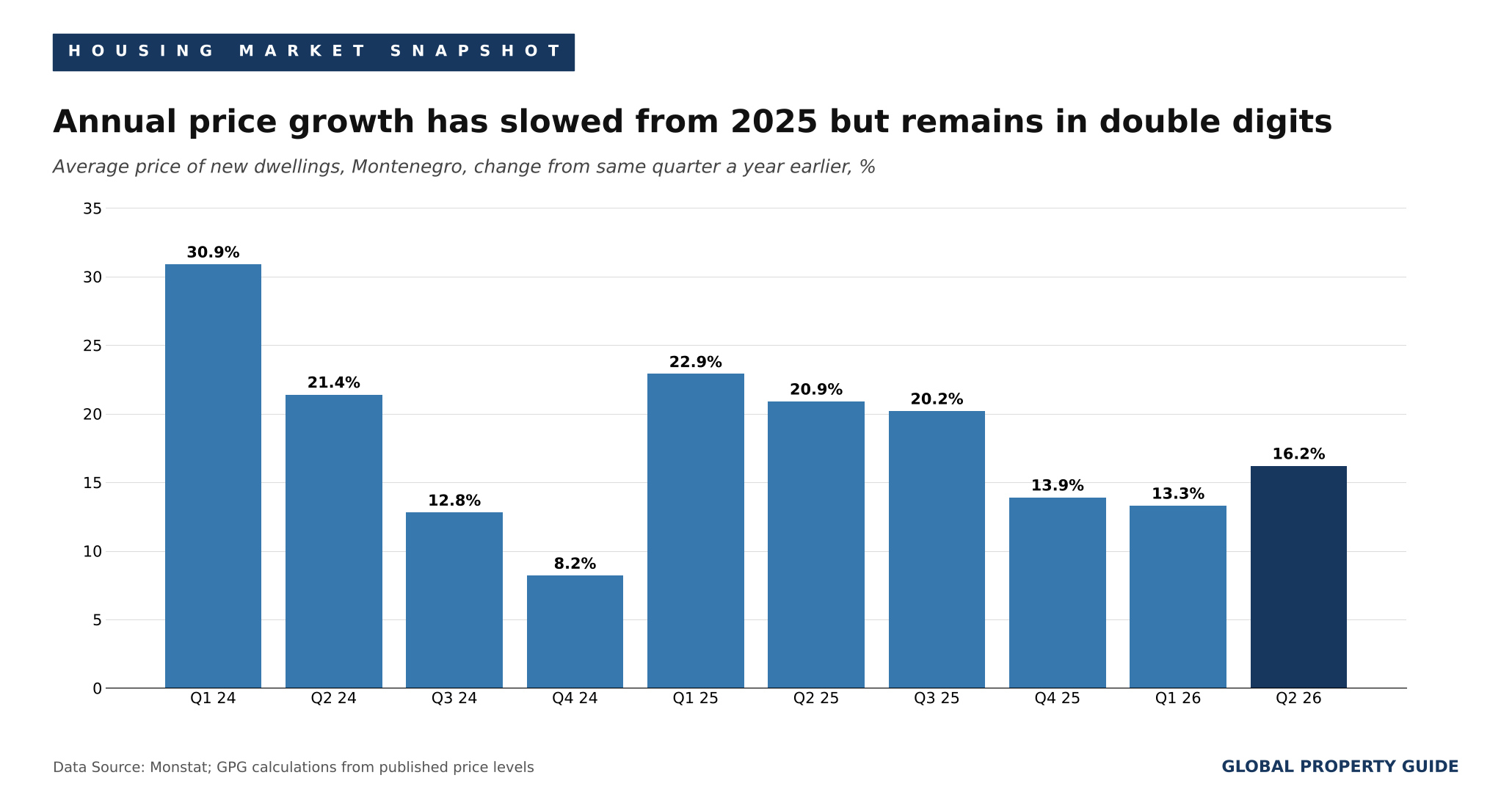
The pace of growth, however, is lower than in 2025. Annual price growth peaked at 22.9% in Q1 2025 and stayed above 20% through Q3 2025, before slowing to 13.9% in Q4 2025 and 13.3% in Q1 2026. The Q2 2026 reading of 16.2% marks a modest pick-up.
The Q4 2025 figure needs some care. The national average that quarter fell 1.0% from Q3 to EUR 2,206 per square meter, but only because low-cost "solidarity" housing sold at EUR 705 per square meter was included in the sample. Dwellings sold by private companies averaged a record EUR 2,415 (USD 2,701) per square meter, 24.3% higher than a year earlier.
The Central Bank of Montenegro (CBCG) has become more cautious. In its Financial Stability Report 2025, it rated real estate market risk as elevated, identifying foreign direct investment into property as the leading driver of price growth. In its March 2026 review of the countercyclical capital buffer, the central bank said it still sees some overvaluation of property prices and expects housing demand to weaken in 2026 because of stricter rules on the residence of foreign nationals.
Local house price variations
Prices rose in every region over the year to Q2 2026.
In Podgorica, the capital, the average price of new dwellings rose 19.1% year-on-year to EUR 2,510 (USD 2,808) per square meter in Q2 2026, according to Monstat. Quarter-on-quarter, prices were up 4.8%.
In other regions:
- In the coastal region, the most expensive part of the country, new dwellings averaged EUR 2,838 (USD 3,175) per square meter in Q2 2026, up 21.6% from a year earlier and 10.2% from the previous quarter.
- In the northern region, the average price was EUR 2,145 (USD 2,399) per square meter, compared with EUR 1,547 in Q2 2025.
- In the central region, the average price was EUR 2,131 (USD 2,384) per square meter, against EUR 1,068 a year earlier. Sales in the central and northern regions are few and volatile: Monstat recorded no new-build sales at all in the central region in Q3 2025 and Q1 2026, or in the northern region in Q4 2025.
| Average price of dwellings in new residential buildings by area: | |||||
| Q2 2026, EUR/sqm |
Q2 2026, USD/sqm |
Q2 2025, EUR/sqm |
Q2 2025, USD/sqm |
YoY, % | |
| Montenegro | 2,557 | 2,860 | 2,201 | 2,462 | 16.2% |
| Podgorica | 2,510 | 2,808 | 2,108 | 2,358 | 19.1% |
| Coastal region | 2,838 | 3,175 | 2,333 | 2,610 | 21.6% |
| Northern region | 2,145 | 2,399 | 1,547 | 1,730 | 38.7% |
| Central region | 2,131 | 2,384 | 1,068 | 1,195 | 99.5% |
| Note: Exchange rate EUR 1 = USD 1.1186 (ECB euro reference rate, 8 October 2026), applied throughout this article. | |||||
| Data source: Statistical Office of Montenegro (Monstat). | |||||
Asking prices are higher still. Property portal Estitor's Q2 2026 report, as reported by Investitor.me, put average asking prices at EUR 4,391 (USD 4,912) per square meter in Tivat, EUR 3,701 (USD 4,140) in Kotor, EUR 3,309 (USD 3,701) in Budva, EUR 2,797 (USD 3,129) in Bar and EUR 2,672 (USD 2,989) in Podgorica.
Property Demand Trends
Foreign investment rose in 2025, but is slowing
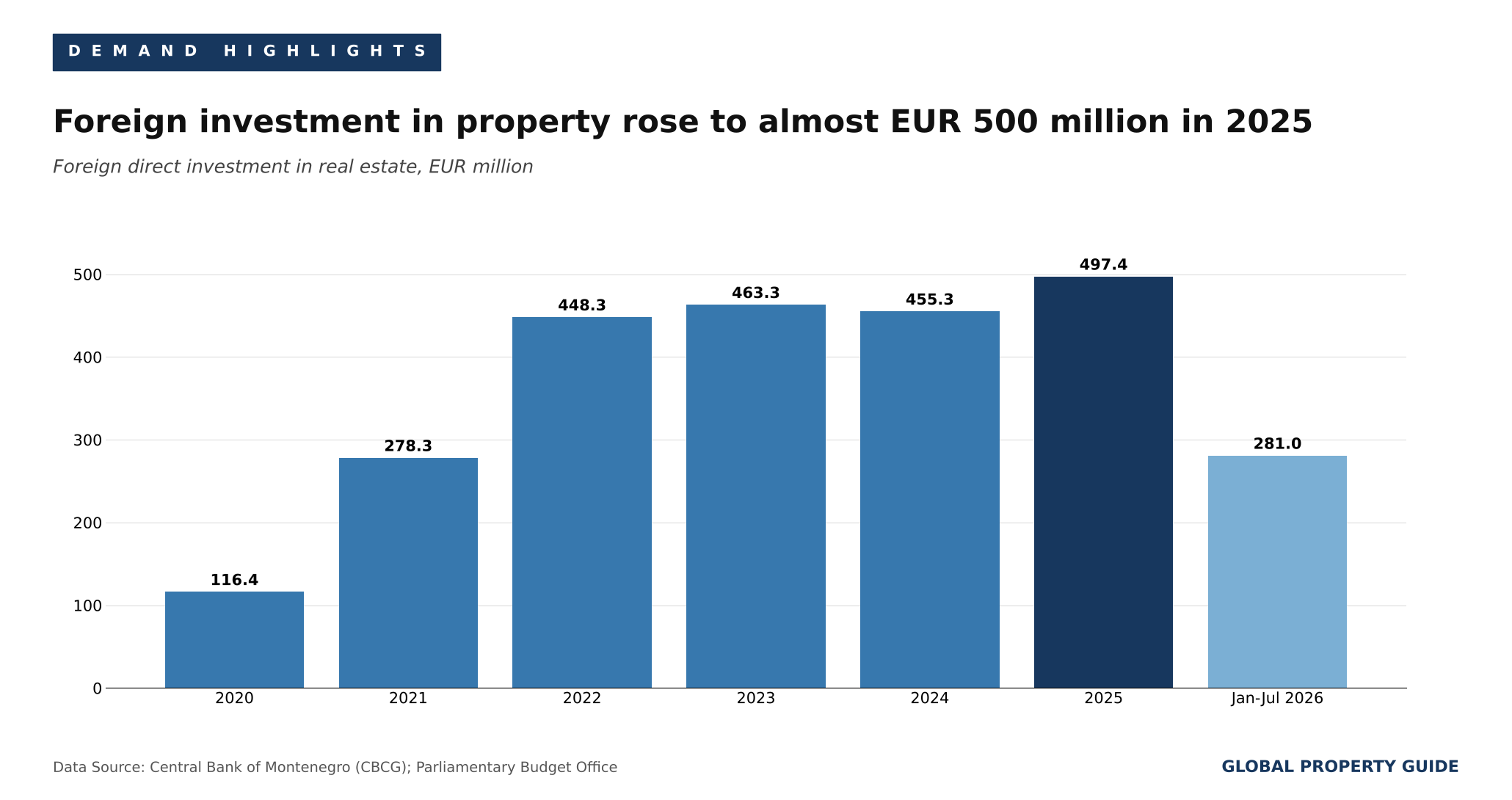
Foreign buyers remain the main engine of the Montenegrin housing market. Foreign direct investment in real estate rose 9.24% to EUR 497.4 million in 2025, according to the CBCG, after a 1.7% dip in 2024. Property purchases accounted for nearly half of the country's total foreign direct investment inflow of EUR 1,018 million. The CBCG estimates that foreign investment in real estate totalled EUR 1.86 billion between 2022 and 2025.
Momentum has slowed this year. In the first seven months of 2026, foreign investment in real estate amounted to EUR 281.0 million, up just 3.17% from a year earlier. In the first half of 2025, growth had been 14.46%.
Serbian buyers lead. In the first eight months of 2025, they invested EUR 61.0 million in Montenegrin property, ahead of buyers from Turkey (EUR 35.6 million), the United States (EUR 31.9 million) and Germany (EUR 28.6 million), according to an analysis of CBCG data by Montenegro's Parliamentary Budget Office. Russia, which once dominated the market, invested EUR 56.0 million in 2023 and EUR 37.8 million in 2024, and has since dropped out of the top five foreign investors.
Russia's retreat reflects politics. Montenegro joined NATO in 2017 and aligned with EU sanctions after Russia's invasion of Ukraine, after which Moscow added Montenegro to its list of "unfriendly" states in March 2022.
Property-based residency has been tightened
The biggest change for foreign buyers is legal. Amendments to the Law on Foreigners, published in the Official Gazette on 9 January 2026 and in force since 17 January 2026, mean that a non-EU buyer can only obtain temporary residence on the basis of property ownership if the property's value for transfer tax purposes is at least EUR 150,000. Previously, a property purchase of any value could support a residence application.
Citizens of EU member states, Iceland, Liechtenstein, Norway and Switzerland, and their family members, are exempt. To extend a property-based permit, the holder must also show that tax obligations were paid while the permit was valid. The government had originally proposed a higher threshold of EUR 200,000.
There are no restrictions on foreigners buying apartments and houses. Land can only be purchased by foreigners through a company.
Tourism remains strong
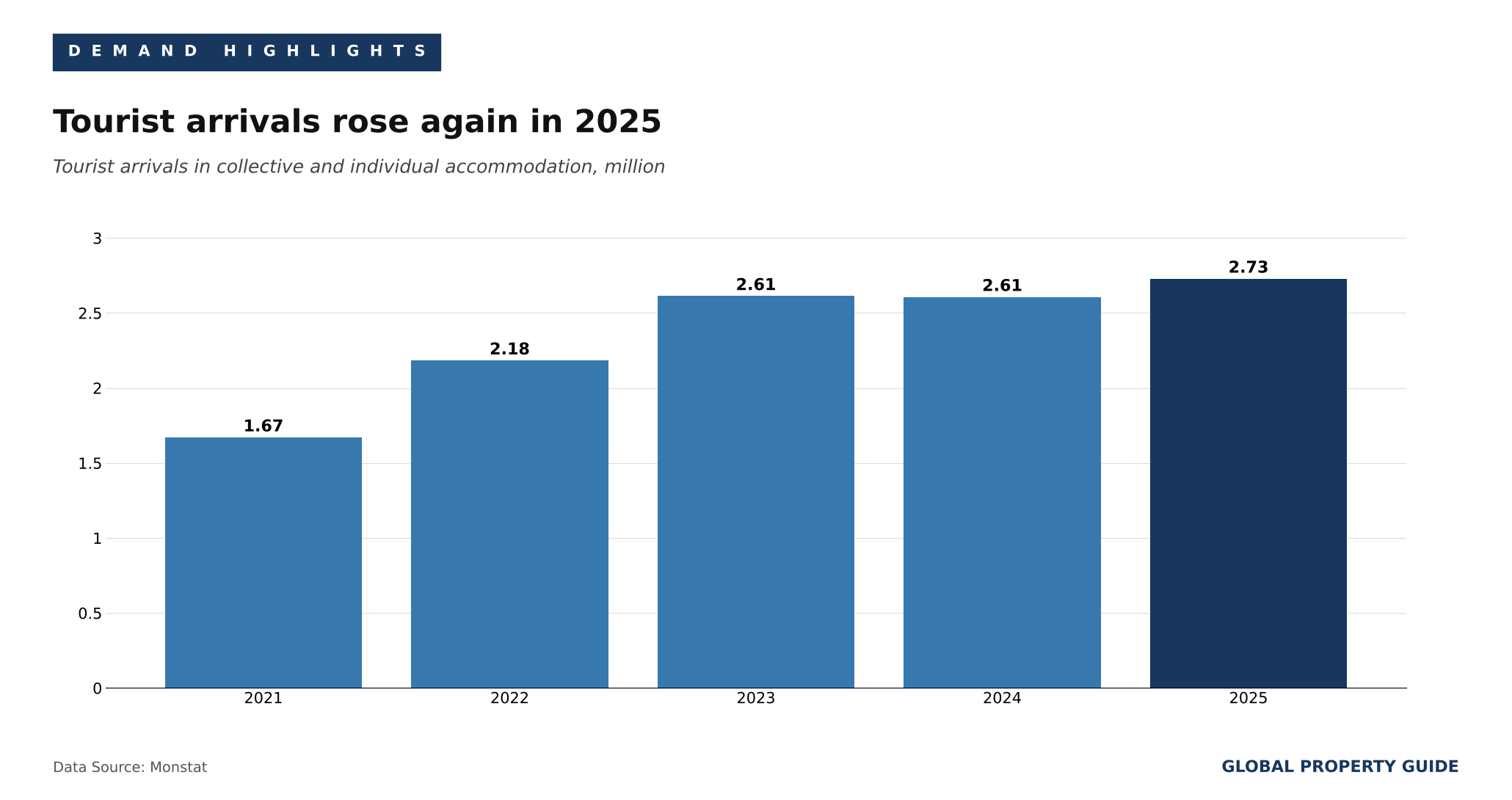
Tourism, the backbone of demand for coastal property, kept growing. In 2025, Montenegro recorded 2,728,564 tourist arrivals, up 4.67% from 2024, according to Monstat. Overnight stays, however, fell 1.46% to 15.37 million. Foreigners accounted for 95.8% of overnight stays, led by visitors from Serbia (23.4%), Russia (16.4%), Bosnia and Herzegovina (8.1%) and Germany (4.6%).
The 2026 season has been stronger. In the first seven months of 2026, arrivals rose 7.78% to 1.62 million and overnight stays increased 7.98% to 8.86 million. Almost all of the growth came from private accommodation, where arrivals were up 15.94%, while hotels and other collective accommodation grew just 1.48%.
Tourism revenue reached EUR 1.48 billion in 2025, according to the Ministry of Tourism. In the first half of 2026, revenue from foreign visitors rose 8.75% year-on-year to EUR 465.05 million.
The coast continues to attract buyers
The coastal towns of Budva, Kotor, Tivat, Herceg Novi and Bar remain the focus of foreign demand. Budva, a historic Venetian port turned resort town, is one of the country's busiest tourist destinations. Nearby Sveti Stefan, an island-village that was a playground for international celebrities from the 1960s to the 1980s, now operates as a luxury Aman resort. Large-scale developments such as Porto Montenegro in Tivat, Portonovi in Kumbor and Lustica Bay have brought high-end residential supply to the Bay of Kotor.
Property Supply Trends
Residential permits have rebounded sharply
Our previous edition described residential construction as in decline, with the number of dwellings in building permits down 36.1% in the first three quarters of 2025. That picture has reversed.
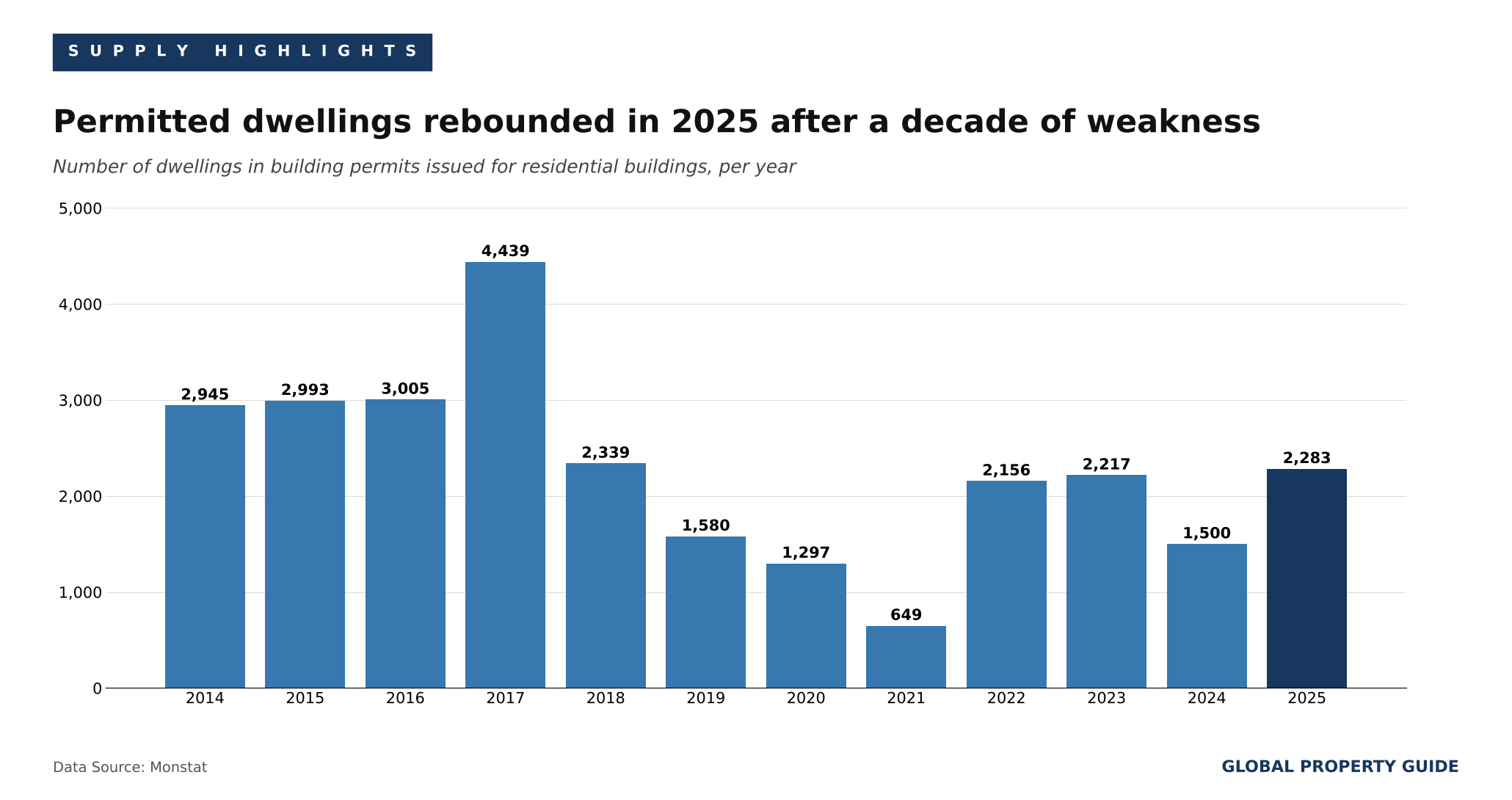
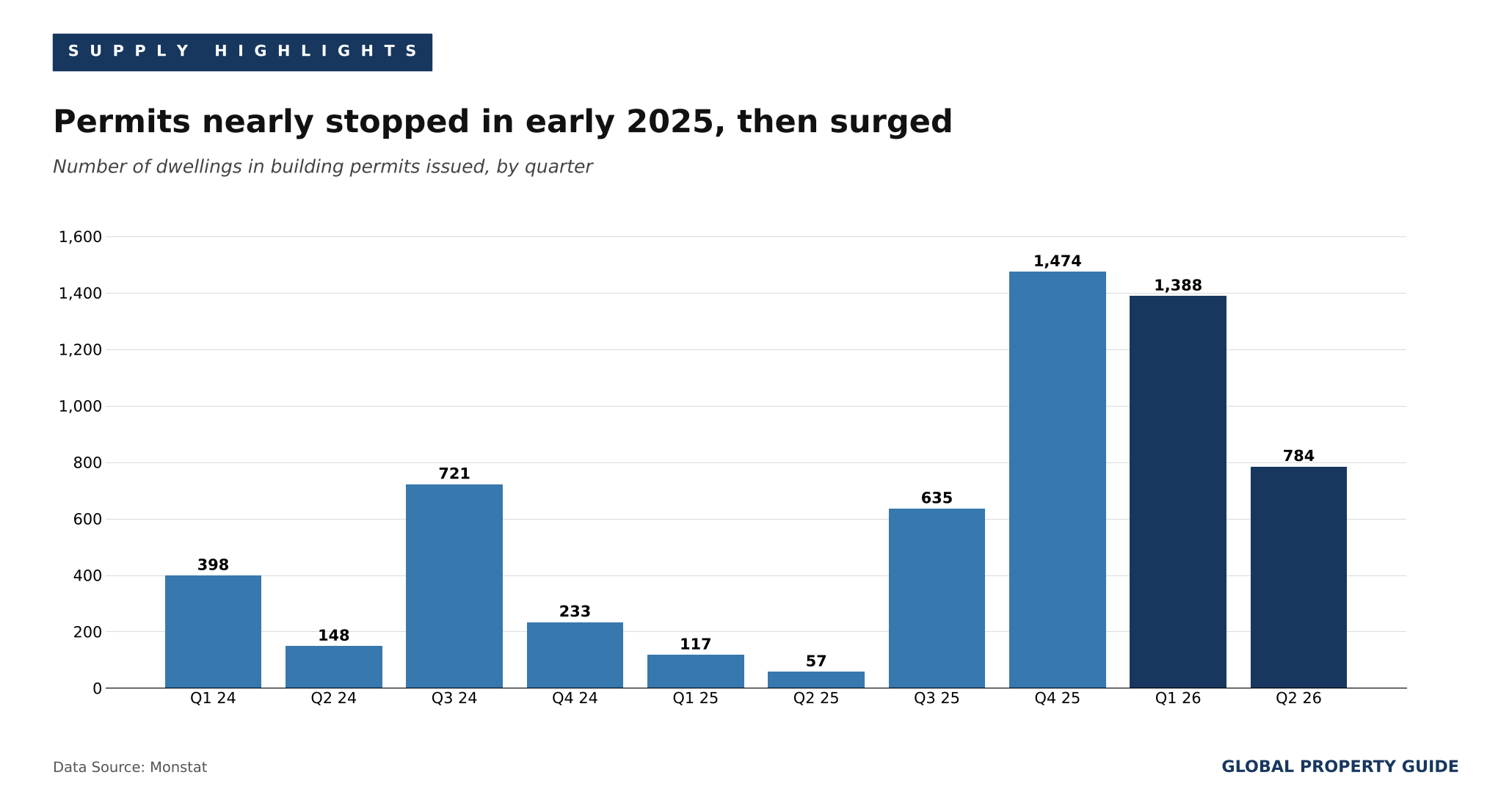
Permits nearly stopped in the first half of 2025, covering just 117 dwellings in Q1 and 57 in Q2, before recovering to 635 dwellings in Q3 and 1,474 in Q4. As a result, the total number of dwellings in building permits rose 52.2% to 2,283 units in 2025, according to Monstat, while the floor area of permitted dwellings increased 63.6% to 168,514 sq. m. Monstat notes that its permit survey was renamed in line with the new Law on Construction of Objects, adopted in 2025, which reintroduced building permits.
The boom has continued in 2026. In the first half of the year, permits covered 2,172 dwellings with a total floor area of 140,858 sq. m., compared with only 174 dwellings and 11,493 sq. m. in the same period of 2025. In just six months, permits already equalled 95.1% of the 2025 total.
In Q2 2026 alone, 784 dwellings were permitted:
- Residential buildings with one dwelling: 114 dwellings, with a floor area of 16,453 sq. m.
- Residential buildings with two dwellings: 16 dwellings, 1,463 sq. m.
- Residential buildings with three or more dwellings: 645 dwellings, or 82.3% of the total, with 38,867 sq. m.
- Additions (extensions): 9 dwellings, 786 sq. m.
Even so, permitted supply is well below its last peak: the 2,283 dwellings permitted in 2025 were just 51.4% of the 4,439 permitted in 2017. Construction activity is growing more slowly than permits. In Q2 2026, the value of finished construction works rose 6.3% year-on-year.
State-backed housing in Podgorica
In Podgorica, the government has started work on the Velje Brdo affordable housing settlement. Construction of the 5.3 km Velje Brdo Boulevard began in March 2026, with around 630 apartments planned in the first phase. More than 15,000 households have registered interest, and the prime minister acknowledged a delay of a few months.
Podgorica has also seen a wave of private development in recent years, including the City Quarter project near the Delta City shopping center, delivering nearly 1,250 housing units, and the city's City Apartment initiative in the Stari Aerodrom area, planned to deliver 220 apartments by end-2028.
Rental Market: Rents and Rental Yields
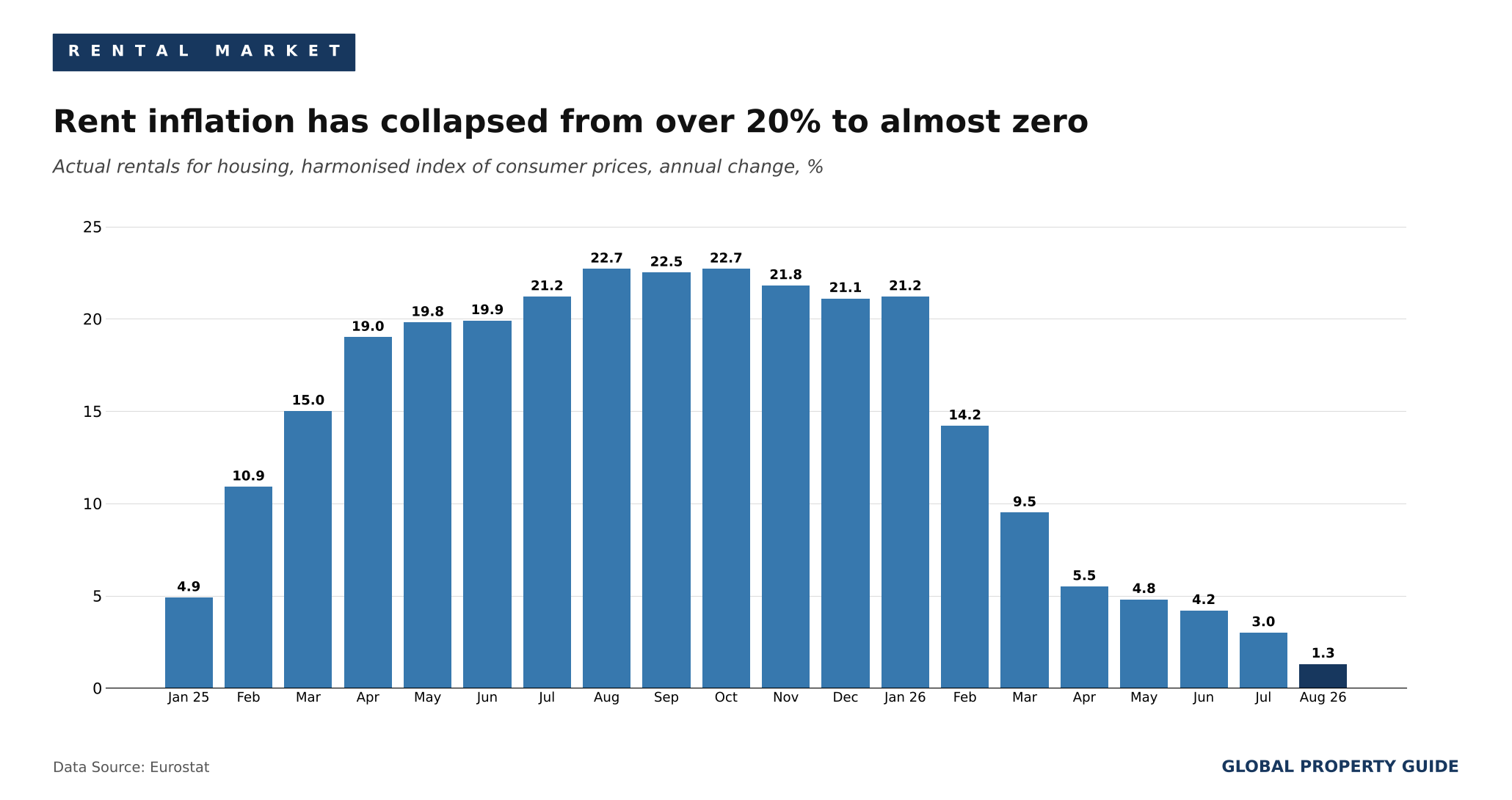
Rent inflation has collapsed
The rental market has cooled dramatically. Rents for housing in Montenegro rose just 1.3% year-on-year in August 2026, according to the harmonised index of consumer prices published by Eurostat. A year earlier, in August 2025, rents had been rising 22.7%. Annual rent growth stayed above 20% from July 2025 to January 2026, before slowing every month since.
Montenegro's rent price index:
Agents are reporting the same trend. Rents have been unchanged from a year earlier, with studios at EUR 300 to EUR 400 per month, one-bedroom apartments at EUR 400 to EUR 800 and two-bedroom apartments at EUR 800 to EUR 1,000, according to an agent quoted by RTCG, who expects rents may fall.
On the coast, average asking rents in Q2 2026 were EUR 16 per square meter per month in Tivat, EUR 14 in Budva, EUR 13 in Kotor and EUR 10 in Bar, according to Estitor. In Podgorica, average asking rents were EUR 10 per square meter per month.
Rental yields have fallen
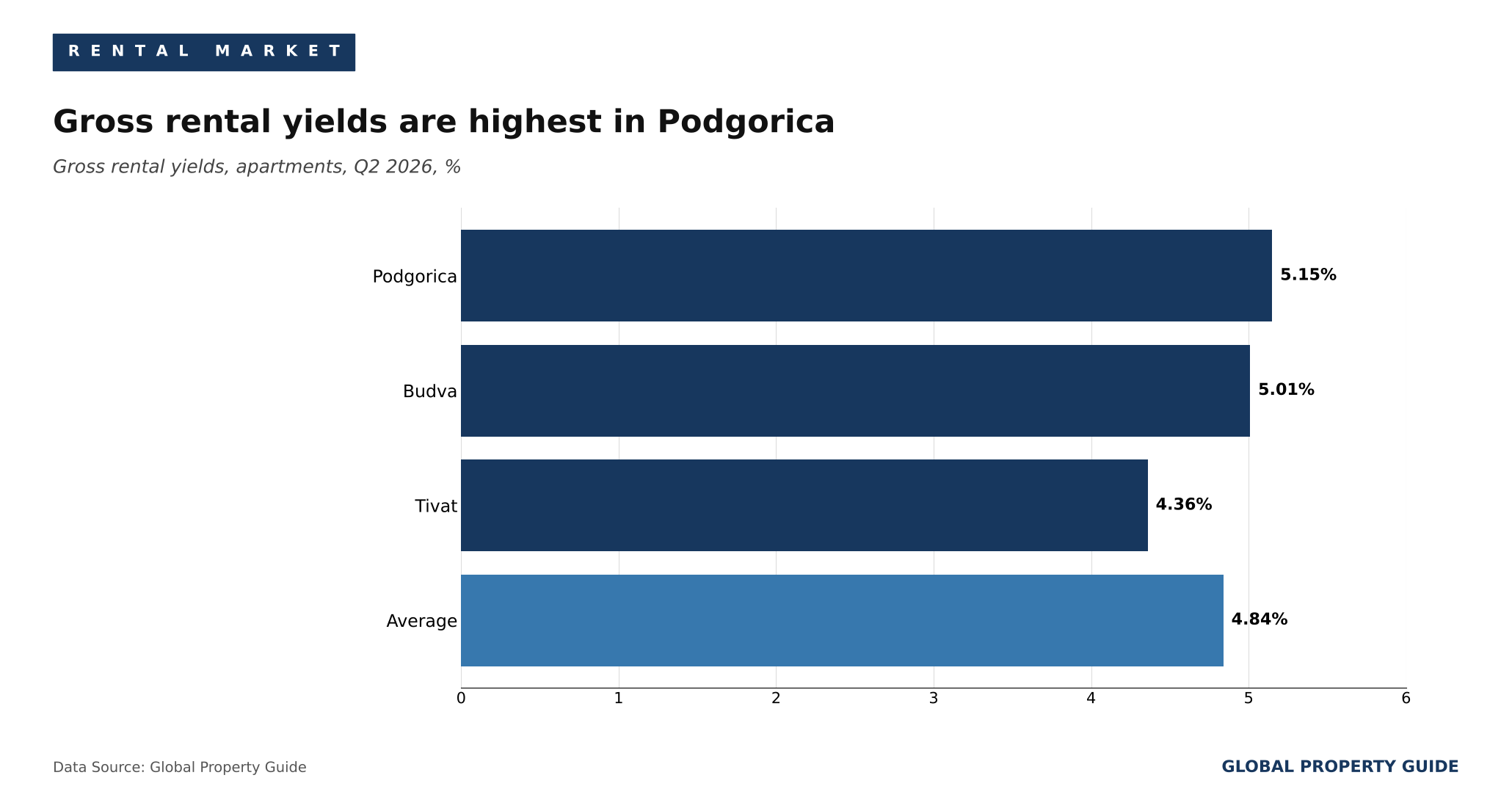
Gross rental yields in Montenegro averaged 4.84% in Q2 2026, down from 5.59% in Q4 2025, according to research by Global Property Guide. Rents have stalled while prices have kept rising.
- In Podgorica, apartments offer gross rental yields ranging from 4.62% to 5.60%, with a city average of 5.15%.
- In Budva, rental yields range from 4.42% to 5.68%, with an average of 5.01%.
- In Tivat, gross rental yields average 4.36%.
In Podgorica and Budva, smaller apartments earn higher yields than larger ones. Estitor's estimates of asking-price yields are similar, ranging from 4.1% in Herceg Novi to 5.1% in Budva.
New rules for landlords are in preparation
The government is preparing a Law on Apartment Rental, covering how rents are set and paid, deposits, contract duration, termination and disputes. A draft is planned for 2027. A separate draft VAT law, put to public consultation in May 2026 but not yet adopted, would make short-term rental platforms such as Booking and Airbnb pay VAT on their commissions and report hosts' transactions to the Tax Administration.
Buyers pay a progressive real estate transfer tax, in force since January 2024: 3% on the first EUR 150,000 of a property's value, 5% on the portion between EUR 150,000 and EUR 500,000, and 6% above that. Newly built dwellings bought from a VAT-registered developer pay 21% VAT instead.
Mortgage Market and Interest Rates
Interest rates are rising again
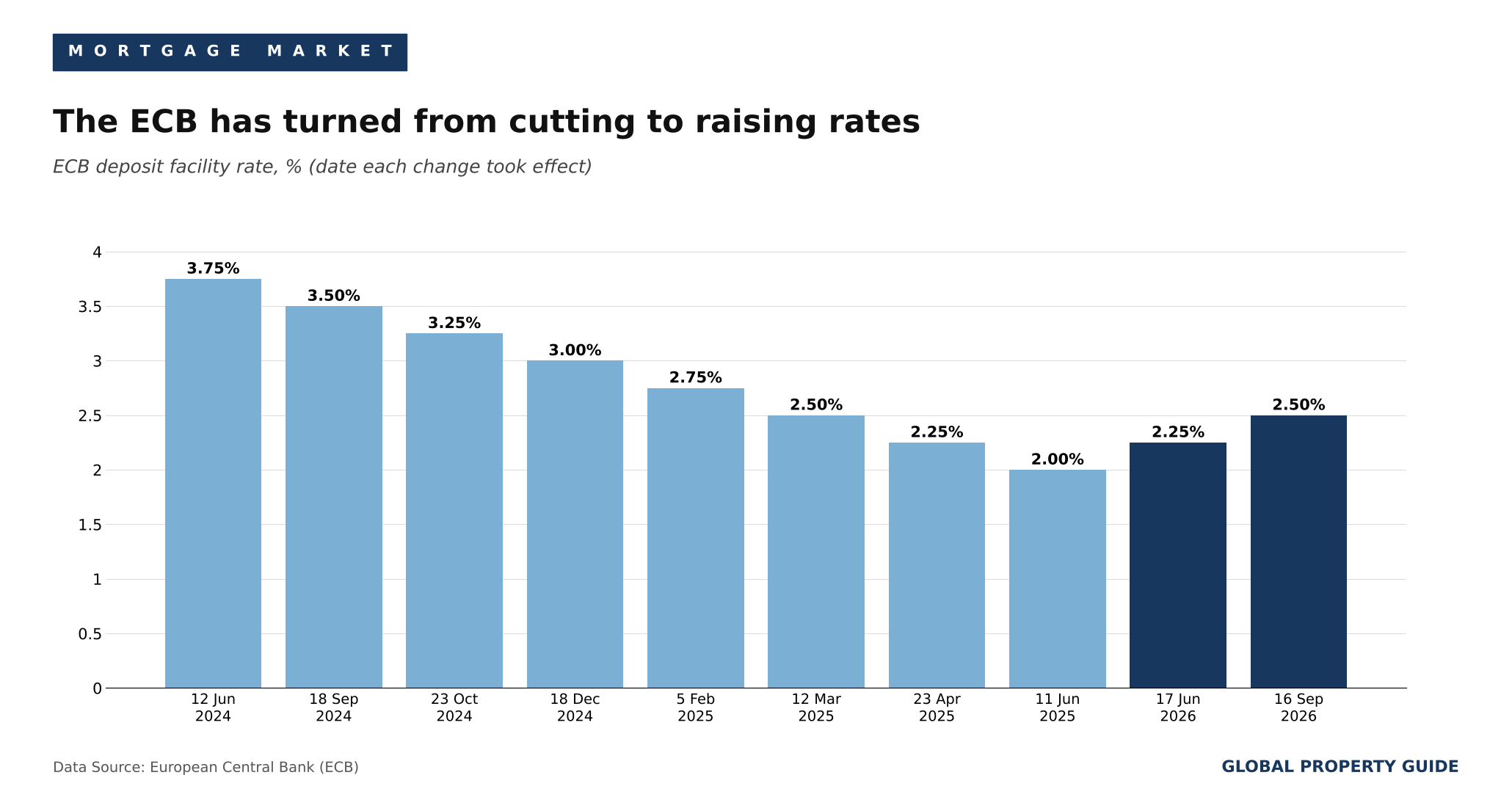
Montenegro uses the euro, so its interest rates follow the ECB. After cutting its deposit facility rate eight times between June 2024 and June 2025, to 2.00%, the ECB has reversed course, raising the rate to 2.25% in June 2026 and to 2.50% in September 2026. The next ECB decision is due on 29 October 2026.
Montenegro's mortgage loan interest rates:
Market rates have followed. The six-month Euribor, the benchmark for variable-rate loans, rose to 2.947% on 7 October 2026, from 2.519% on 1 June 2026.
Local lending rates have so far been steady. In July 2026, the weighted average nominal interest rate on new loans to households was 6.30%, and the effective rate 6.92%, both slightly lower than a year earlier, according to the CBCG. These figures cover all household loans, not only housing loans. Variable-rate lending is now rare: the share of variable-rate loans in total bank lending fell to 5% at the end of 2025.
Housing loans are growing at around 20% a year
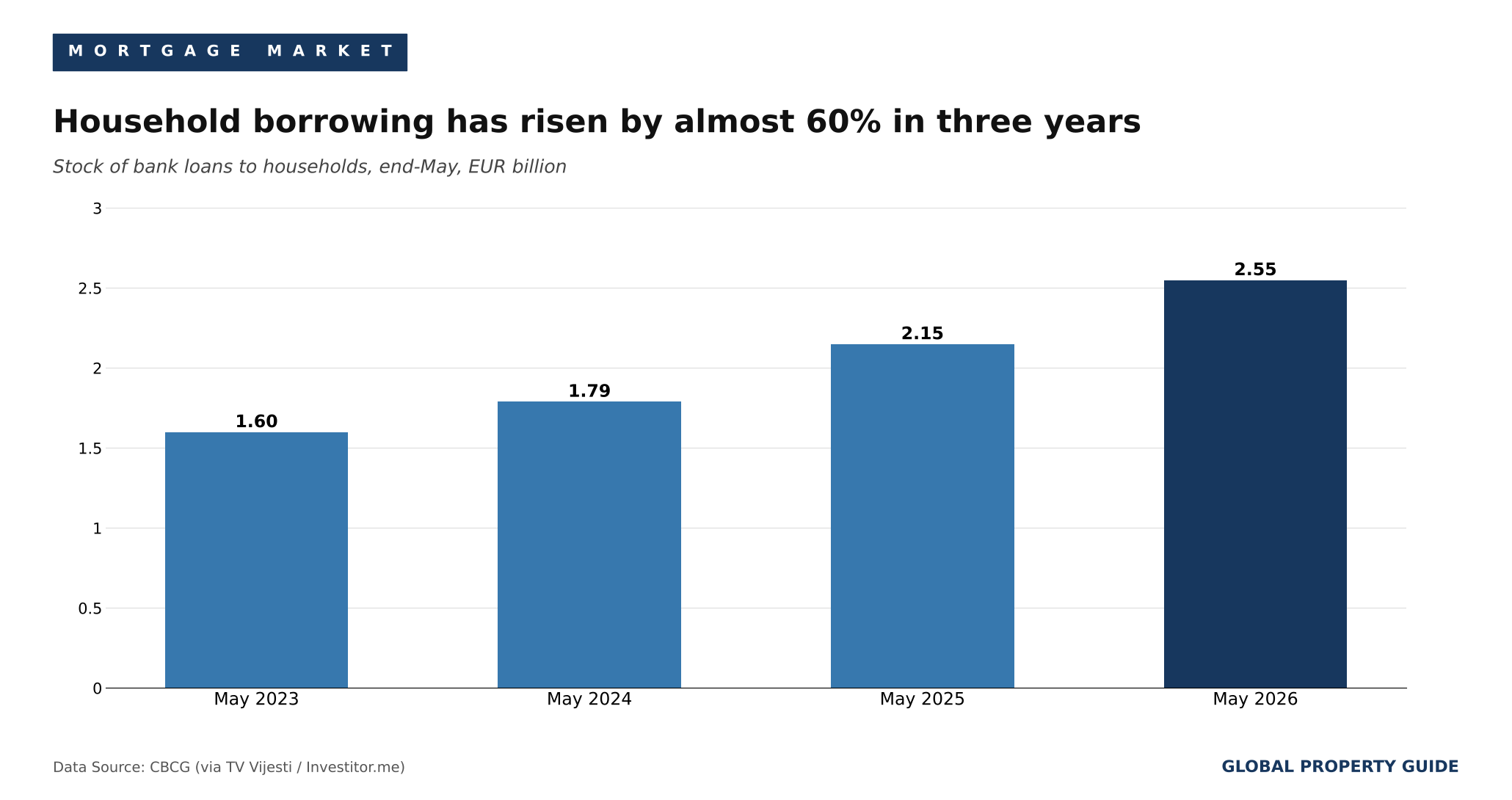
Housing loans have grown quickly. Retail housing loans rose 20.7% year-on-year in June 2026, and newly approved housing loans over the previous twelve months were up 19.8%, according to the CBCG. Total household loans reached about EUR 2.55 billion at the end of May 2026, up 18.6% from a year earlier.
There are no loan-to-value or debt-service limits on housing loans in Montenegro. The CBCG's only borrower-based measure covers cash loans and expressly excludes housing loans. Recent amendments to the Law on Credit Institutions allow such limits, and the central bank says it is ready to use them if risks increase. The CBCG found that 30.1% of housing loans approved between December 2024 and June 2025 combined a debt-service-to-income ratio above 40% with a loan-to-value ratio above 80%.
Mortgage loans for foreigners
A new Consumer Credit Law, applied since 28 November 2025, bans processing fees and early-repayment fees on housing loans. Banks' published housing loan offers have changed considerably since our previous edition.
Few banks publish dedicated terms for non-residents. Lovcen Banka offers a loan for non-residents buying property with a maximum term of 10 years, at a fixed rate of 6.95% or a variable rate of 3.45% plus the six-month Euribor. Other banks do not publish separate terms for foreigners, and approval depends on each bank's assessment.
| Housing loans offered by selected banks: | ||||
| Lovcen Banka (non-residents) |
Lovcen Banka | First Bank | CKB | |
| Loan amount | EUR 10,000 to EUR 500,000 | EUR 10,000 to EUR 300,000 | Up to EUR 150,000 | Up to EUR 300,000 |
| Maximum term | 10 years | 20 years | 20 years | 30 years |
| Nominal interest rate | 6.95% fixed, or 3.45% + 6M Euribor | 5.95% fixed, or 3.45% + 6M Euribor | From 4.99% fixed | 4.99% fixed |
| Processing fee | None | None | None | None |
| Data Source: Lovcen Banka, First Bank (Prva banka CG), CKB (as reported by Ukamati.com, 7 October 2026). | ||||
Economic and Social Factors
Growth has picked up
Montenegro's economy grew 2.7% in 2025, according to the CBCG, down from 3.2% in 2024. Growth slowed to 1.5% year-on-year in Q4 2025, but picked up to 2.6% in Q1 2026 and to 3.8% in Q2 2026, according to Monstat.
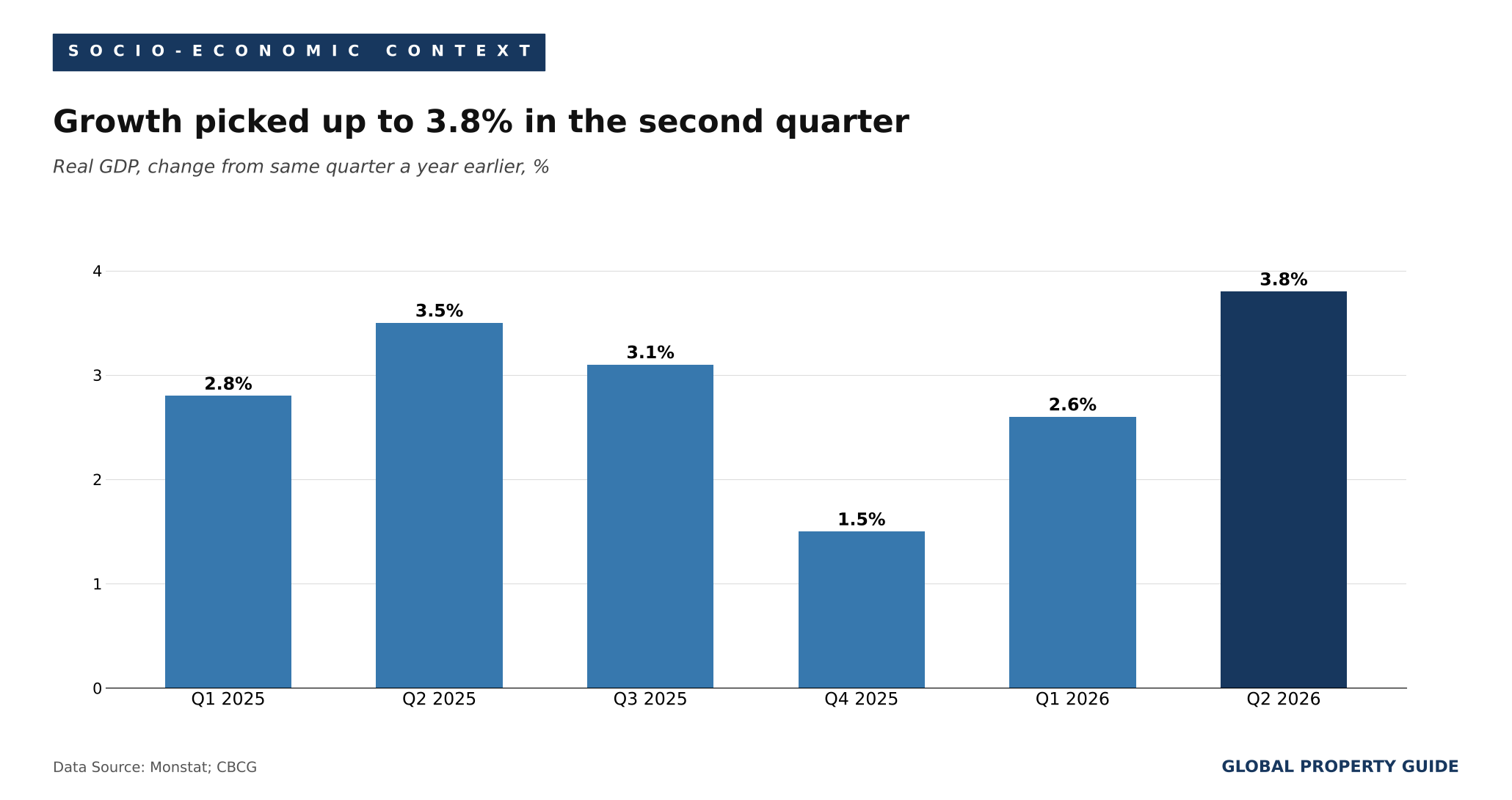
Forecasters expect growth of around 3%. The World Bank projects 2.9% in 2026 and 3.1% in 2027, while the International Monetary Fund projects 2.8% in 2026. The European Bank for Reconstruction and Development is more optimistic, forecasting 3.2% growth in both 2026 and 2027.
Tourism is the economy's main growth driver. In 2020, the Covid-19 pandemic brought tourism to a halt and the economy contracted by 15.3%. It rebounded by 13.0% in 2021 as tourism recovered.
Inflation is rising again
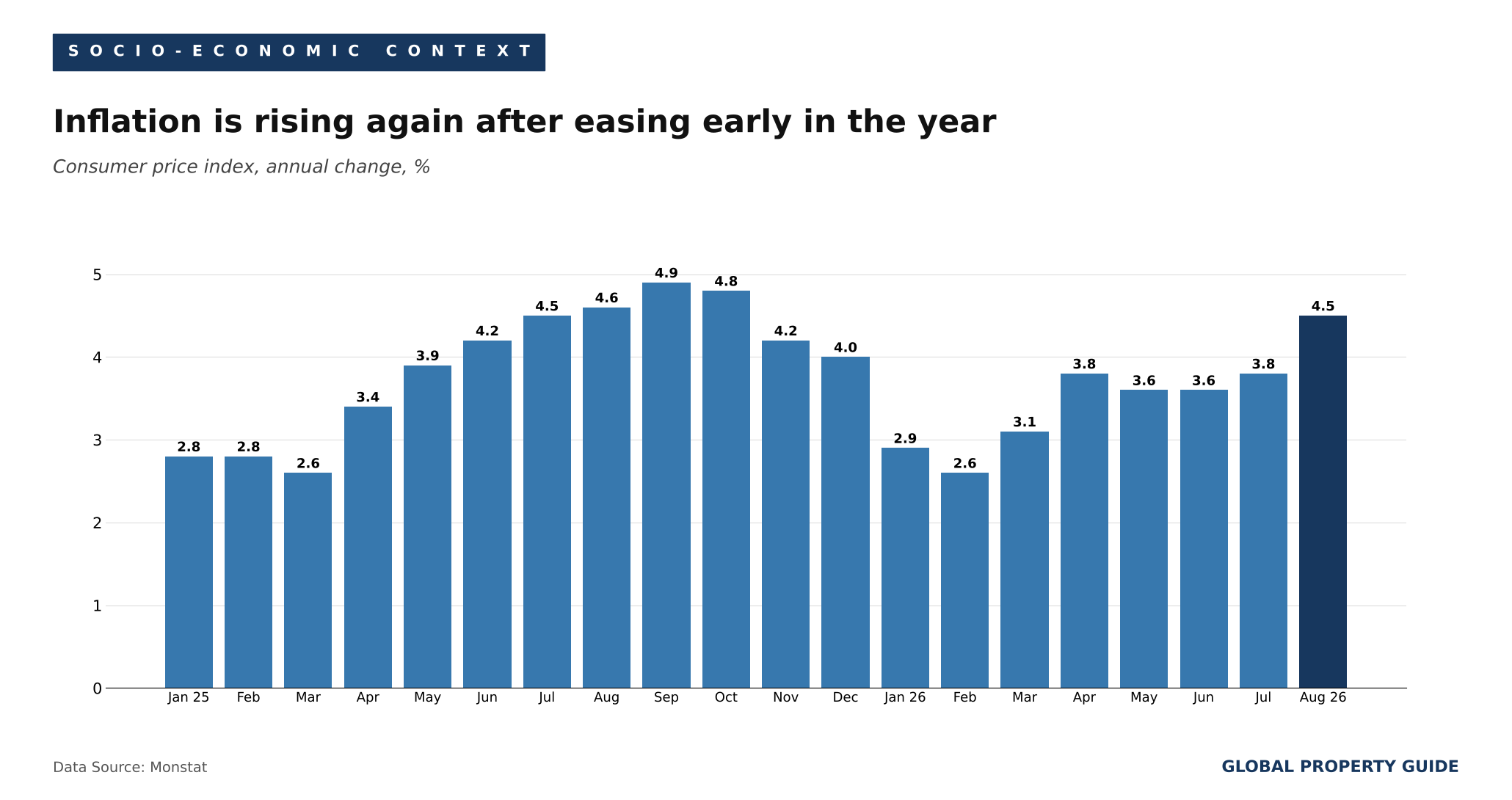
Consumer price inflation rose to 4.5% in August 2026, up from 3.8% in July and 2.6% in February, with transport prices up 16.9% year-on-year. Inflation averaged 3.9% in 2025, according to Monstat, after 3.3% in 2024 and 8.6% in 2023. It peaked at a record 17.5% in November 2022.
The labor market keeps improving. The registered unemployment rate fell to 7.62% in June 2026, from 9.13% a year earlier, according to the Employment Agency of Montenegro. The survey-based unemployment rate, which uses a different method, averaged 10.7% in 2025.
Public debt is rising, but ratings are improving
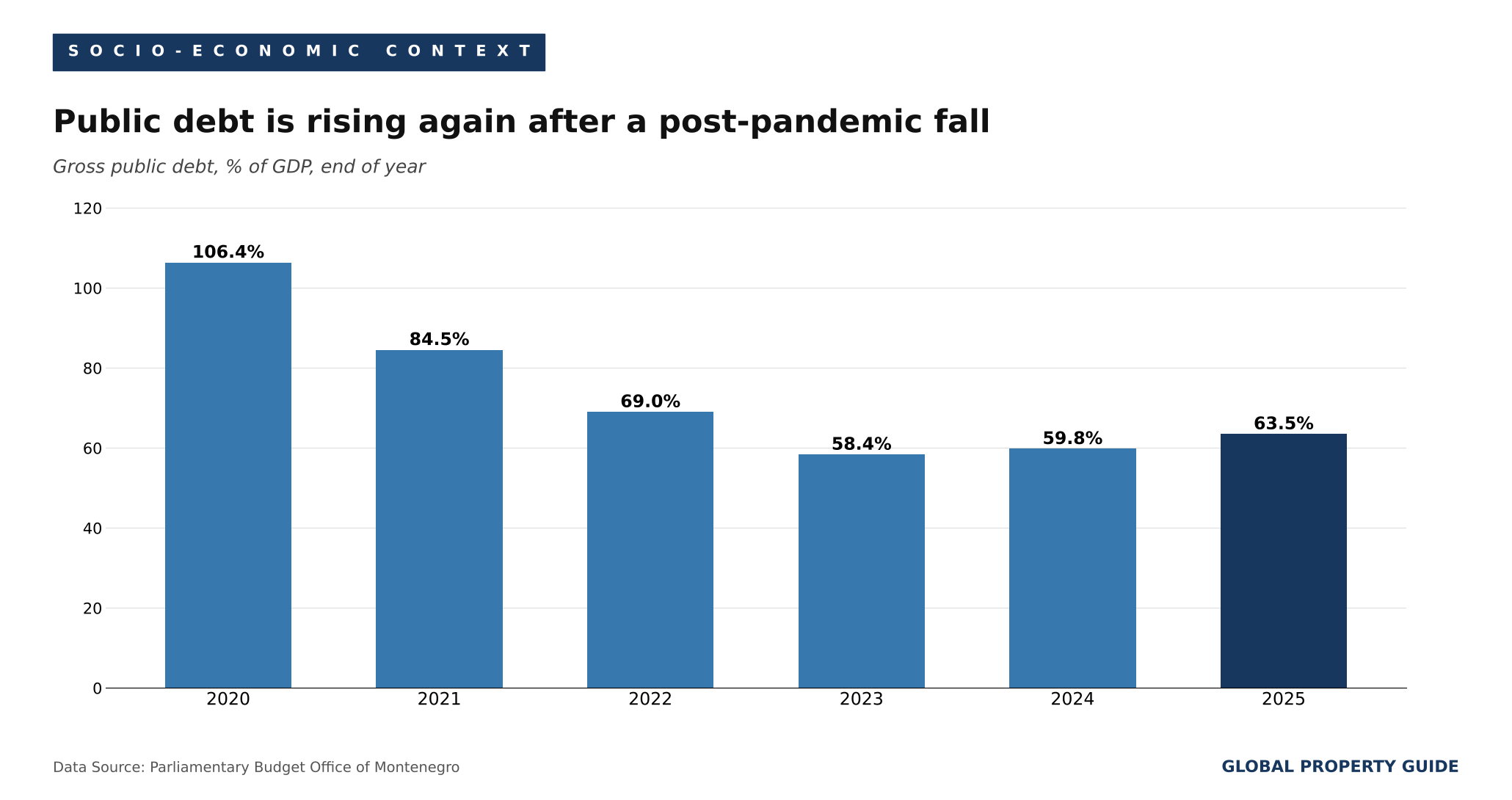
The general government deficit widened to 4.3% of GDP in 2025, from 3.3% in 2024, according to the European Commission's assessment of Montenegro's economic reform programme. Gross public debt rose to 63.5% of GDP at the end of 2025, from 59.8% a year earlier, according to the Parliamentary Budget Office. That is still far below the 106.4% recorded in 2020. In spring 2025, Montenegro issued a record EUR 850 million seven-year Eurobond.
Credit rating agencies have turned more positive. S&P Global Ratings revised its outlook on Montenegro's B+ rating to positive in February 2026, and Moody's upgraded the country to Ba2 with a positive outlook in September 2026.
EU accession is the main long-term support. Montenegro has opened all 33 negotiating chapters and had provisionally closed 18 by July 2026. It aims to close all chapters by the end of 2026 and to join the EU in 2028.
Sources:
- Statistical Office of Montenegro (Monstat)
- Prices of Dwellings in New Residential Buildings, Q2 2026 (ME): monstat.org
- Prices of Dwellings in New Residential Buildings, Q4 2025 (ME): monstat.org
- Prices of Dwellings in New Residential Buildings, 2025 (ME): monstat.org
- Building Permits, Q2 2026 (ME): monstat.org
- Building Permits, Q4 2025 (ME): monstat.org
- Construction Activity, Q2 2026: monstat.org
- Arrivals and Overnight Stays of Tourists, Total, 2025: monstat.org
- Quarterly Gross Domestic Product, Q2 2026: monstat.org
- Annual Gross Domestic Product, 2020: monstat.org
- Annual Gross Domestic Product, 2021: monstat.org
- Consumer Price Index, December 2025: monstat.org
- Central Bank of Montenegro (CBCG)
- Financial Stability Report 2025: cbcg.me
- Review of the Countercyclical Capital Buffer Rate, Q1 2026 (ME): cbcg.me
- Information on Review of the Countercyclical Capital Buffer Rate, Q3 2026: cbcg.me
- Bulletin 2/2026 (ME): cbcg.me
- Bulletin 8/2026 (ME): cbcg.me
- Macroeconomic Report 1/2026, Real Sector (ME): cbcg.me
- Macroprudential Analysis and Policy, Vol. 1: cbcg.me
- Parliament of Montenegro, Parliamentary Budget Office
- Foreign Direct Investment in Montenegro, 2020-2024 and January-August 2025 (ME): pbk.skupstina.me
- Public Debt of Montenegro, 2020-2025 (ME): pbk.skupstina.me
- Government of Montenegro
- Construction of Velje Brdo Boulevard Begins: gov.me
- Official Gazette of Montenegro
- Law Amending the Law on Foreigners, Official Gazette No. 3/2026 (ME): sluzbenilist.me
- Employment Agency of Montenegro
- Monthly Statistical Report, 31 July 2026 (ME): zzzcg.me
- European Central Bank (ECB)
- Key ECB Interest Rates: ecb.europa.eu
- Euro Foreign Exchange Reference Rates: ecb.europa.eu
- Eurostat
- HICP, Actual Rentals for Housing, Montenegro: ec.europa.eu
- Council of the European Union
- Commission Assessment of Montenegro's Economic Reform Programme 2026-2028: data.consilium.europa.eu
- International Monetary Fund (IMF)
- Montenegro: imf.org
- Global Property Guide
- Gross Rental Yields in Montenegro: globalpropertyguide.com
- Banks
- Lovcen Banka, Loan for Non-Residents to Buy Property (ME): lovcenbanka.me
- Lovcen Banka, Housing Loan (ME): lovcenbanka.me
- First Bank, Housing Loan (ME): prvabankacg.com
- Housing Loans in Montenegro (Ukamati, ME): ukamati.com
- Other Sources
- Euribor 6 Months (Euribor-rates.eu): euribor-rates.eu
- Montenegro Inflation Rate (Trading Economics): tradingeconomics.com
- Estitor Q2 2026 Report (Investitor.me, ME): investitor.me
- Montenegro Earned EUR 1.48 Billion from Tourism (Investitor.me, ME): investitor.me
- Household Debt Up Almost EUR 1 Billion in Three Years (Investitor.me, ME): investitor.me
- New Rules for Apartment Rentals (Investitor.me, ME): investitor.me
- Booking and Airbnb Under Tax Scrutiny (Investitor.me, ME): investitor.me
- Consumer Credit Law Takes Effect (Biznis.me, ME): biznis.me
- Lower Demand for Property in Montenegro, Rents May Fall (Biznis.rs, SR): biznis.rs
- Tourism Season Brings Record Revenue (Standard, ME): standard.co.me
- Montenegro Draft Residence Threshold (RTS, SR): rts.rs
- Changes in Montenegro's Tax Regulations (RSM, SR): rsm.global
- World Bank Lowers Montenegro's Growth Forecast (MINA): mina.news
- EBRD Revises Up Montenegro's Growth Forecast (MINA): mina.news
- Montenegro's Outlook Upgraded to Positive (MINA): mina.news
- Monstat: 33,100 People Unemployed (MINA): mina.news
- Moody's Upgrades Montenegro (ICE Podgorica, IT): ice.it
- Montenegro Closes Two More Chapters with the EU (European Western Balkans): europeanwesternbalkans.com
- Russia Adds Montenegro, Albania and North Macedonia to 'Enemy' List (Balkan Insight): balkaninsight.com
- City Quarter (Celebic): celebic.com
- Podgorica to Build 220 Apartments by 2028 (Montenegro Business): montenegrobusiness.eu