Portugal's Residential Property Market Analysis 2025
While the upward trend for rents slows, home prices in the Portuguese market continue to register exceptional growth, driven by a persistent supply–demand imbalance, improved financing conditions, and solid economic fundamentals.
This extended overview from Global Property Guide covers key aspects of the Portuguese housing market and takes a closer look at its most recent developments and long-term trends.
Table of Contents
- Housing Market Snapshot
- Historic Perspective
- Demand Highlights
- Supply Highlights
- Rental Market
- Mortgage Market
- Socio-Economic Context
Housing Market Snapshot
Despite already elevated base values, residential property prices in Portugal continue to post exceptional growth, underpinned by a persistent supply-demand imbalance and solid economic fundamentals. In October 2025, the median bank appraisal value for residential properties rose to EUR 2,025 (USD 2,355) per square meter, a 17.66% year-on-year increase, according to Statistics Portugal (INE). This marked the thirteenth consecutive month of double-digit annual growth since October 2024. As JLL notes, "robust performance continues to be supported by sustained demand and persistent housing shortage."
Portugal's house price annual change:
Note: Portugal House Price Index: All Dwellings (2015=100)
Data Source: ECB.
The median appraisal value for apartments reached EUR 2,345 (USD 2,727) per square meter, up 22.14% year-on-year, while villas recorded an 11.77% increase to EUR 1,472 (USD 1,712) per square meter. The highest appraisal values in both segments remain concentrated in the Greater Lisbon area and the Algarve, reflecting the strong concentration of demand in prime residential and tourism-driven markets.
Median bank appraisal value of residential properties by region:
| Apartments, Oct 2025, EUR/sqm |
Apartments, Oct 2025, USD/sqm |
YoY, % | Villas, Oct 2025, EUR/sqm |
Villas, Oct 2025, USD/sqm |
YoY, % | |
| Continental Portugal | EUR 2,345 | USD 2,727 | 22.14% | EUR 1,472 | USD 1,712 | 11.77% |
| North | EUR 2,342 | USD 2,724 | 22.23% | EUR 1,465 | USD 1,704 | 11.66% |
| Center | EUR 1,959 | USD 2,278 | 20.04% | EUR 1,407 | USD 1,636 | 11.67% |
| West and Tagus Valley | EUR 1,533 | USD 1,783 | 22.64% | EUR 1,084 | USD 1,261 | 8.40% |
| Greater Lisbon | EUR 1,674 | USD 1,947 | 26.15% | EUR 1,495 | USD 1,739 | 20.18% |
| Setúbal Peninsula | EUR 3,058 | USD 3,556 | 20.68% | EUR 2,711 | USD 3,153 | 10.16% |
| Alentejo | EUR 2,465 | USD 2,867 | 29.33% | EUR 2,415 | USD 2,809 | 16.95% |
| Algarve | EUR 1,548 | USD 1,800 | 21.99% | EUR 1,146 | USD 1,333 | 11.59% |
| Autonomous Region of the Azores | EUR 2,757 | USD 3,206 | 20.34% | EUR 2,499 | USD 2,906 | 1.17% |
| Autonomous Region of Madeira | EUR 2,203 | USD 2,562 | 21.65% | EUR 1,392 | USD 1,619 | 15.71% |
| Portugal | EUR 2,533 | USD 2,946 | 18.36% | EUR 1,965 | USD 2,285 | 6.10% |
| Note: Exchange rate as of October 2025, EUR 1 = USD 1.1630. | ||||||
| Data Sources: INE. | ||||||
Analysis by the property platform Idealista shows the median asking price for residential properties nationwide reaching EUR 3,000 (USD 3,468) per square meter as of November 2025, representing a 7.8% year-on-year increase. At the municipal level, Lisbon remained the most expensive market, with median asking prices of EUR 5,914 (USD 6,837) per square meter, up 4.0% year-on-year. In Porto, prices advanced by 5.9% over the same period, reaching EUR 3,908 (USD 4,518) per square meter, confirming both cities as the country's main high-value poles.
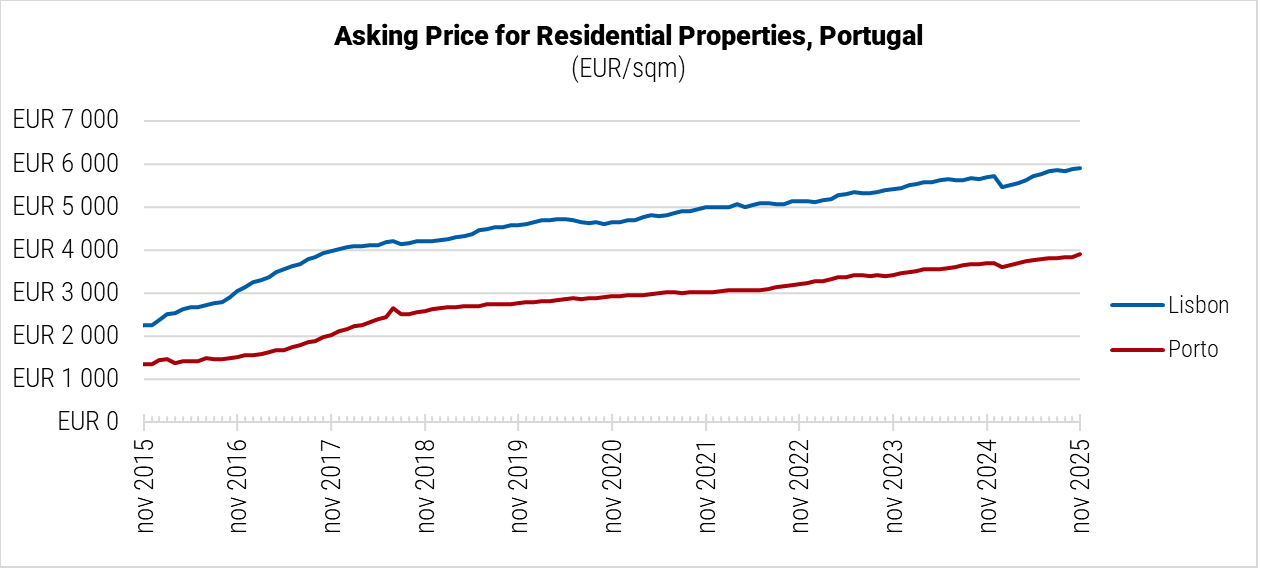
Data Source: Idealista.
Looking ahead, BPI Research expects house price growth to continue. The global and European macroeconomic backdrop has become less uncertain, with the avoidance of an escalation into a tariff war between the euro area and the United States helping to contain inflation and allowing interest rates to stabilize at levels the ECB considers broadly neutral. Domestically, the labor market remains strong, with employment at record highs, low unemployment, and real wages rising, all of which continue to support household purchasing power.
Demand-side support measures are also set to remain in place, notably tax exemptions and public guarantees for young people buying their primary residence. On the supply side, the pace of new construction has been accelerating, but output remains well below the levels recorded in the 2000s, suggesting that structural supply constraints will continue to exert upward pressure on prices in the near term.
Historic Perspective:
Supply Limitations Sustain Price Growth Over a Decade of Market Expansion
Between 2015 and 2024, Portugal's housing market underwent one of the most pronounced periods of growth in Europe. Over this period, national house prices more than doubled, with the most significant increases concentrated in Lisbon, Porto, and coastal regions. The expansion was primarily driven by sustained foreign investment, supported by the Golden Visa program and the Non-Habitual Resident tax regime, as well as by the growth of the tourism sector and the increasing prevalence of short-term rental platforms. Persistently low interest rates further facilitated borrowing, maintaining elevated transaction volumes.
Housing supply, however, did not expand at a comparable pace. Annual completions averaged slightly above 15,000 units. Although construction activity showed a gradual upward trend, new development remained constrained by administrative delays, labor shortages, rising construction costs, and complex regulatory frameworks.
In an effort to address these imbalances, the government implemented several policy measures aimed at increasing the availability of affordable housing, including a EUR 2 billion public housing program and the reclassification of rural land to enable additional development. Simultaneously, adjustments were made to reduce demand-side pressures. In 2023, the Golden Visa program was amended to exclude real estate as an eligible investment category, and the Non-Habitual Resident tax regime was terminated effective January 2024.
Despite these interventions, the structural imbalance between supply and demand remains, sustaining upward pressure on housing prices. In 2024, the median bank appraisal value for residential properties reached EUR 1,662 (USD 1,742) per square meter, representing a year-on-year increase of 9.27% and bringing the average annual growth rate over the 2015-2024 period to 8.29%.
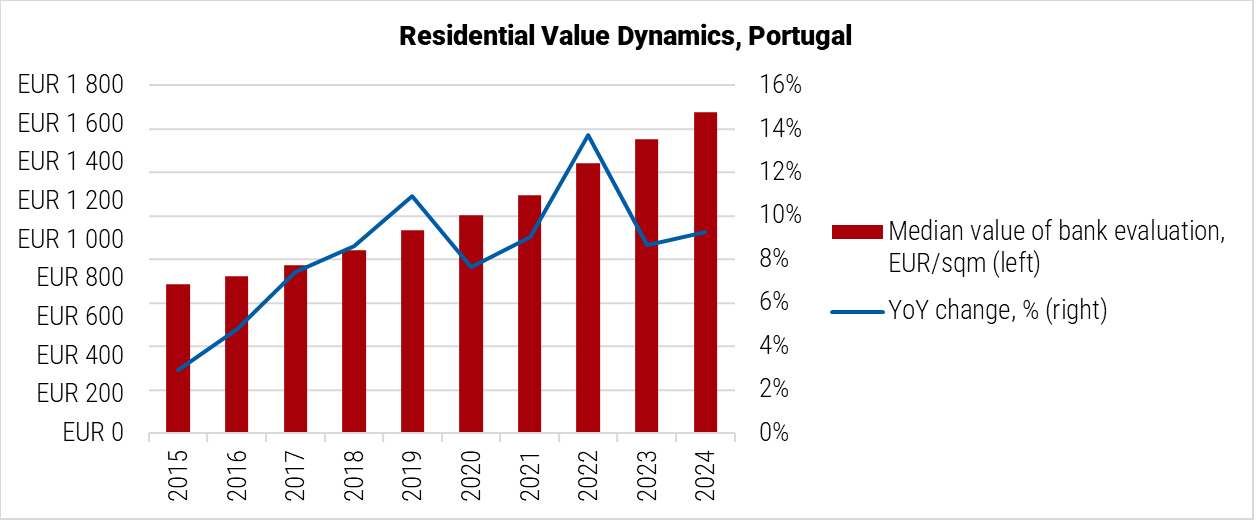
Data Source: INE.
Demand Highlights:
Strong Domestic Sales Momentum Amid Lower Rates and Targeted Support for Young Buyers
Demand for housing in Portugal remains strong, building on the acceleration observed in the second half of 2024. According to the INE, a total of 84,247 dwellings were sold nationwide in the first two quarters of 2025, representing a 20.0% year-on-year increase. This surge is widely attributed to easier access to mortgage finance, targeted schemes for buyers aged up to 35, and an improved macroeconomic backdrop. As Coldwell Banker notes, the combination of lower inflation and falling mortgage rates has "boosted consumer confidence and fueled demand for mortgage credit".
Secondary market transactions accounted for 67,578 dwellings, or 80.2% of total sales, reflecting a 20.6% year-on-year increase. Sales of newly built homes reached 16,669 units, up 17.7% compared to the previous year. The vast majority of sales (96%) were concentrated in Continental Portugal, with the North, Greater Lisbon, and Center regions jointly accounting for 65% of total transactions, underscoring the continued dominance of key metropolitan hubs.
Domestic buyers continued to dominate activity, with 95.0% of homes sold to individuals with tax domicile in Portugal. Domestic purchases reached 80,042 units, an increase of 21.9% year-on-year. The remaining 4,205 units were acquired by foreigners, including both EU and non-EU residents, marking a 7.2% year-on-year decline. Experts from Idealista attribute this shift primarily to recent changes in tax rules for foreigners, namely the end of the Golden Visas for real estate investment and the replacement of the former Non-Habitual Resident tax regime with a more restrictive framework.
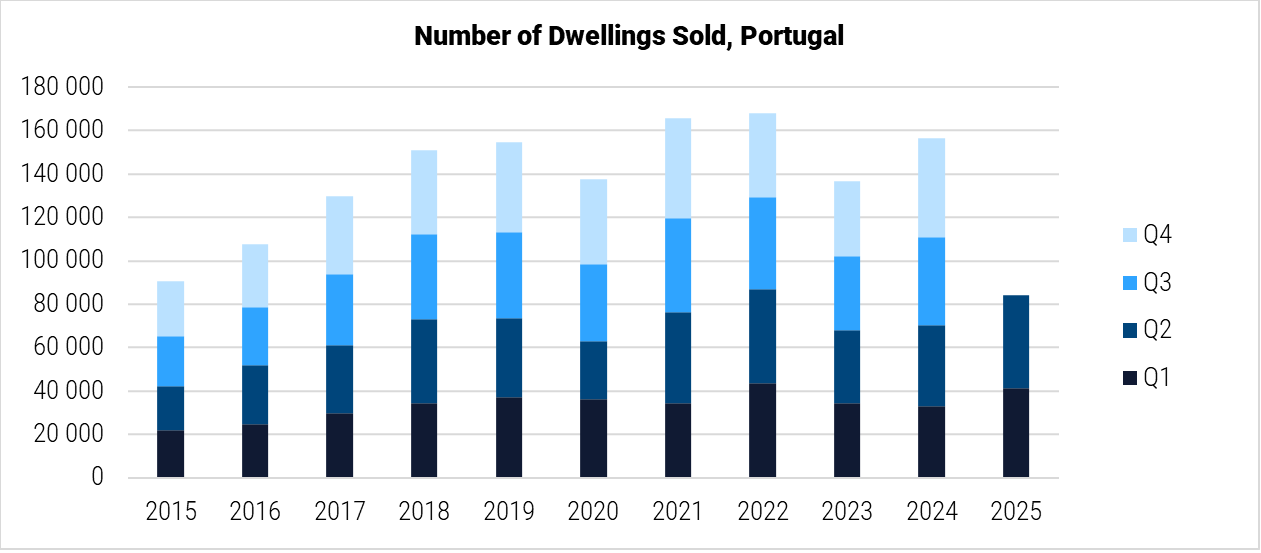
Data Source: INE.
Number of dwellings sold by region:
| Primary Dwellings Sold, H1 2025 |
YoY, % | Secondary Dwellings Sold, H1 2025 |
YoY, % | |
| Continental Portugal | 16,053 | 18.0% | 65,195 | 21.0% |
| North | 6,182 | 13.1% | 19,058 | 23.3% |
| Center | 2,637 | 19.7% | 10,696 | 18.1% |
| West and Tagus Valley | 1,529 | 20.6% | 6,333 | 19.6% |
| Greater Lisbon | 2,777 | 28.5% | 13,430 | 19.9% |
| Setúbal Peninsula | 1,182 | 17.7% | 6,949 | 23.1% |
| Alentejo | 609 | 36.9% | 3,617 | 15.6% |
| Algarve | 1,137 | 7.5% | 5,112 | 25.2% |
| Autonomous Region of the Azores | 184 | -8.0% | 1,129 | 14.0% |
| Autonomous Region of Madeira | 432 | 22.0% | 1,254 | 6.5% |
| Portugal | 16,669 | 17.7% | 67,578 | 20.6% |
| Data Sources: INE. | ||||
Looking ahead, market participants generally expect strong sales momentum to hold, provided that core fundamentals continue to support affordability. "As long as Portugal maintains a dynamic labor market and accessible financing, demand will remain strong. The real obstacle to transactions is not a lack of interest in buying, but the mismatch between disposable income and house prices. That is the barrier that the market alone cannot overcome," commented Ricardo Sousa, CEO of Century 21 agency.
Supply Highlights:
New Supply Trails Transaction Growth Despite Rising Completions
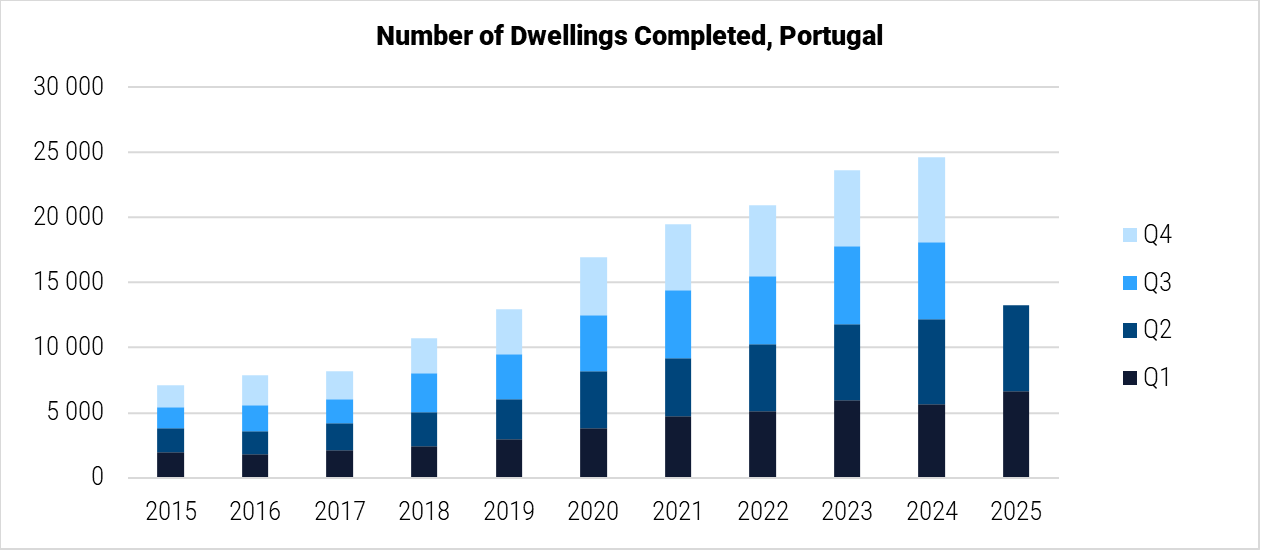
Portugal's housing market continues to be characterized by a persistent imbalance between supply and demand, driving residential prices higher and further eroding affordability and accessibility. Licensing and construction activity contracted sharply during the sovereign debt crisis (2010-2014), and the subsequent recovery has been slow. Although output has picked up in recent years, analysts from Morningstar note that new construction remains "much lower than at the turn of the century" and is still not sufficient to meet rapidly escalating demand.
According to recent figures from INE, 13,244 new dwellings were completed in the first half of 2025, representing a 4.9% year-on-year increase. However, this volume remains insufficient to keep pace with the rapid acceleration in transaction activity, particularly in the main metropolitan areas and their surrounding commuter belts. As CBRE points out, "The population growth, driven mainly by migratory balances, has intensified affordability challenges as demand continues to rise without a proportional expansion in the housing stock."
Data Source: INE.
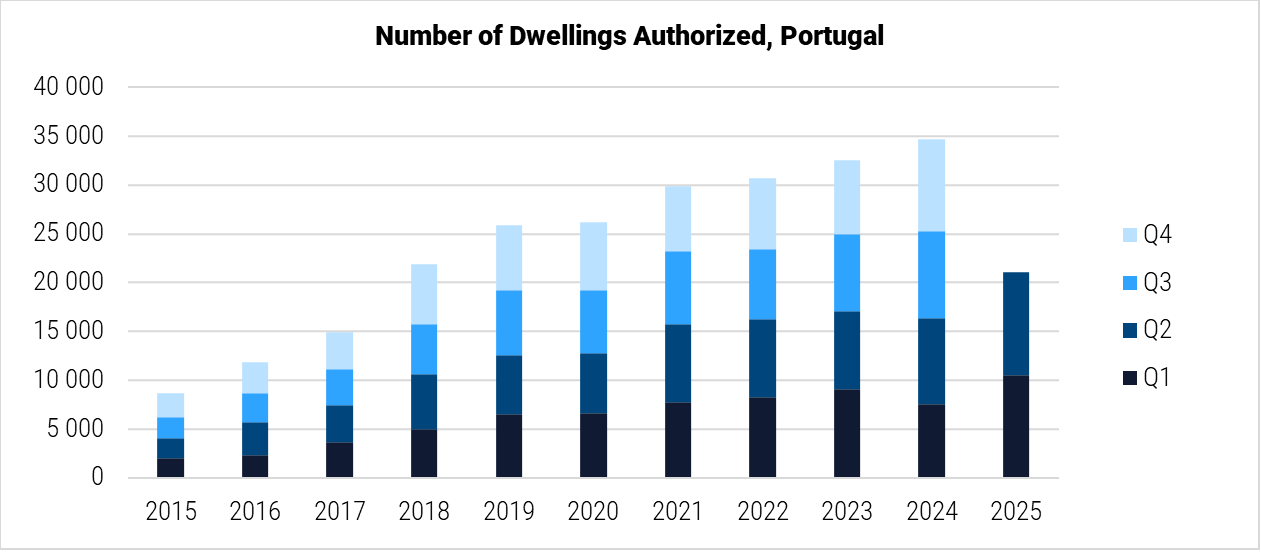
Forward-looking indicators point to a more supportive environment for future development. INE data show that 21,057 dwellings were licensed for construction in the first half of 2025, representing a robust 28.8% year-on-year increase. JLL highlights that "the recent surge in building permits already signals renewed developer confidence", adding that this momentum is expected to be further underpinned by the government's "Construir Portugal" program, which proposes a reduced VAT rate of 6% on residential construction and renovation to stimulate new supply.
Data Source: INE.
Regionally, continental Portugal remains the core of construction activity, with the bulk of completed and authorized dwellings located in the North, Centre, and Greater Lisbon regions. The Greater Lisbon area is also the main driver of growth, recording the strongest increases in both completions and building permits, underscoring the continued concentration of development in the country's most dynamic urban markets.
Residential construction activity by region:
| Number of Dwellings Completed, H1 2025 |
YoY, % | Number of Dwellings Authorized, H1 2025 |
YoY, % | |
| Continental Portugal | 12,533 | 4.3% | 20,111 | 27.8% |
| North | 5,788 | 5.8% | 9,086 | 18.0% |
| Center | 1,965 | 4.9% | 3,521 | 56.3% |
| West and Tagus Valley | 950 | -0.7% | 1,682 | 28.1% |
| Greater Lisbon | 1,859 | 31.8% | 3,324 | 56.5% |
| Setúbal Peninsula | 1,114 | 8.3% | 1,069 | 0.8% |
| Alentejo | 278 | -17.0% | 408 | -17.6% |
| Algarve | 579 | -38.3% | 1,021 | 29.6% |
| Autonomous Region of the Azores | 200 | -12.3% | 397 | 37.4% |
| Autonomous Region of Madeira | 511 | 34.8% | 549 | 67.9% |
| Portugal | 13,244 | 4.9% | 21,057 | 28.8% |
| Data Sources: INE. | ||||
Rental Market:
Slower But Persistent Growth Trend for Rents
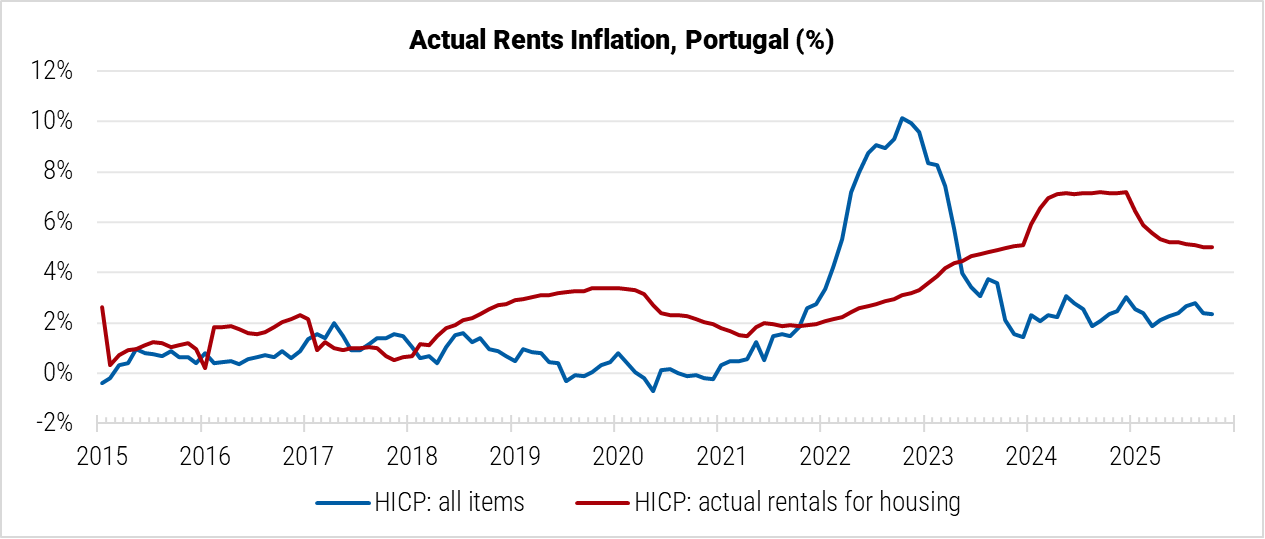
While still substantially outpacing the overall consumer price growth, rental inflation in Portugal has been on a decelerating trajectory in 2025. The actual rentals for the housing component of the consumer price index (CPI) reported by the INE registered a 5.0% year-on-year growth in October 2025, down from 6.5% in January and 7.2% a year prior in October 2024. According to the INE, all regions of the country displayed positive rates of change in housing rents, with the highest increase observed in the Autonomous Region of Madeira (7.4%).
Portugal's rent price index:
Note: Portugal Rent Price Index, % change 1 yr
Data Source: ECB.
For existing contracts, rent increases can be expected to remain relatively stable next year, as the official cap, which is established annually under the New Urban Lease Regime (NRAU) based on the CPI inflation, was set by the Portuguese government at 2.24% for 2026, only marginally up from 2.16% in 2025.
Data Source: INE.
In nominal terms, the median rent per square meter in new lease agreements of dwellings, as reported by the INE, reached EUR 8.22 (USD 8.68) in Q1 2025, up from EUR 7.47 during the same period in 2024. The regions posting median values above the national one were Greater Lisbon, Setúbal Peninsula, Autonomous Region of Madeira, and Algarve. Among major cities, the highest median rents were observed in Lisbon (EUR 16.00 / USD 16.84) and Porto (EUR 12.94/ USD 13.62).
Median monthly rent in new lease agreements by region:
| City | EUR/sqm, Q1 2025 | USD/sqm, Q1 2025 | YoY, Q1 2025 vs Q1 2025 |
| Continental Portugal | EUR 8.25 | USD 8.68 | 10.0% |
| North | EUR 7.08 | USD 7.45 | 10.1% |
| Porto | EUR 12.94 | USD 13.62 | 8.5% |
| Center | EUR 5.91 | USD 6.22 | 9.9% |
| West and Tagus Valley | EUR 6.51 | USD 6.85 | 12.8% |
| Greater Lisbon | EUR 13.16 | USD 13.85 | 8.6% |
| Lisbon | EUR 16.00 | USD 16.84 | 5.1% |
| Setúbal Peninsula | EUR 10.24 | USD 10.78 | 9.6% |
| Alentejo | EUR 5.44 | USD 5.72 | 9.7% |
| Algarve | EUR 9.92 | USD 10.44 | 13.0% |
| Autonomous Region of the Azores | EUR 5.40 | USD 5.68 | 6.7% |
| Autonomous Region of Madeira | EUR 10.44 | USD 10.99 | 25.3% |
| Portugal | EUR 8.22 | USD 8.65 | 10.0% |
| Note: Exchange rate as of Q1 2025, EUR 1 = USD 1.0523. | |||
| Data Sources: INE. | |||
The decelerated but consistently upward dynamic has also been observed for asking rents based on properties listed on Idealista. According to the platform, the year-on-year growth in asking rents slowed from double digits in 2023 and early 2024 to 3.2% in November 2025. Most recently, the median asking rent was recorded at EUR 16.6 (USD 19.2) per square meter nationwide, EUR 20.5 (USD 23.7) in Lisbon, and EUR 15.8 (USD 18.3) in Porto.
In parallel, research conducted by Global Property Guide showed gross rental yields for apartments in Portugal at the average level of 4.32% in November 2025, down from 4.96% previously reported in November 2024. The highest potential performance among the surveyed submarkets was estimated for rental properties in Setúbal (5.09%), while the lowest yields were reported in Lisbon (3.79%).
Despite the slowdown, rents in the largest cities and surrounding metro areas can be expected to continue growing due to consistently high demand. A recent analysis from Idealista shows that peripheral municipalities around Lisbon dominate the list of the most sought-after areas for renting a home. In Q3 2025, Vila Franca de Xira ranked first among the 50 municipalities most in demand for rentals, followed by Moita, Alenquer, Barreiro, Amadora, Sintra, Loures, and Odivelas. A similar pattern was observed in Porto, with five municipalities in its district appearing among the most in-demand for rentals (Valongo, Paredes, Gondomar, Trofa, and Maia).
The overall size of the rental market in Portugal has been relatively stable over the last two decades, with Eurostat reporting the share of tenant households in the country at 26.6% in 2024, which is below the eurozone average of 35.6%.
Mortgage Market:
Lending Activity Grows, Supported by Lower Interest Rates and Easier Credit Standards
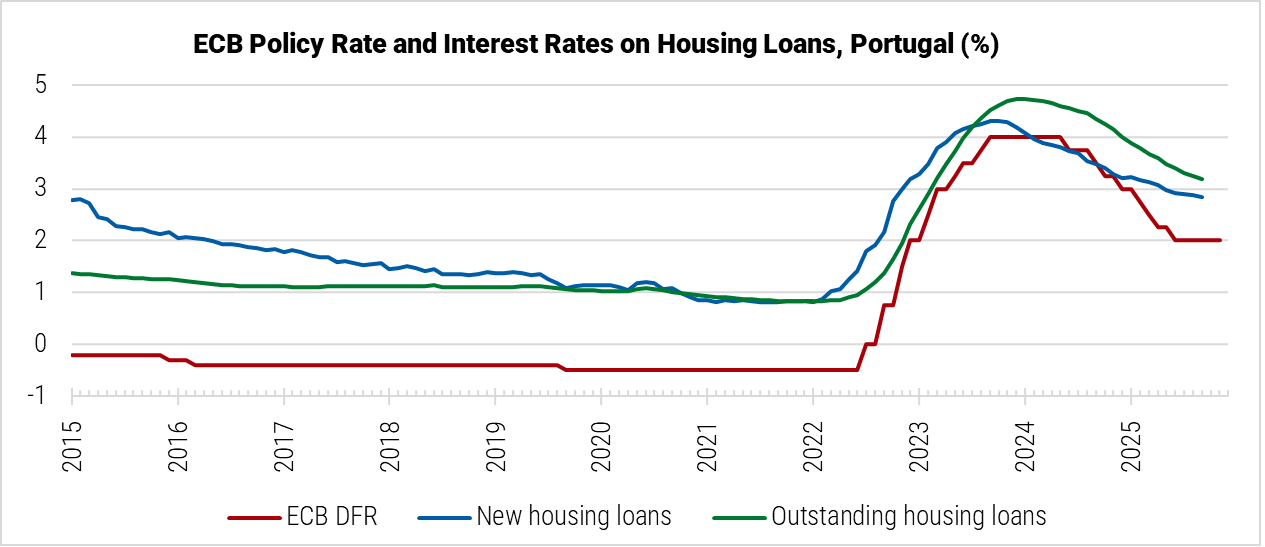
After eight consecutive cuts to its monetary policy rates (which brought the deposit facility rate to 2.00%, the main refinancing operations rate to 2.15%, and the marginal lending facility rate to 2.40%), the European Central Bank (ECB) has maintained its stance in recent months, making no further moves at the October meeting of the Governing Council.
Portugal's mortgage loan interest rates:
Note: Annualised agreed rate (AAR) / Narrowly defined effective rate (NDER)
Data Source: ECB.
Along with the apparent stabilization of the European regulator's monetary policy, interest rates in the Portuguese mortgage market (mainly consisting of floating-rate loans) have continued to decline throughout 2025, now also approaching stabilization phase, with the gap between average interest on new and existing loans gradually narrowing. According to the ECB figures, as of September 2025, the average interest rates on loans to households for house purchase reached 2.84% for new loans (a 63 b.p. decrease since the same period a year ago) and 3.19% for outstanding loans (a 116 b.p. decrease since September 2024).
Data Source: ECB.
Average interest rates on loans to households for house purchase:
| Sep 2025 | YoY | Sep 2024 | YoY | Sep 2023 | |
| New housing loans | 2.84% | ↓ | 3.47% | ↓ | 4.31% |
| - Floating rate and IRF up to 1 year | 2.80% | ↓ | 4.18% | ↓ | 4.63% |
| - IRF of over 1 and up to 5 years | 2.76% | ↓ | 3.21% | ↓ | 3.90% |
| - IRF of over 5 and up to 10 years | 4.19% | ↑ | 3.92% | ↓ | 5.35% |
| - IRF of over 10 years | 3.30% | ↓ | 3.56% | ↓ | 3.97% |
| Outstanding housing loans | 3.19% | ↓ | 4.35% | ↓ | 4.51% |
| - Original maturity up to 1 year | 5.95% | ↓ | 6.22% | ↑ | 5.91% |
| - Original maturity over 1 and up to 5 years | 8.32% | ↓ | 8.34% | ↑ | 7.51% |
| - Original maturity of over 5 years | 3.19% | ↓ | 4.34% | ↓ | 4.50% |
| Data Sources: ECB. | |||||
While they remain notably above the pre-2022 historic lows, now past-peak and stabilizing interest rates should continue to support buyer activity in Portugal amid a supply-demand imbalance and sluggish new construction, experts believe. "While interest rates remain elevated, stability in recent quarters will provide more favorable conditions to those looking to secure a mortgage, further boosting the demand for housing," a market overview from Savills said earlier this year.
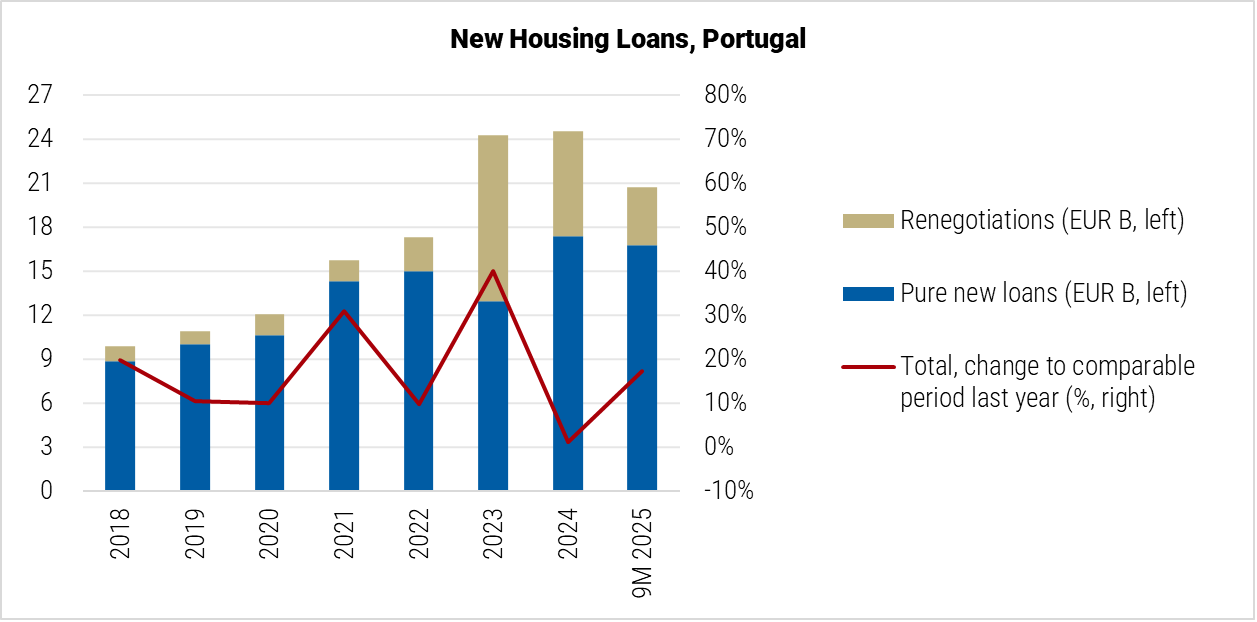
This view is supported by data on new loan originations. Based on the ECB figures, the total value of new loans for house purchase reported by monetary financial institutions (banks) in Portugal demonstrated a slower but positive dynamic in 2024 (1.2% year-on-year), with pure new loans growing by 34.1% year-on-year, while renegotiations (previously fueled by the sharp rise in variable rates) dropped. In the nine months of 2025, a total of EUR 20.7 billion (USD 24.3 billion) in new housing loans was issued by banks in Portugal, a solid 17.2% increase compared to the same period last year. Of those, EUR 16.8 billion (USD 19.7 billion) were pure new loans, which demonstrated a 39.7% growth against the comparable period in 2024.
According to the country's central bank, higher activity in the Portuguese mortgage market this year has been driven by both lenders and borrowers. "On the supply side, since the end of 2024, banks have reported easier credit standards - particularly for housing loans - which has been equally noted by consumers, who report fewer difficulties in accessing credit. On the demand side, over the same period, banks have pointed to an increase in loan demand, along with a rise in loan applications from young adults," noted the October 2025 lending survey published by the Banco de Portugal.
Data Source: ECB.
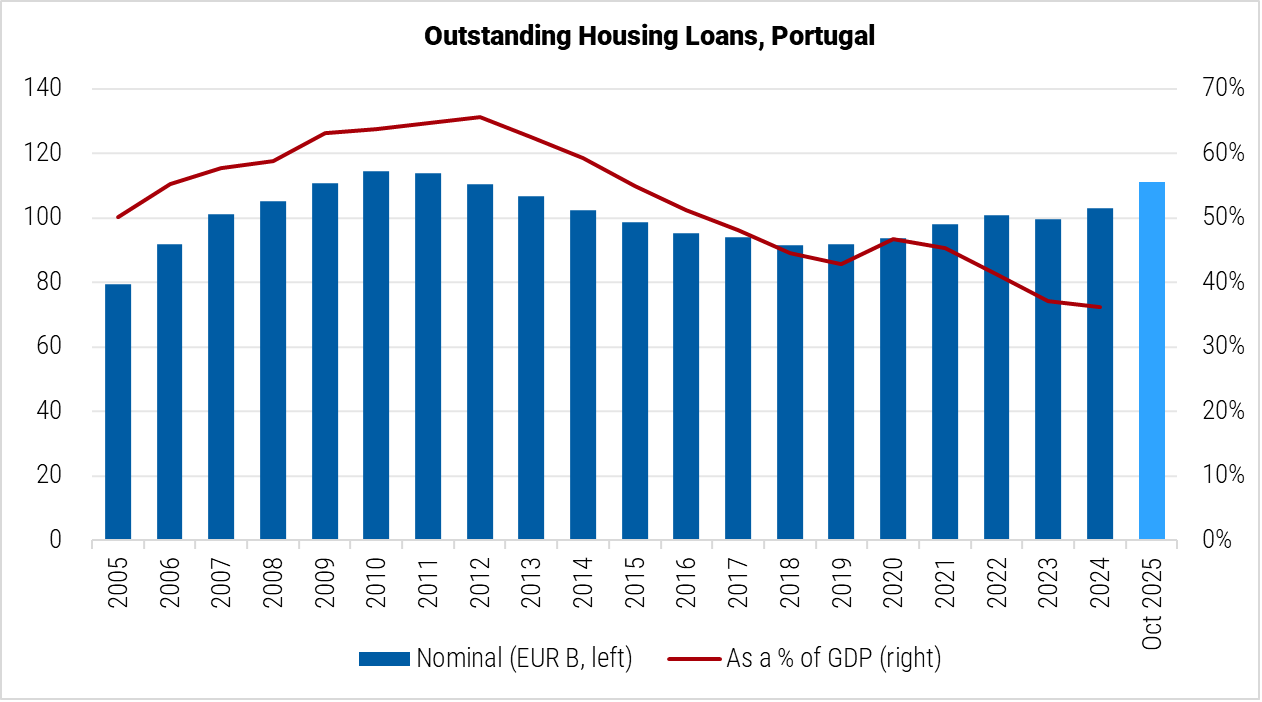
Overall, the banking sector data published by the ECB shows that after decreasing by 1.3% in 2023, the housing loan stock in the country returned to growth, registering a 3.5% increase in 2024. As of October 2025, the total value of outstanding housing loans maintained by Portuguese banks stood at EUR 111.1 billion (USD 129.2 billion), having expanded by 8.0% since the beginning of the year and now approaching peak levels previously observed in 2010-2011.
The relative size of the market, represented by the ratio of outstanding housing loans to GDP at current prices, is still in decline, however, down from the peak level of an estimated 65.6% in 2012 to 36.1% in 2024.
According to the most recent EUROSTAT figures, 32.5% of Portuguese households are homeowners with an outstanding mortgage or housing loan.
Data Source: ECB.
Socio-Economic Context:
Resilient Growth Amid Global Uncertainty
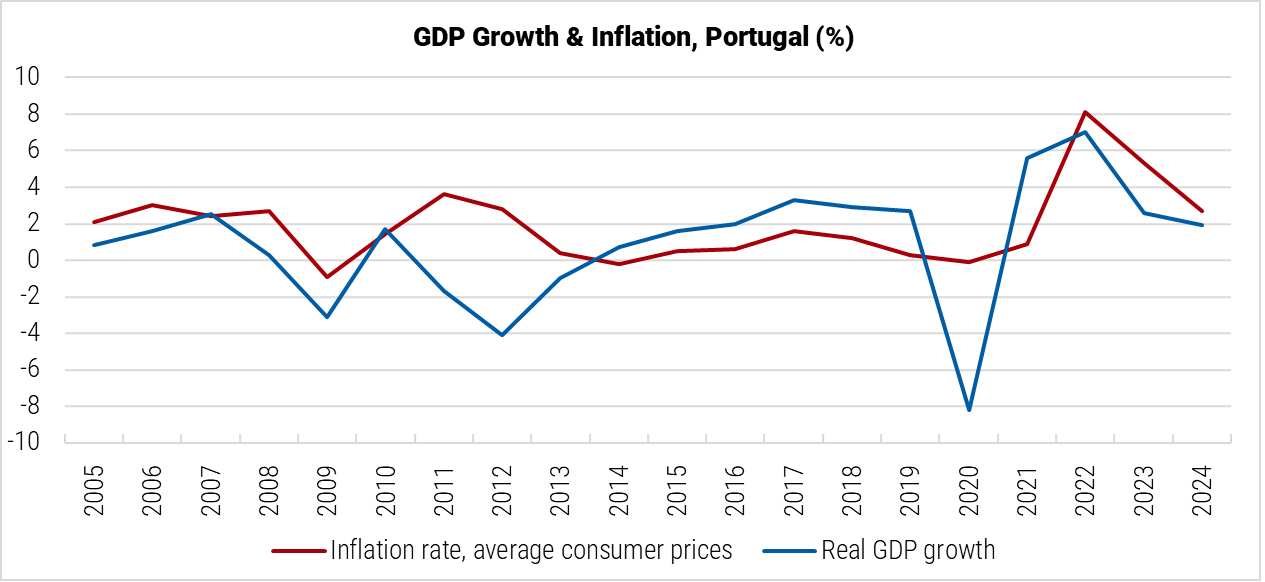
Despite a challenging period of elevated interest rates and higher cost of living, the Portuguese economy has remained resilient to external shocks and continues to grow above some eurozone peers. The country's real GDP growth moderated from 7.0% in 2022 to 2.6% in 2023 and 1.9% in 2024 and is forecast to hold at 1.9% in 2025 before re-accelerating somewhat to 2.2% in 2026, supported by domestic demand and EU-backed public investment.
"Private consumption is projected to continue growing at a steady pace over the forecast horizon amid increasing household income and a gradual decrease in the high saving rate <…>. Investment is expected to grow even faster than private consumption in 2025 and 2026 when the use of RRF funds is at its peak," said the European Commission fall forecast.
In parallel, consumer price index (CPI) inflation in the country has fallen significantly from 8.1% in 2022 to 5.3% in 2023 and 2.7% in 2024. Most recently, the INE reported the indicator at 2.2% in November 2025. Considering the latest drop in energy and industrial goods prices, headline inflation is projected to continue its downward path in the coming months amid a further mild easing in services inflation, slowing to average levels of 2.2% in 2025 and 2.0% in 2026.
Data Source: IMF.
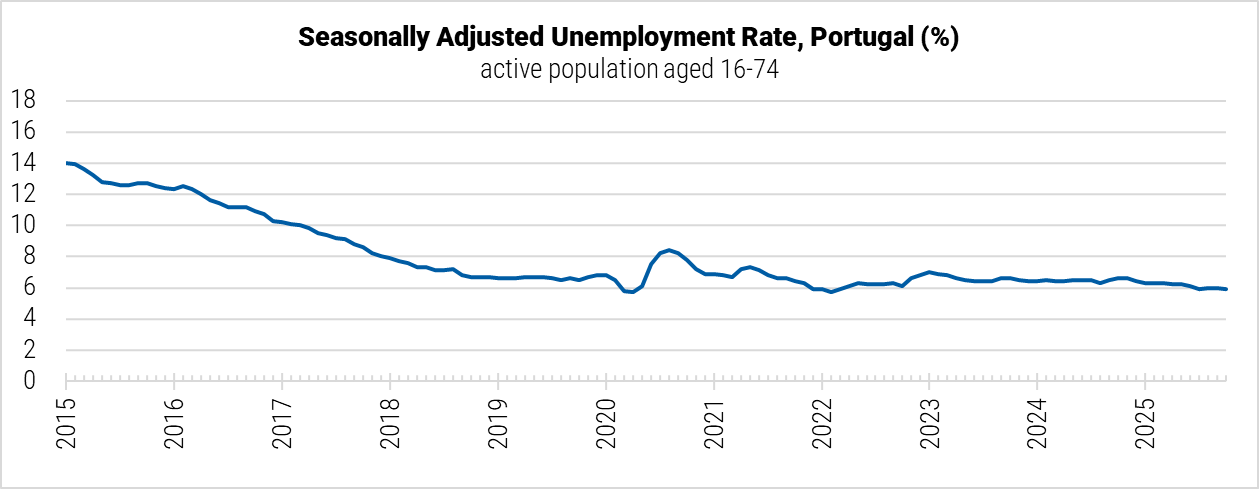
In the Portuguese labor market, unemployment has remained relatively stable at historically low levels, with the seasonally adjusted rate most recently reported by the INE at 5.9% in October 2025, against the background of both labor supply and employment rising at a strong pace, helped by net migration. In the upcoming periods, the European Commission anticipates employment growth will moderate somewhat but still lead to a gradual decline in unemployment down to an annual average of 6.1% by 2027. Wages are set to continue rising slightly faster than nominal GDP, according to the fall 2025 forecast.
Data Source: INE.
Portugal continues to face external headwinds, tied to trade and geopolitical tensions, as well as domestic political challenges, including a fragmented parliament formed after a snap election earlier this year and unpopular labor reform plans, which recently caused public protests in Lisbon. Nonetheless, the overall outlook for its economy is optimistic, with a relatively favorable performance within the euro area expected to continue over the projection horizon, as outlined in the October 2025 economic bulletin from the Banco de Portugal.
This view is supported by rating actions from global agencies this year. In February 2025, S&P upgraded Portugal from 'A-' to 'A' with a positive outlook, citing its resilient economic growth, improvements in the country's external financial position, anticipated budget surpluses, and reduction of government debt among the deciding factors. In September, Fitch Ratings also upgraded Portugal to an 'A' standing, with a stable outlook, based on the economy's resilience despite heightened risks, continued debt reduction, and balanced fiscal position, among other factors.
Sources:
- Statistics Portugal (INE)
- National and Regional Accounts: https://www.ine.pt/
- Prices: https://www.ine.pt/
- Labor Market: https://www.ine.pt/
- Consumer price index, October 2025: https://www.ine.pt/
- Consumer price index, November 2025: https://www.ine.pt/
- Monthly Employment and Unemployment Estimates, October 2025: https://www.ine.pt/
- House Rental Statistics at Local Level, Q1 2025: https://www.ine.pt/
- Survey of Bank Evaluation of Housing, November 2025: https://www.ine.pt/
- House Price Index, Q2 2025: https://www.ine.pt/
- Construction: Building Permits and Completed Buildings, Q2 2025: https://www.ine.pt/
- Government of the Portuguese Republic
- Public Guarantee: What is it and how does it work? (PT): https://www.portugal.gov.pt/
- Banco de Portugal
- Bank Lending Survey - October 2025: https://www.bportugal.pt/
- Economic Bulletin - October 2025: https://www.bportugal.pt/
- Official Gazette of the Republic of Portugal (Diário da República)
- New Urban Lease Regime - NRAU, Law no. 6/2006: https://diariodarepublica.pt/
- Notice No. 23174/2025/2, of September 19: https://diariodarepublica.pt/
- Notice No. 23099/2024/2, of October 18: https://diariodarepublica.pt/
- European Central Bank (ECB)
- ECB Data Portal: https://data.ecb.europa.eu/
- Key ECB Interest Rates: https://www.ecb.europa.eu/
- Monetary Policy Decisions, 30 October 2025: https://www.ecb.europa.eu/
- US Dollar/Euro, Monthly: https://data.ecb.europa.eu/
- US Dollar/Euro, Quarterly: https://data.ecb.europa.eu/
- US Dollar/Euro, Annual: https://data.ecb.europa.eu/
- European Commission
- Economic Forecast for Portugal: https://economy-finance.ec.europa.eu/
- Distribution of Population by Tenure Status, Type of Household, and Income group: https://ec.europa.eu/
- International Monetary Fund (IMF)
- Country Overview: Portugal: https://www.imf.org/
- 2024 Article IV Staff Report: https://www.imf.org/
- Organization for Economic Co-operation and Development (OECD)
- OECD Economic Outlook, Volume 2025 Issue 2, Portugal: https://www.oecd.org/
- Idealista
- Buying a House in Portugal: Prices Rise 7.8% and Reach a New Record (PT): https://www.idealista.pt/
- Home Sales Are Growing Again - and Prices Are Hitting Their Biggest Increase Ever (PT): https://www.idealista.pt/
- Renting a House in Portugal: Prices Slowed Their Upward Trend in November (PT): https://www.idealista.pt/
- Demand for Housing Near Lisbon Persists Despite High Rents: https://www.idealista.pt/
- Savills
- Residential Market Overview, Q1 2025: https://pdf.euro.savills.co.uk/
- JLL
- Portugal Residential Market Dynamics, Q3 2025: https://www.jll.com/
- CBRE
- Unlocking the Potential of Portugal's Residential Market: https://www.cbre.pt/
- BPI Research
- Portugal: House Prices Continue to Rise at a Very Strong Pace in Q2 2025 (PT): https://www.bancobpi.pt/
- Coldwell Banker
- Report on the Portuguese Real Estate Market. H1 2025 (PT): https://blog.coldwellbanker.pt/
- Roca Estate
- Overview of Portuguese Government Housing Programs: https://rocaestate.com/
- Morningstar
- Portuguese Residential Mortgage Market Update 2025: https://dbrs.morningstar.com/
- S&P
- Portugal Upgraded To 'A' On Ongoing External And Government Deleveraging; Outlook Positive: https://disclosure.spglobal.com/
- Fitch Ratings
- Fitch Upgrades Portugal to 'A'; Outlook Stable: https://www.fitchratings.com/
- Reuters
- Portugal's Ruling Centre-Right Alliance Wins Election, Misses Majority: https://www.reuters.com/
- Tens of Thousands March in Lisbon Against Planned Labour Changes: https://www.reuters.com/
- Diário Imobiliário
- Local Demand Dominates Portuguese Housing Market. Foreign Demand Falls (PT): https://diarioimobiliario.pt/