Thailand's Residential Property Market Analysis 2026
Thailand’s housing market showed tentative signs of recovery in early 2026, led by affordable housing and supported by government measures, although weak price growth, cautious lending, and substantial unsold inventory continue to weigh on the outlook.
This extended overview from Global Property Guide covers key aspects of the Thai housing market and takes a closer look at its most recent developments and long-term trends.
Table of Contents
- Property Prices and Price Index
- Property Demand Trends
- Property Supply Trends
- Mortgage Market and Interest Rates
- Rental Market: Rents and Rental Yields
- Economic and Social Factors
Property Prices and Price Index
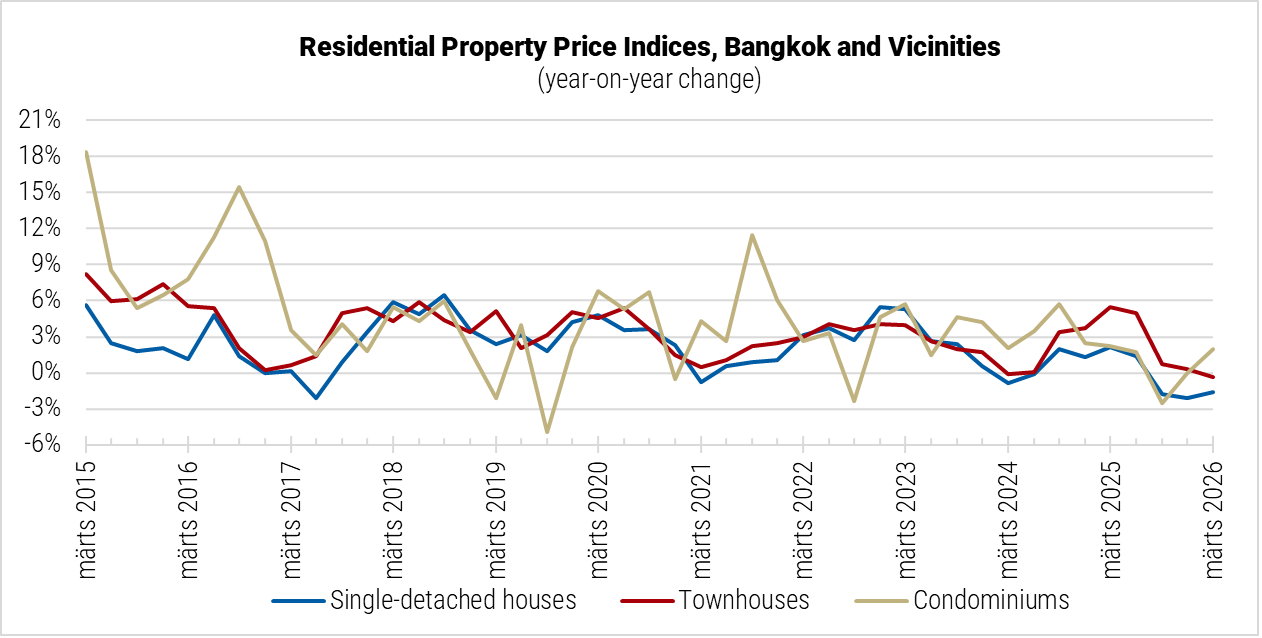
Thailand’s residential property market remained broadly stable in early 2026, with weak purchasing power and substantial unsold inventory limiting price growth, despite a recovery in transaction activity supported by government measures. In Q1 2026, the nationwide Residential Property Price Index, reported by the Bank of Thailand (BOT), increased by just 1.26% year-on-year, following growth of 0.63% in Q4 2025. Prices of single-detached houses rose by 1.57%, while townhouse prices increased by 1.06%.
Thailand's house price annual change:
Regional divergence persisted, with the South recording the strongest annual increase, at 5.59%, while Bangkok and its surrounding provinces were the only region to register a decline, with the regional index falling by 0.18% year-on-year. Within Bangkok and its vicinities, condominiums were the only segment to record growth, with prices rising by 1.95%. Townhouse prices were broadly unchanged, while single-detached house prices fell by 1.59%.
According to Colliers, developers in Bangkok’s condominium market have generally sought to preserve headline prices through incentives and promotional packages rather than outright reductions. Nevertheless, buyers in the capital remain highly price-sensitive, with demand concentrated in projects priced below prevailing market levels.
Residential Property Price Index, by region:
| Region | YoY, % Q1 2026 |
2-year change, % Q1 2026 |
5-year change, % Q1 2026 |
| Bangkok and vicinities | -0.18% | 3.07% | 10.61% |
| Central | 1.53% | 5.02% | 12.64% |
| North | 2.33% | 5.52% | 15.91% |
| Northeast | 2.61% | 9.04% | 17.58% |
| South | 5.59% | 12.84% | 20.10% |
| Nationwide | 1.26% | 4.79% | 13.53% |
| Note: Q1 2026 figures are preliminary. The central region excludes Bangkok and vicinities. | |||
| Data Source: BOT. | |||
Note: Indices for single-detached houses and townhouses segments include land.
Data Source: BOT.
The pricing outlook remains highly segmented. CBRE expects average asking prices for downtown Bangkok condominiums to increase by as much as 15% year-on-year in 2026, primarily reflecting a greater concentration of new launches in the luxury and super-luxury segments. This, however, should not be interpreted as a forecast for the wider Bangkok market, where elevated inventory and price-sensitive demand are likely to keep growth subdued.
JLL similarly sees pricing conditions to remain uneven. The consultancy noted that continued inventory-clearance requirements are constraining capital-value growth, while discounted units in mid-Sukhumvit continue to attract buyers. Taken together, these assessments point to moderate price growth across most of the market, with stronger increases concentrated in newly launched luxury developments and limited appreciation among projects competing with substantial unsold inventory.
Property Demand Trends
Cautious Recovery Led by Affordable Housing
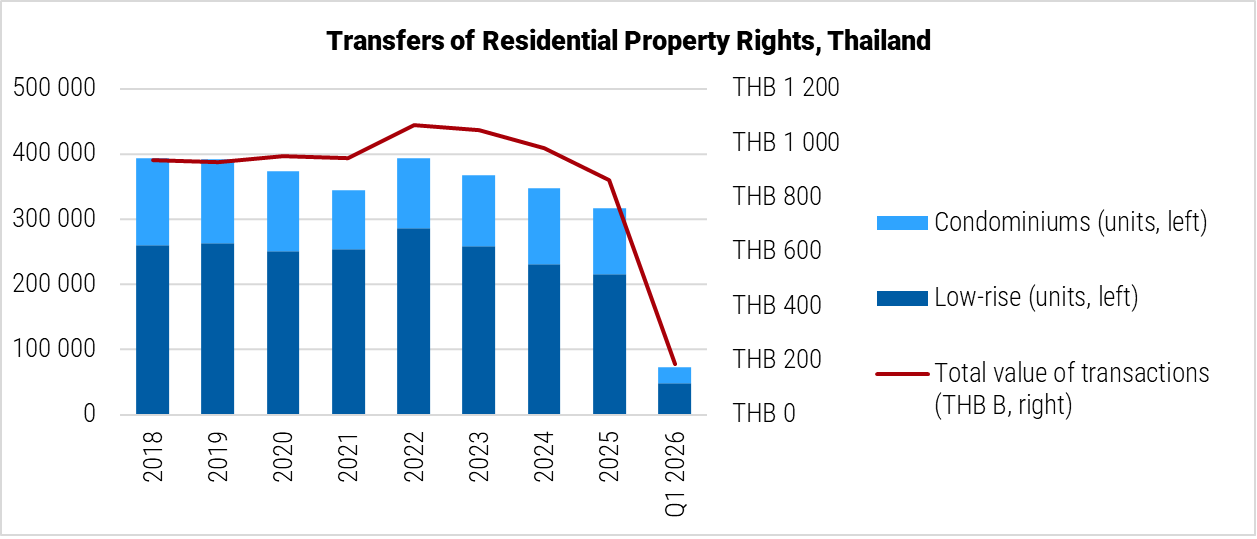
Following a prolonged period of weakening activity, Thailand’s housing market showed cautious signs of improvement in early 2026. Nationwide residential property transfers increased by 11.2% year-on-year to 72,583 units in Q1 2026, while their combined value rose by a more modest 3.1% to THB 187.18 billion, according to the Real Estate Information Center (REIC). This followed a more challenging 2025, when transaction volumes fell by 9.1%, and transfer value declined by 11.8%.
Low-rise housing continued to account for the majority of transactions, with transfers increasing by 12.2% year-on-year to 48,746 units and their value rising by 4.1% to THB 130.76 billion. Condominium transfers increased more modestly by 9.3% to 23,837 units, while their value remained almost unchanged, rising by just 0.8% to THB 56.42 billion. REIC attributed the improvement partly to government support measures and continued underlying demand among Thai buyers, although purchasing decisions remained constrained by limited household purchasing power, as buyers increasingly adjusted their preferred price range, dwelling size, and property type.
The recovery was concentrated primarily in the affordable segment. Properties priced at no more than THB 7 million (USD 221,559) recorded 69,447 transfers, up 12.7% year-on-year, while transactions above this threshold fell by 14.8% to 3,136 units. Second-hand homes accounted for about 67% of all residential transfers, with transactions of lower-priced resale properties rising more strongly than those of comparable new homes.
Data Source: REIC.
Foreign condominium demand, on the other hand, weakened during the quarter. Foreign buyers purchased 3,241 units, down 17.3% year-on-year, while the total value of transfers fell by 17.9% to THB 13.46 billion. REIC attributed the decline to weaker economic conditions in Thailand and abroad, which led buyers to become more cautious and delay purchase decisions. This was particularly evident among Chinese buyers, who continued to face economic and liquidity constraints in their domestic market.
Chinese nationals nevertheless remained the largest foreign buyer group, although their purchases fell by 38.8% year-on-year to 906 units. By contrast, transfers to Russian buyers increased by 33.0% to 383 units. Chonburi recorded the largest number of foreign condominium transfers, supported by demand in Pattaya, while Bangkok remained the largest market by transaction value.
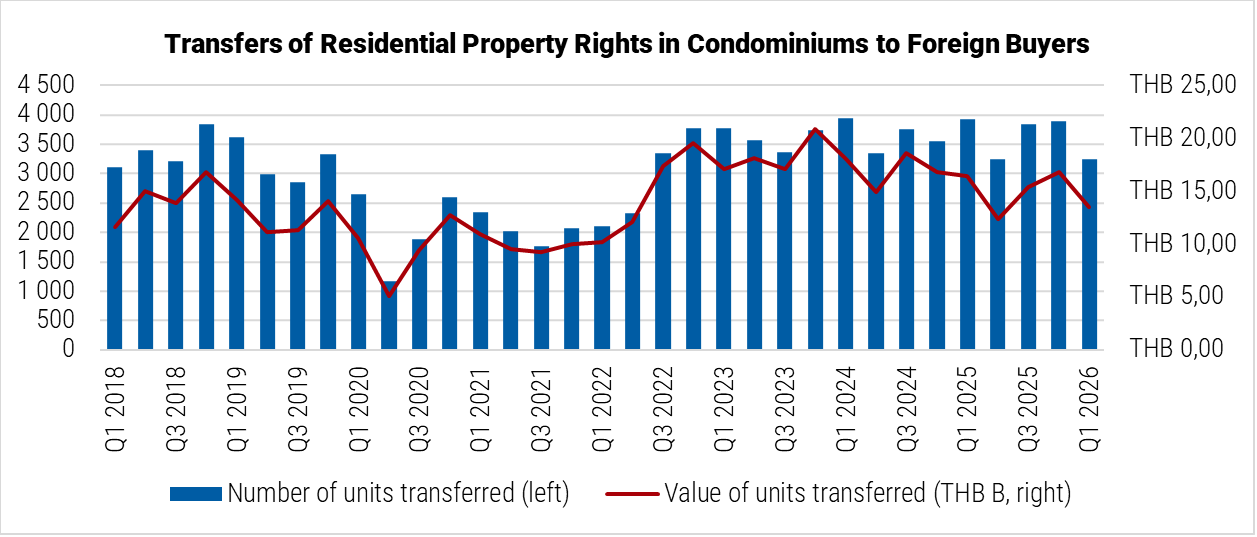
Data Source: REIC.
Transfers of residential property rights in condominiums to foreign buyers, by nationality:
| Nationality of Foreign Buyers | Total no. of units transferred, Q1 2026 |
YoY, % | Total value of units transferred, THB million, Q1 2026 |
YoY, % | Avg value per unit, (THB M) |
Avg area per unit (sqm) |
| China | 906 | -38.8% | 3,493 | -42.9% | 3.9 | 39.9 |
| Russia | 383 | 33.0% | 1,665 | 68.7% | 4.3 | 42.1 |
| Myanmar | 279 | -36.4% | 968 | -39.0% | 3.5 | 33.2 |
| Taiwan | 136 | -31.0% | 688 | -24.5% | 5.1 | 35.4 |
| US | 138 | -6.1% | 685 | -16.5% | 5.0 | 53.9 |
| France | 155 | -1.9% | 627 | 2.4% | 4.0 | 49.2 |
| UK | 148 | 13.0% | 570 | -23.4% | 3.9 | 49.7 |
| Germany | 135 | 17.4% | 481 | 18.1% | 3.6 | 47.0 |
| Australia | 83 | 36.1% | 381 | 32.4% | 4.6 | 54.8 |
| India | 63 | 40.0% | 353 | -5.3% | 5.6 | 67.8 |
| Others | 815 | -4.9% | 3,553 | 0.1% | 4.4 | 46.2 |
| Data Source: REIC. | ||||||
Despite the stronger Q1 results, REIC expects the housing market to contract slightly over 2026 as a whole. Nationwide residential transfers are forecast to fall by 1.1% to 312,814 units, while their total value is projected to decline by 2.3% to THB 845.24 billion. The outlook reflects continued pressure on household purchasing power, weaker economic conditions, and geopolitical risks, particularly the possibility of higher energy, transportation, and construction-material costs.
The downturn, nevertheless, is expected to remain relatively limited due to continued government support, including the extension of relaxed loan-to-value rules and the reduction of transfer and mortgage-registration fees to 0.01% for eligible residential properties priced at no more than THB 7 million (USD 221,559). Broader fiscal stimulus measures are also seen to support domestic economic activity and help prevent a sharper decline in housing demand.
Property Supply Trends
Residential Completions Fall Despite a Rebound in Permitting Activity
Thailand’s residential development activity remains subdued, as the market continues to absorb existing inventory and developers remain cautious about new construction, although the latest permit data point to some improvement in the longer-term pipeline.
In the Bangkok Metropolitan Region, a total of 72,584 newly completed residential properties were registered in 2025, down by 25.4% from 97,284 units a year earlier. The slowdown was broad-based, with low-rise completions, including housing projects and self-built homes, falling by 27.9% year-on-year, while condominium completions declined by 22.7%. Completions decreased across all six provinces covered by the series, with the steepest contraction recorded in Pathum Thani, at 41.8%. Bangkok accounted for 38,969 completed properties, down by 19.5% from the previous year.
The contraction continued during the first two months of 2026. Based on the latest BOT data, the number of newly completed and registered residential properties in the Bangkok Metropolitan Region fell by 24.0% from the same period of 2025. The decline was particularly pronounced in the apartment and condominium segment, where completions were down by 38.3% year-on-year.
The continued reduction in completions reflects developers’ cautious response to subdued market conditions and the slow absorption of existing inventory. CBRE described the Bangkok condominium market as having had a slow start to 2026, with buyers remaining cautious and taking longer to make purchasing decisions amid the weak domestic economy and wider geopolitical uncertainty.
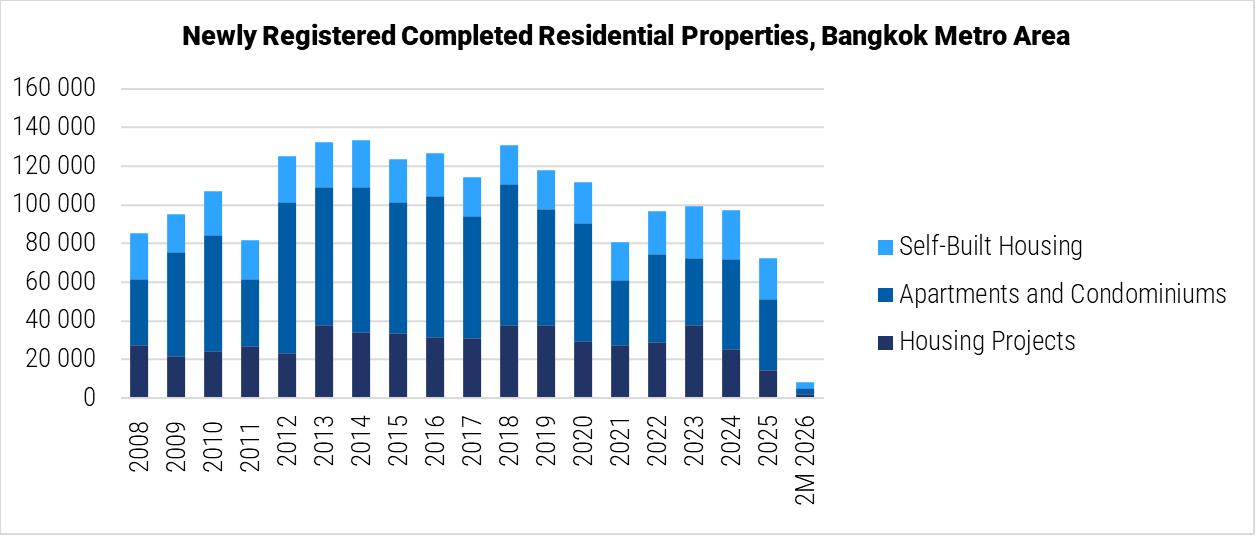
Data Source: BOT.
Nevertheless, forward-looking indicators point to some improvement in the potential construction pipeline. Data from the National Statistical Office of Thailand show that permits were issued for 56,342 new residential buildings nationwide in the first quarter of 2026, an increase of 20.0% year-on-year. Their combined permitted floor area rose by 13.1% to approximately 7.55 million square meters. The improvement was greatest in the Northeast, where 12,939 residential buildings were permitted, up by 38.7% from the previous year. Bangkok and its surrounding provinces followed closely, recording a 38.2% increase to 9,392 permitted residential buildings.
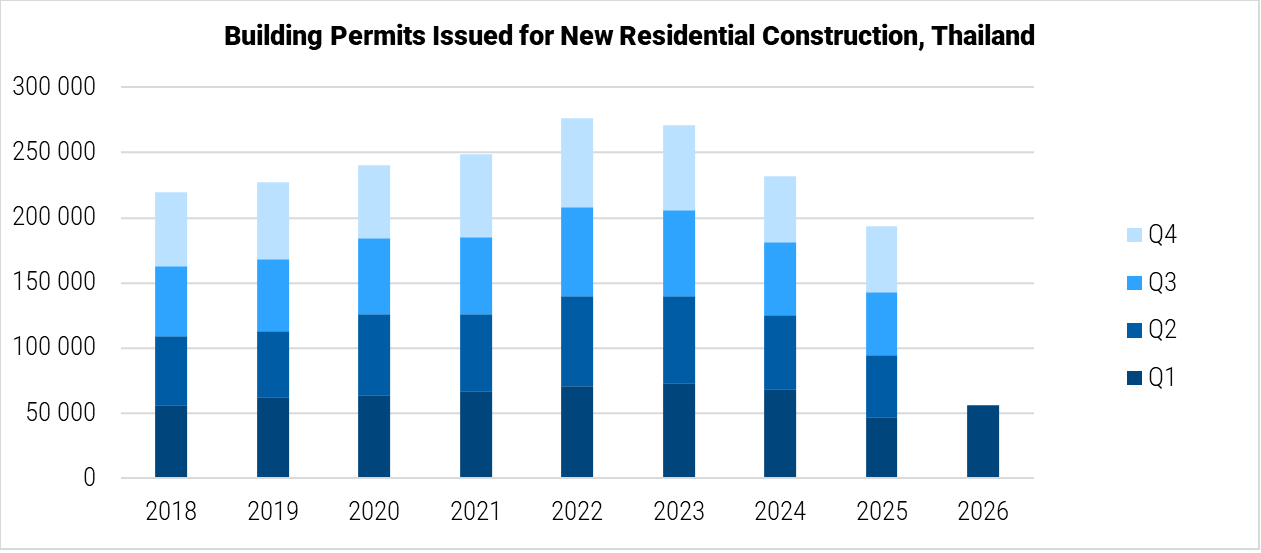
Data Source: NSO.
Building permits issued for new residential construction, by region:
| Region | Building Permits Issued, Q1 2026 |
YoY, % |
| Bangkok Metro | 9,392 | 38.18% |
| Center | 14,719 | 7.78% |
| North | 8,711 | 16.21% |
| Northeast | 12,939 | 38.65% |
| South | 10,581 | 9.26% |
| Data Source: NSO. | ||
The increase in permitting activity indicates that developers are gradually preparing for a future recovery, but it is unlikely to translate into an immediate rise in completed supply. Projects may still be delayed or phased if presales remain insufficient. Although demand for affordable housing has recently strengthened, developers are likely to remain selective until the recovery becomes more firmly established. CBRE expects more activity in Bangkok’s luxury and super-luxury condominium market, where existing supply has achieved a 93% sales rate. By contrast, low-rise developers are seen to assess demand carefully before proceeding with new projects because of the elevated volume of unsold inventory.
Mortgage Market and Interest Rates
Lower Interest Rates and Early Signs of Recovery in Lending Activity
After a series of cuts between October 2024 and February 2026, the BOT has kept its policy rate unchanged at 1.00% over the last several months. According to the latest press statement from the Monetary Policy Committee, the regulator assesses that an “accommodative monetary policy stance, coupled with targeted financial measures, has helped support the economic recovery” and that the economy’s growth remains low and uneven, while inflation is expected to rise, but will subsequently fall once the supply-side pressures gradually ease, suggesting a pause in rate adjustment for the time being.
Thailand's mortgage loan interest rates:
Reflecting the policy trajectory, minimum retail rates (MRR) set by individual banks and generally serving as a baseline for specific mortgage products, declined slightly year-on-year but have remained stable since March. Based on information published by the BOT, at the end of June 2026, the average MRR for domestic commercial banks was 7.38%, down from 7.80% a year earlier and 8.02% two years earlier. For foreign bank branches, the indicator reached 6.33% in June 2026, down from 6.42% in June 2025 and 7.16% in June 2024.
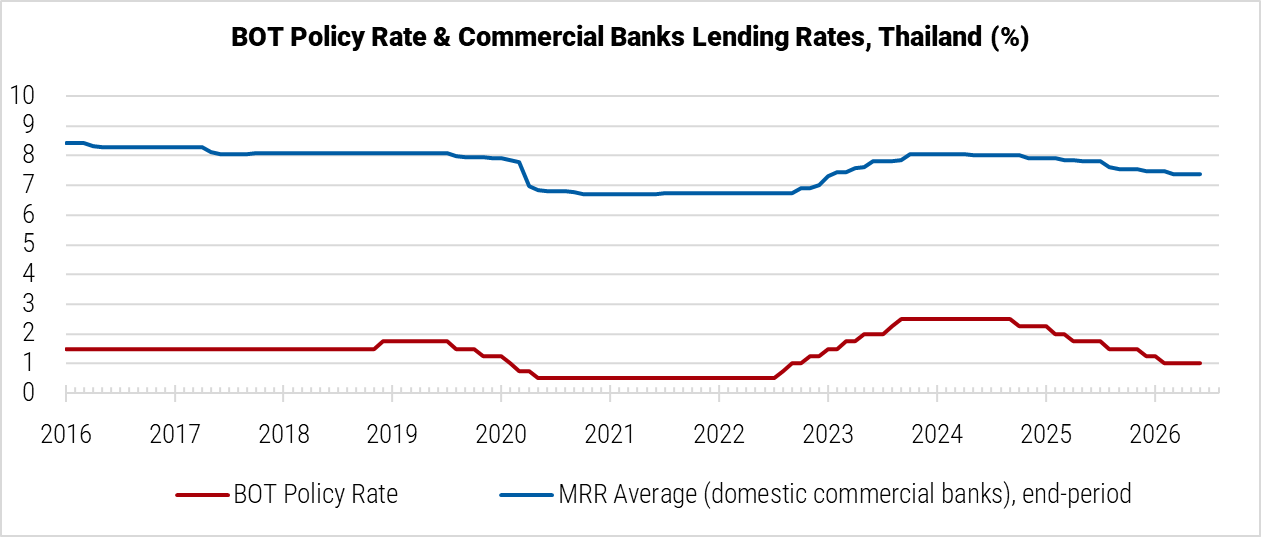
Data Source: BOT.
Typically, banks in Thailand offer a discounted fixed rate for the first three years of a loan term, switching to a floating rate tied to MRR from the fourth year. According to the data accumulated by the real estate website DDproperty, as of June 2026, the lowest average interest rate for the first 3 years across various home loan programs is between 2.65% and 3.85% in popular commercial banks, and 2.66% and 2.55% in the state-owned Government Housing Bank (GHB) and Government Savings Bank (GSB), respectively. In both commercial and state-owned segments, MRRs at all major lenders are now below the levels reported a year ago and two years ago.
Selected banks Minimum Retail Rate (MRR):
| June 2026 | YoY | June 2025 | YoY | June 2024 | |
| Domestic Commercial Banks | |||||
| Bangkok Bank | 6.500% | ↓ | 6.900% | ↓ | 7.050% |
| Krung Thai Bank | 6.845% | ↓ | 7.295% | ↓ | 7.570% |
| Kasikornbank | 6.580% | ↓ | 7.030% | ↓ | 7.300% |
| Siam Commercial Bank | 6.575% | ↓ | 7.025% | ↓ | 7.300% |
| Bank of Ayudhya | 6.670% | ↓ | 7.120% | ↓ | 7.400% |
| Domestic State Banks | |||||
| Government Housing Bank | 6.145% | ↓ | 6.495% | ↓ | 6.545% |
| Government Savings Bank | 6.045% | ↓ | 6.545% | ↓ | 6.595% |
| Data Source: DDproperty. | |||||
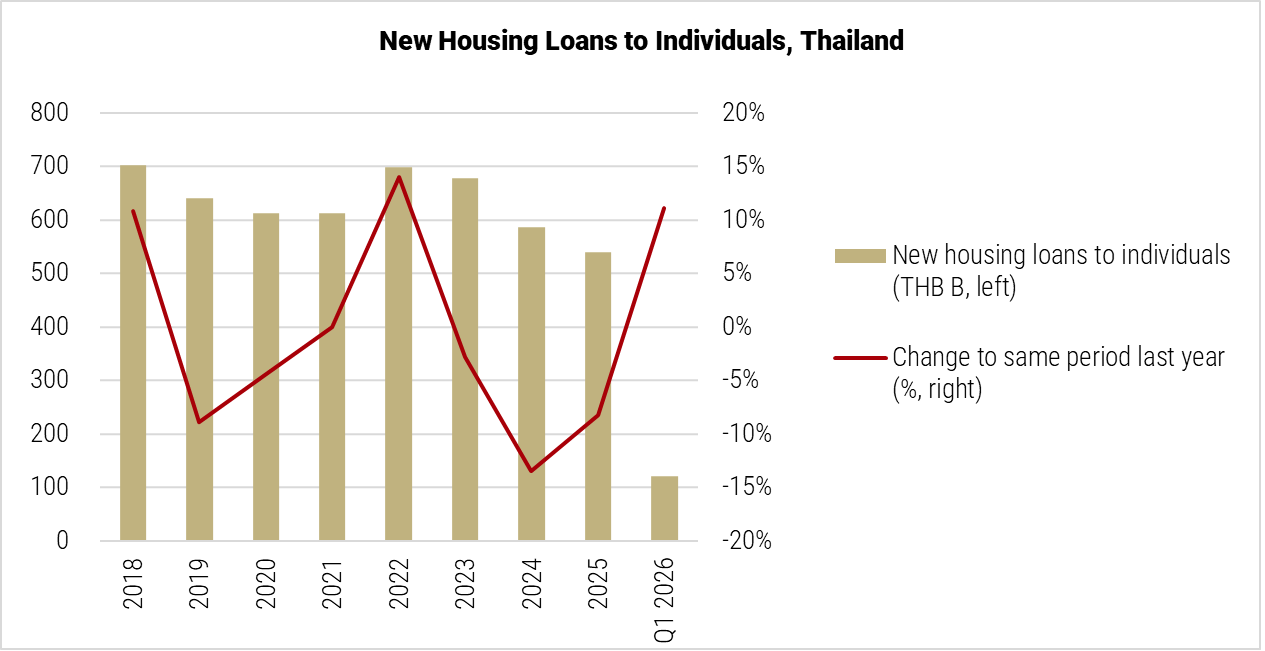
Despite lower interest rates, which improved borrowing costs for current mortgage holders in Thailand, and first signs of recovery in new lending observed in Q1 2026 (THB 121.6 billion / USD 3.8 billion in new mortgage loans to individuals, marking an 11.1% increase compared to the same period in 2025), demand for new mortgages is expected to remain subdued against the background of strict lending requirements established by the financial institutions in response to a large number of non-performing loans and the weakened debt repayment capability of potential buyers, especially those in the lower-income segments.
“Mortgage lending is expected to remain weak this year as persistently high loan rejection rates continue to weigh on home transfers, while weak consumer confidence is prompting more buyers to withdraw from purchases despite having secured financing,” Bangkok Post wrote in June. Experts from Kasikorn Research Center cited by the publication warn that the recent rebound in activity should be interpreted cautiously, because it was partly driven by a low comparison base, as many homebuyers previously delayed purchases while awaiting government property stimulus measures.
Data Source: REIC.
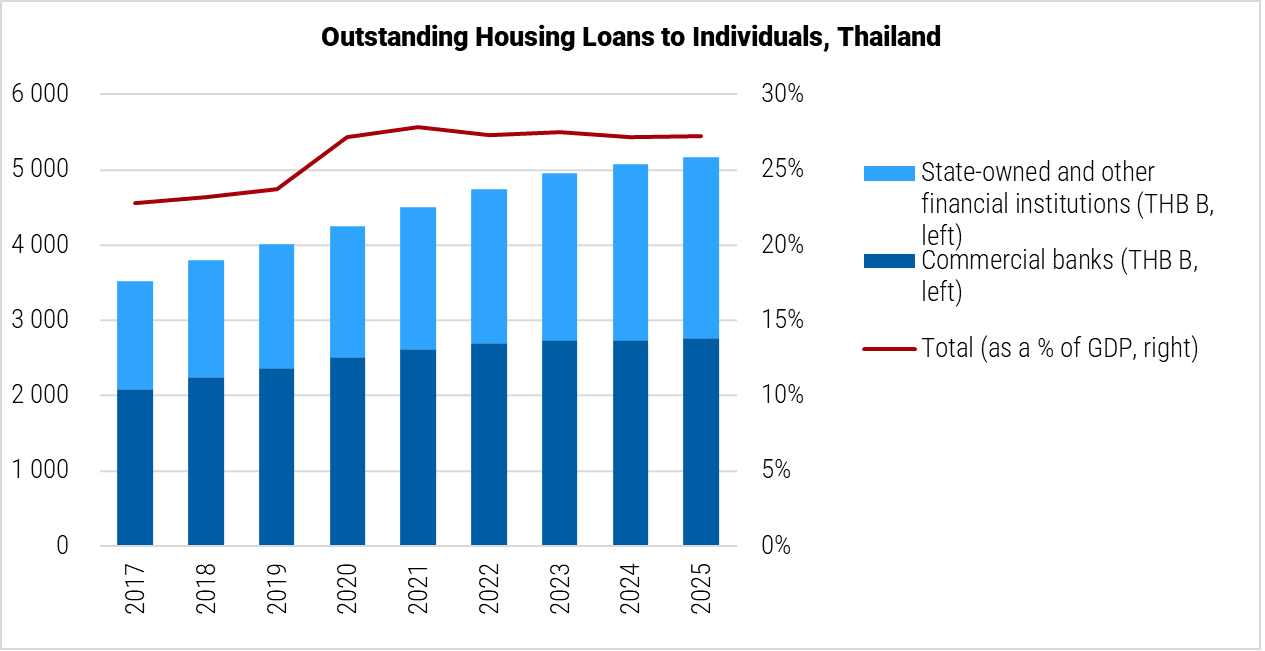
Based on REIC figures, the total value of outstanding housing loans to individuals in Thailand’s financial system stood at THB 5.17 trillion (USD 160.9 billion) at the end of 2025, a 2.0% increase over the year. Around 53% of the stock is mortgages from commercial banks, while the rest are loans issued by state enterprises such as the GHB and the GSB, as well as other financial institutions. Sized against the national economy, the market has remained stable in recent years, with the loan-to-GDP ratio estimated at 27.3% in 2025.
Data Sources: REIC, World Bank.
Rental Market: Rents and Rental Yields
Actual Rents Inflation Low, Growth in Prime Rents in Bangkok Expected to Moderate
According to the 2010 Census conducted by the NSO, the homeownership rate in Thailand was estimated at 78.9% (compared to 82.4% previously recorded in 2000). At the same time, 16.5% of residents rented accommodation for a fee, and 4.3% rented free of charge. While the preliminary results of the 2025 Census have not yet revealed the latest official findings on households’ residence ownership status, anecdotal evidence and expert assessments point to a further decrease in the share of owners in recent years.
“Thailand’s residential market is showing a clear shift from buying to renting, as tighter mortgage rules and persistently high household debt push more consumers away from home ownership,” The Nation Thailand commented recently on the state of the country’s housing market, adding that younger consumers are now placing greater value on flexibility and city living than on ownership.
Supporting this view, an article in the Prachachat Business Newspaper previously highlighted the so-called Generation Rent trend becoming more widespread in Thailand. According to the local experts cited, today’s young professionals increasingly don’t want to own a home because of pressure from the burden of living costs, coupled with housing prices that are beyond the purchasing power of this group of customers, especially in cities and locations with convenient transportation, such as train lines passing through.
In Bangkok, rental demand has also been supported by a substantial expatriate community (nearly 103,000 foreigners in the capital province as of June 2026). In parallel, popular tourist destinations like Phuket, Pattaya, Koh Samui, and Chiang Mai sustain demand for short-term rentals.
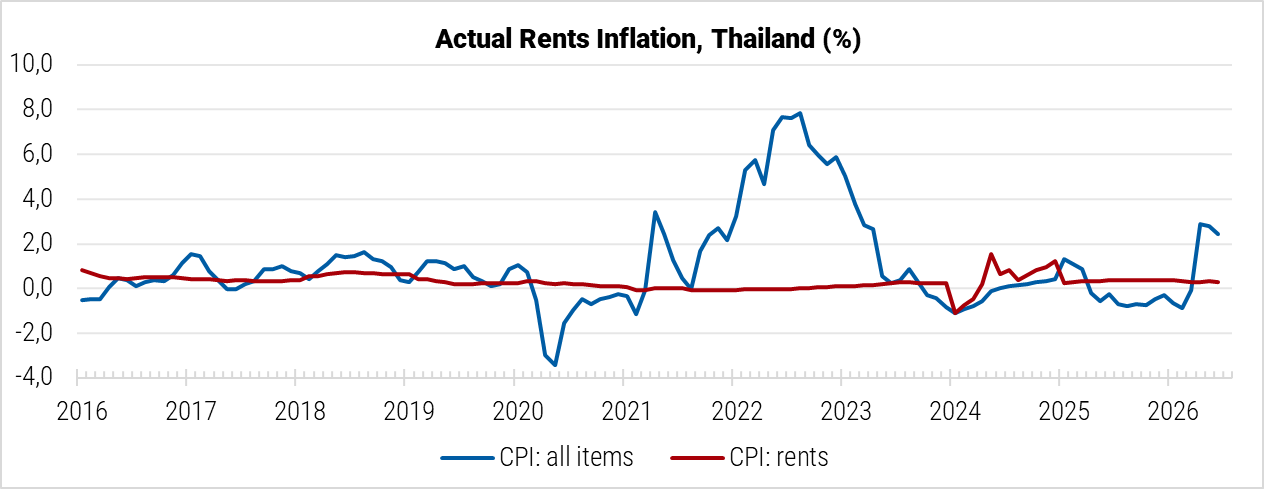
Despite these indirect indications of solid local and foreign demand, balanced out by ample supply and stricter regulations issued by the Office of the Consumer Protection Board in 2025, actual rent inflation in Thailand (as measured by the change in the rent component of the consumer price index) remains subdued, reported at just 0.29% year-on-year in June 2026. At the same time, high-end properties popular among foreigners typically exhibit a more pronounced positive price dynamic.
Data Source: TPSO.
In nominal terms, research by Global Property Guide found listed rents in Thailand averaging USD 220-550 per month for studio units, USD 310-800 for 1-bedroom units, USD 580-1,770 for 2-bedroom units, and USD 1,930-3,500 for 3-bedroom units in February 2026. The highest average rent levels were observed in Bangkok and Phuket submarkets.
The corresponding gross rental yields averaged 6.49%, up from 6.17% reported a year prior in February 2025. Regional performance varied, with the highest yields among the surveyed submarkets registered in Samut Prakan (8.52%). In the capital city of Bangkok, the indicator was estimated at 6.22%.
Within the prime residential segment, the latest JLL figures showed average gross rents for high-end and luxury units in Bangkok at THB 765 (USD 24.19) per square meter in Q1 2026, reflecting a 5.1% year-on-year increase. “Persisting market wariness supported demand in the rental market, as tenants were attracted by flexibility and fewer long-term commitments,” the report noted. At the same time, the experts anticipate rental growth momentum for this property segment will moderate in 2026 as more luxury units become available.
Economic and Social Factors
Slower Growth Outlook, Tourist Arrivals Still in Decline
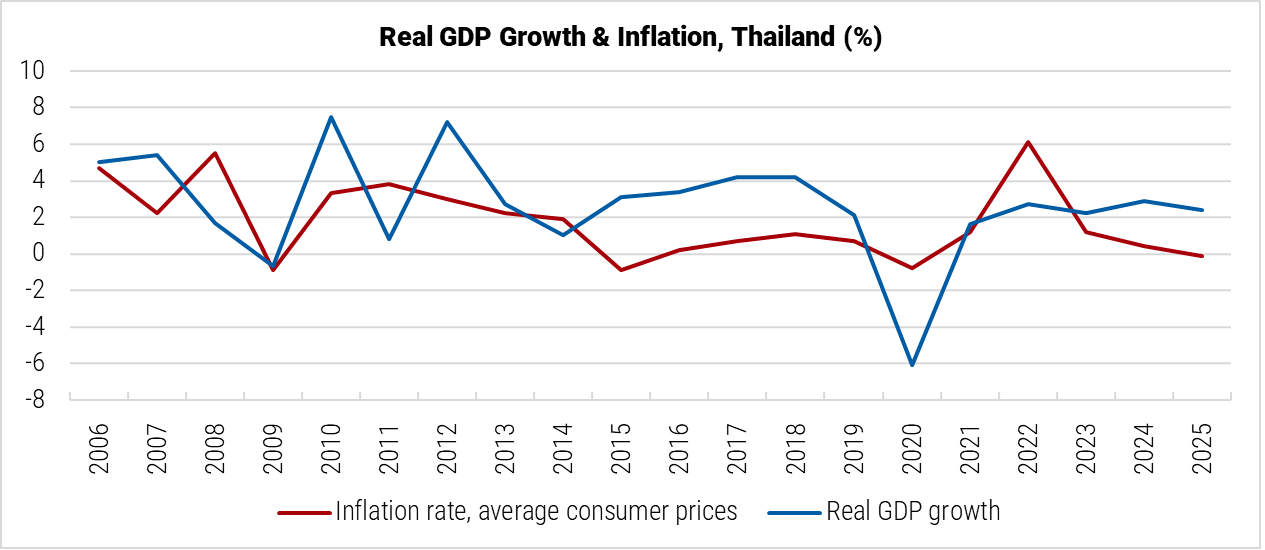
Thailand’s economy has been facing mounting challenges, including the lasting impact of the pandemic and long-standing structural challenges (such as elevated household debt), as well as more recent external shocks of the US tariffs and the Middle East escalation, as well as domestic political instability, all heightening uncertainty and weighing on growth. The country’s real GDP growth slowed from 2.9% in 2024 to 2.4% in 2025 and is projected by the International Monetary Fund (IMF) to fall further to 1.9% in 2026 despite outperforming earlier forecasts in the first quarter of the year. The BOT expects growth to decelerate gradually to 2.3% this year and 1.8% in 2027.
Impacted by global developments, consumer price index (CPI) inflation in Thailand, which had previously gone into negative territory, reaching an annual average of -0.1% in 2025, notably picked up over the recent months and was most recently reported by the Trade Policy and Strategy Office (TPSO) at 2.4% in June 2026. The BOT projects headline inflation at 2.8% for 2026 and 1.4% for 2027.
Data Source: IMF.
Against this background, the country’s tourism industry is yet to recover to its pre-pandemic baseline. On the contrary, in 2025, the number of foreign tourist arrivals demonstrated a substantial 7.2% year-on-year decline, which was mainly attributed to short-haul tourists, especially Chinese, who were traveling to Thailand less due to safety concerns, as well as wider economic factors such as income and consumer confidence in the main origin markets. In the first five months of 2026, foreign tourist arrivals reached 14.0 million compared to 14.4 million during the same period in 2025 (-2.3% year-on-year) and are projected to remain broadly stable for the full year.
“While the number of Chinese tourists is expected to increase as security concerns ease, both long-haul arrivals — particularly from the Middle East and Europe — and short-haul arrivals (e.g., from China) are expected to slow due to travel constraints and higher airfares,” the BOT noted in the latest monetary policy report.
Based on the preliminary figures from the Ministry of Tourism and Sports, between January and May 2026, the vast majority of foreign tourists arrived in Thailand from Asia and the Pacific (65.2%), followed by Europe (28.3%) and the Americas (5.0%). Key country markets of origin were China, Malaysia, India, and Russia.
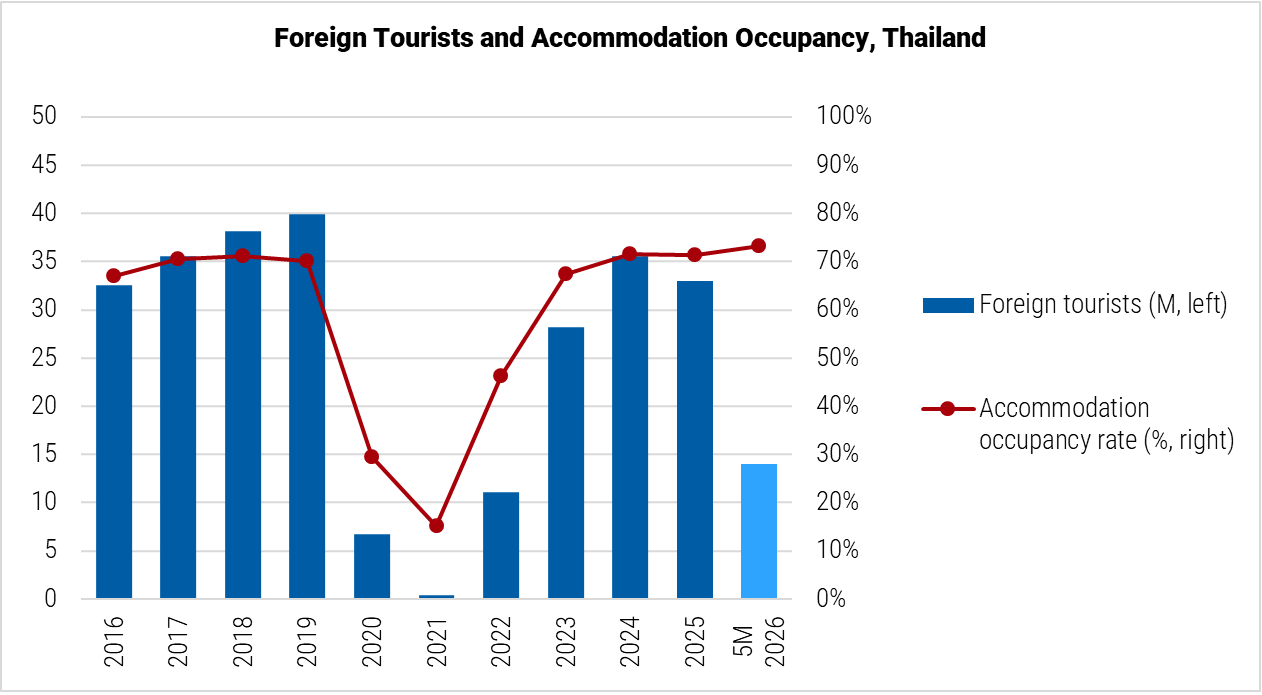
Data Sources: BOT, Ministry of Tourism and Sports.
In Thailand’s labor market, the unemployment rate has been low and relatively stable at around 1% (most recently reported at 0.94% in Q1 2026). At the same time, the market continues to suffer from longstanding structural issues, including a declining labor force due to rapid population aging and a large informal sector coupled with insufficient social protection, which contribute to inequality and high household debt.
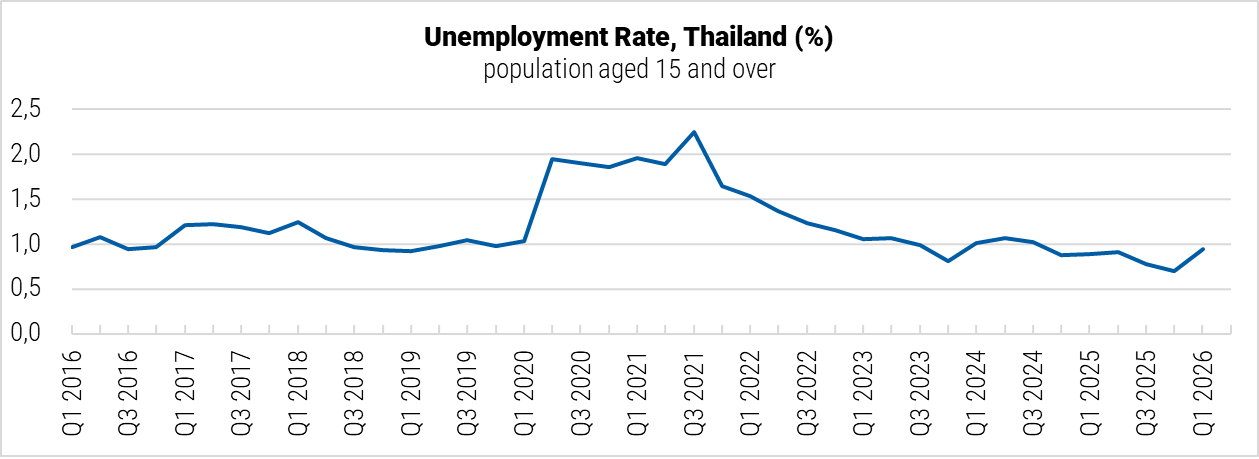
Data Source: BOT.
Overall, the outlook for Thailand’s economy remains dominated by downside risks, with prolonged escalation in the Middle East and persistent trade policy uncertainty being the principal external risks, while high household debt continues to stand out as a substantial domestic challenge.
Earlier in 2025, Moody’s Ratings, while affirming Thailand’s ‘Baa1’ standing, changed its outlook from stable to negative, flagging concerns over the country’s rising debt and weakening fiscal strength exacerbated by external risks. More recently, in September 2025, Fitch Ratings also revised its outlook for Thailand from stable to negative, citing increasing risks to the country’s public finance from political uncertainty combined with growth headwinds from slowing global demand, a delayed tourism recovery, and household deleveraging.
Following the prolonged period of political instability marked by multiple leadership changes, the early 2026 snap election resulted in a decisive victory of the conservative Bhumjaithai Party. The new government reportedly intends to serve a full four-year term and plans to focus on debt relief measures and reviving economic activity. In May 2026, the government approved a THB 400 billion emergency borrowing decree (recently upheld by the Constitutional Court), which will fund a consumer subsidy scheme intended to cushion households from higher living costs, as well as investments in the green energy transition.
Sources:
- National Statistical Office of Thailand (NSO)
- 2025 Population and Housing Census, Preliminary Results: https://www.nso.go.th/
- 2010 Population and Housing Census: https://www.nso.go.th/
- Construction Site Data Processing, Q1 2026 (TH): https://www.nso.go.th/
- Bank of Thailand (BOT)
- Residential Property Price Index and Land Price Index: https://app.bot.or.th/
- Property Indicators: https://app.bot.or.th/
- Policy Interest Rate: https://www.bot.or.th/
- Monetary Policy Committee’s Decision 3/2026: https://www.bot.or.th/
- Daily Interest Rates of Commercial Banks: https://www.bot.or.th/
- Labor Force Survey: https://app.bot.or.th/
- Tourism Indicators: https://app.bot.or.th/
- Economic Outlook: https://www.bot.or.th/
- Monetary Policy Report Q1 2026: https://www.bot.or.th/
- Monetary Policy Report Q4 2025: https://www.bot.or.th/
- The Central Bank Has Extended the LTV Measure for Another Year…: https://www.bot.or.th/
- Real Estate Information Center (REIC)
- Housing Market Situation in Q1 2026 (TH): https://www.reic.or.th/
- Housing Market Situation in Q4 2025 and Outlook for 2026 (TH): https://www.reic.or.th/
- Highlight Data Q4 2025 (TH): https://www.reic.or.th/
- The Bangkok and Metropolitan Area Housing Market Situation in Q4 2025 and Outlook for 2026 (TH): https://www.reic.or.th/
- REIC Indicates That the Housing Market in the First Quarter of 2026 Was Boosted… (TH): https://reic.or.th/
- Report on the Transfer of Condominium Ownership to Foreigners, Q1 2026 (TH): https://www.reic.or.th/
- Trade Policy and Strategy Office (TPSO)
- Consumer Price Index/Inflation (TH): https://index.tpso.go.th/
- Ministry of Tourism and Sports
- Tourist Statistics: https://www.mots.go.th/
- Bureau of Registration Administration
- Statistics for Executives (TH): https://www.bora.dopa.go.th/
- International Monetary Fund (IMF)
- Country Overview: Thailand: https://www.imf.org/
- 2025 Article IV Staff Report: https://www.imf.org/
- World Economic Outlook Update, July 2026: https://www.imf.org/
- World Bank
- Thailand MPO, April 2026: https://thedocs.worldbank.org/
- Federal Reserve Economic Data (FRED)
- Thai Baht to US Dollar Spot Exchange Rate: https://fred.stlouisfed.org/
- JLL
- Asia Pacific Residential Market Dynamics Q1 2026: https://www.jll.com/
- Bangkok Residential Market Dynamics Q1 2026: https://www.jll.com/
- CBRE
- Bangkok Overall Figures Q1 2026: https://www.cbre.co.th/
- Thailand’s Real Estate Market in 2026: https://www.cbre.co.th/
- Colliers
- Bangkok Condominium Market Q1 2026: https://www.colliers.com/
- DDproperty
- Updated Home Loan Interest Rates for June 2026 from All Banks (TH): https://www.ddproperty.com/
- Moody’s Ratings
- Moody’s Ratings Changes Thailand’s Outlook to Negative from Stable; Affirms Baa1 Ratings: https://ratings.moodys.com/
- Fitch Ratings
- Fitch Revises Thailand's Outlook to Negative; Affirms at 'BBB+': https://www.fitchratings.com/
- Reuters
- Thai Housing Demand Recovering but Outlook Clouded by Energy Shock Risks: https://www.reuters.com/
- Thai Q1 GDP Growth Beats Forecasts, but 2026 Outlook Unchanged Amid Middle East War: https://www.reuters.com/
- Thai Court Rules Government's $12 Billion Emergency Loan is Lawful: https://www.reuters.com/
- Thailand PM Anutin Consolidates Power with Dominating Election Win: https://www.reuters.com/
- Thai PM Says New Government Will Complete Full Term: https://www.reuters.com/
- Thai Government Will Focus on Debt Relief, Finance Minister Says: https://www.reuters.com/
- Bangkok Post
- Home Loans to Stay Weak in 2026 on Flat Confidence: https://www.bangkokpost.com/
- Prachachat Business Newspaper
- Gen Rent — Customers Rejecting Loans, Real Estate Trends for New Generation Consumers (TH): https://www.prachachat.net/
- The Nation Thailand
- Thailand Homebuyers Turn to Renting as Loan Hurdles Rise: https://www.nationthailand.com/