Tax on property income in Guadeloupe
Effective Tax Rate on Rental Income |
|||
| Monthly Income | €1,500 | €6,000 | €12,000 |
| Tax Rate | 0-48% | 0-48% | 0-48% |
| Click here to see a worked example | |||
| Source:Global Property Guide | |||
INDIVIDUAL TAXATION
French taxation is ruled by the massive Code Général des Impots (CGI), which is available at Legifrance. A shorter write-up is available at Impots (Tax).
INCOME TAX
For rentals, the net income received by a nonresident is subject to a minimum income tax rate of 20%, unless the taxpayer can prove that, if he had been resident in France, his effective rates of taxation (on his worldwide income) would have been lower than 20% (which is unlikely). This rate applies to both furnished and unfurnished rentals.
The decision whether to let furnished or unfurnished is important, because it has implications a) for taxation, primarily as to deductions allowed, and b) for the tenant´s rights vis-à-vis the landlord.
Rule: Choose ´unfurnished´ if there are high deductible expenses, such as high mortgage expenses. Otherwise, choose ´furnished´, assuming the local ´professional´ taxes are not too high.
Furnished property, which includes bed and beakfasts and gites (self-catering holiday cottages), is taxed under the business profits heading of income tax (but not as corporate income). If the gross furnished rental income is less that €76,300 per annum (€80,000 as from 01 January 2009), a flat 71% can be deducted to cover all expenses and claimable deductions (which simplifies book-keeping) and the balance (i.e., 29%) will be taxed at the prevailing rate i.e., taxed at 20% of income, i.e., gross rental income is taxed at 5.80%.
There is then the issue of whether one is taxed as a ´professional´ or ´non-professional´ landlord. Some areas of France levy the ´professional´ tax, which is similar to English business rates, on landlords of furnished premises, using the Land Registry property values. It can be expensive.
Unfurnished lettings are taxed under income tax as ´real property income´. In arriving at net rental income, deductions can include repairs, maintenance and improvements (excluding construction), local taxes, employee costs, mortgage interest expenses, management fees and insurance costs. If revenues are less than €15,000, a 30% fixed deduction is applied.

Tax losses can be set against all personal income up to €10,700. Note that if interest on a loan to finance the purchase is claimed as a tax-loss, that can only be deducted over ten years.
Important: Foreigners resident for tax purposes in countries with which France has no double taxation treaty are assessed for French rental income tax on a notional income basis (revenu forfataire) equal to three times the notional rental value of the homes available to them in France, according to Article 164C of the French tax code (this applies whether or not they actually derive any income from the properties in France).
[Such foreigners will need to consider structuring themselves as a ´property investment partnership (société civile immobilière or SCI)´, a company not subject to French corporate tax - similar to an English partnership. If it has a registered address in France, the shareholders or partners, whether or not French resident, will be taxed according to their shares as French residents (no tax agent is needed). But any lettings under such a CGI will be taxable as a company].
Rentals which meet the specification of various tax-incentive schemes can avail of special deductions (a profession of special advisors has grown up around this subject, called ´défiscalisation´).
PARTNERSHIP ROUTE
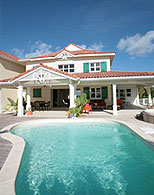
A property investment partnership (société civile immobilière, or SCI) is a legal form designed for the acquisition or construction of buildings (houses, flats or entire buildings), to be rented to third parties or provided free of charge to the partners. It allows French inheritance law to be by-passed. However, if furnished property held through an SCI is rented out, it loses its tax transparency, and is taxed like a company.
An SCI must consist of at least two partners. A written contract, known as the by-laws, is required of every SCI. The partners are liable for the SCI´s debts in proportion to their share in its capital. SCIs are burdensome, as they require the registration of the SCI, and the keeping of annual accounts in French, based on French accounting practitice ad tax code. Non-submission of the SCI annual accounts may result in a penalty of 3% of the market value of the property.
CAPITAL GAINS TAX
New rules were introduced in 2004. EU residents and residents of France now pay 16% on the net gain, after deduction of acquisition and improvement costs (the default deductions under these two headings are 7.5% and 15% respectively, but if invoices can be produced, more may be allowable). For both residents and nonresidents, discounts of 10% a year are allowed after the fifth year of ownership, with the effect that after 15 years no gain is chargeable to tax.
Properties which have been used as a principal residence from the date of purchase, or for a minimum of five years, are exempt from CGT. Old age pensioners and invalids, even if nonresident, are exempt from CGT.
However, owners who are not residents of an EU country pay CGT at a rate of 33.3%, subject to any applicable double tax treaty. There is no allowance for the first 5 years of ownership, but every year, from then on, allows him 10% off his capital gain, with the result that a property owned for more than 15 years is free of Capital Gains Tax.
Those who own their properties through a Société Civile Immobilière (SCI) (which is not subject to corporation tax) are, as shareholders, individually liable for payment of CGT. This also applies to companies subject to French corporation tax, though in addition, for such companies the purchase price will be reduced in value by 2% every year.
The Notaire instructed to act on the sale is a public official, and as such he is obliged to act as the tax collector, and will withhold the tax due on the gain.
PROPERTY TAX
Property Taxes
There are two types of property taxes in France, the taxe d´habitation and the taxe foncière. Whoever actually resides in a building is obliged to pay the tax d´habitation. Generally, rental leases also provide that the tenant will reimburse the landlord for the taxe foncière, which is otherwise payable by the owner of the property. The tax foncière is a combination of tax for the building (taxe foncière bâtie) and for the land (taxe foncière non bâtie).